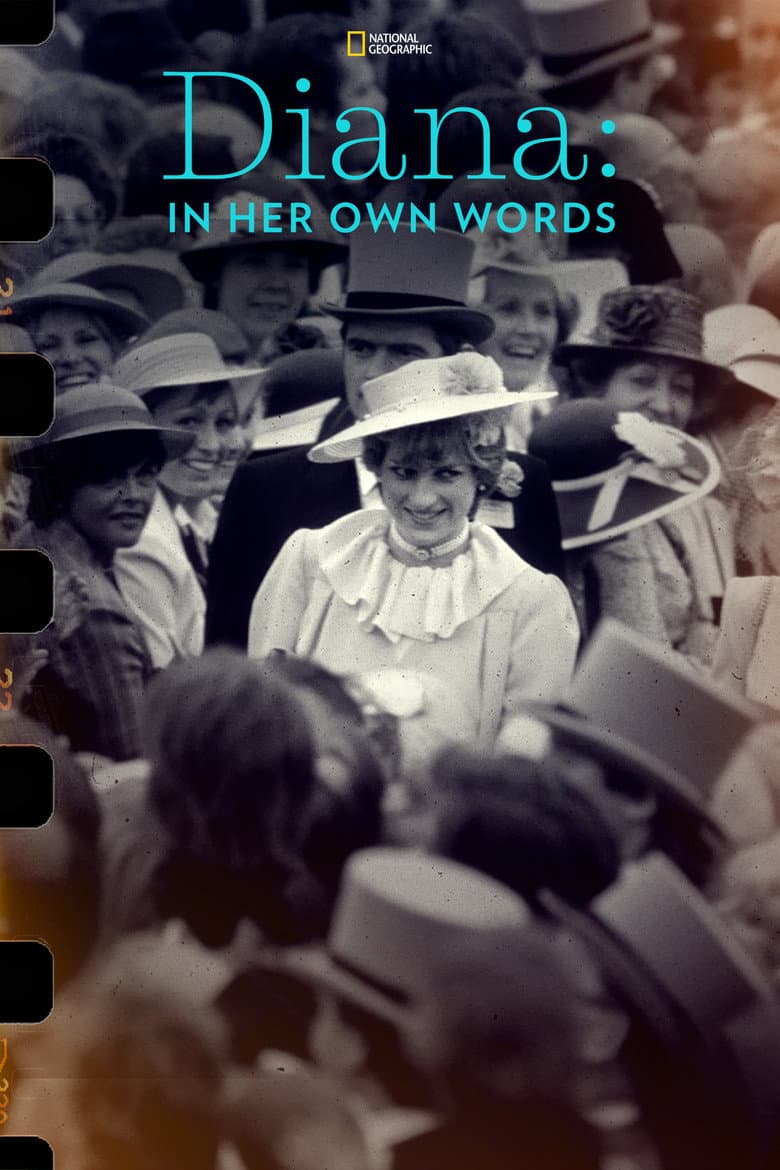
Princess Diana tells the story of her life through recordings made in 1991 while she was still married to Prince Charles. She remembers her unhappy childhood, her sudden move into London's royal world, and the public pressure that followed her wedding. She describes her troubled marriage, bulimia, depression, motherhood, and growing wish to control her own public work. Archival news footage and photographs create an intimate but one-sided portrait that feels sad, personal, and at times hopeful.
The film gives strong attention to a young woman trying to speak for herself inside the royal family. Diana describes how old royal duties, a troubled marriage, and public pressure left her unable to show her pain. The documentary also shows her using royal fame to support AIDS patients and an effort to ban landmines. These themes offer a mild activist and female-empowerment message, but they remain tied to her real life rather than a broad modern identity campaign.
Community feedback
Was our 26% Woke rating accurate?
Breakdown
These are the editorial factors and ratings behind our score for Diana: In Her Own Words.
Woke representation / casting
Not present. The film uses Diana's real recordings and archival images, so it has no casting choices. No actor is assigned a representation-based role.
0%
Woke political dialogue
Diana speaks about hugging a man with AIDS and helping the Red Cross ban anti-personnel landmines. She calls herself a humanitarian rather than a political figure. These are public causes, but the film does not use modern identity, DEI, or party-political language.
14%
Identity-driven story themes
The documentary repeatedly follows a young woman learning to speak for herself inside the royal family. Diana describes how old royal duties, a troubled marriage, and public pressure left her unable to show her pain. The film also presents her later choice to work alone and use her fame for causes. This gives the story a mild female-empowerment angle, but it is not a modern identity campaign.
18%
Western institutional / cultural critique
The film repeatedly shows the royal system and the press as forces that make Diana hide her illness and control her public role. Diana says she could do the job better alone and plans to alter the monarchy through William. The documentary criticizes rigid royal expectations and media behavior, but it does not attack Christianity, capitalism, or Western culture as a whole.
30%
Woke character or canon changes
Not relevant. The documentary uses a real historical figure and does not change her race, gender, sexuality, or role.
0%
Anti-woke backlash and complaints
Not present. The reported complaints concern privacy, balance, or the monarchy, not woke, DEI, or identity politics. The supplied X research found no anti-woke reaction.
0%
Creator track record context
Tom Jennings's work is mainly archival history and journalism documentaries, with no clear identity-first pattern. David Tillman has a stronger LGBTQ-related record through a past film and work with the Los Angeles LGBT Center. Their title-related interviews focus on Diana's recordings and archival material, not diversity or queer themes. This gives a mild creator track record signal, but it does not match the documentary's main subject.
21%
Production
Movie · 2018
A documentary about World War I with never-before-seen footage to commemorate the centennial of Armistice Day, and the end of the war.
Movie · 2022
In the aftermath of George Floyd’s death, the media concocted a narrative that justified a summer of worldwide riots and helped contribute to the rise of Black Lives Matter who…
Movie · 2017
An intimate journey through the formative years of David Lynch's life. From his idyllic upbringing in small town America to the dark streets of Philadelphia, we follow Lynch as he…
Movie · 2017
Documentary about the arena-packing Swedish DJ, chronicling his explosive rise to fame and surprising decision to retire from live performances in 2016.
Movie · 2022
After years in the limelight, Selena Gomez achieves unimaginable stardom. But just as she reaches a new peak, an unexpected turn pulls her into darkness.
Movie · 2016
With stunning views of eruptions and lava flows, Werner Herzog captures the raw power of volcanoes and their ties to indigenous spiritual practices.
Movie · 2020
With this inventive portrait, director Kirsten Johnson seeks a way to keep her 86-year-old father alive forever.
Movie · 2021
Christopher Wallace, AKA The Notorious B.I.G., remains one of Hip-Hop’s icons, renowned for his distinctive flow and autobiographical lyrics.
