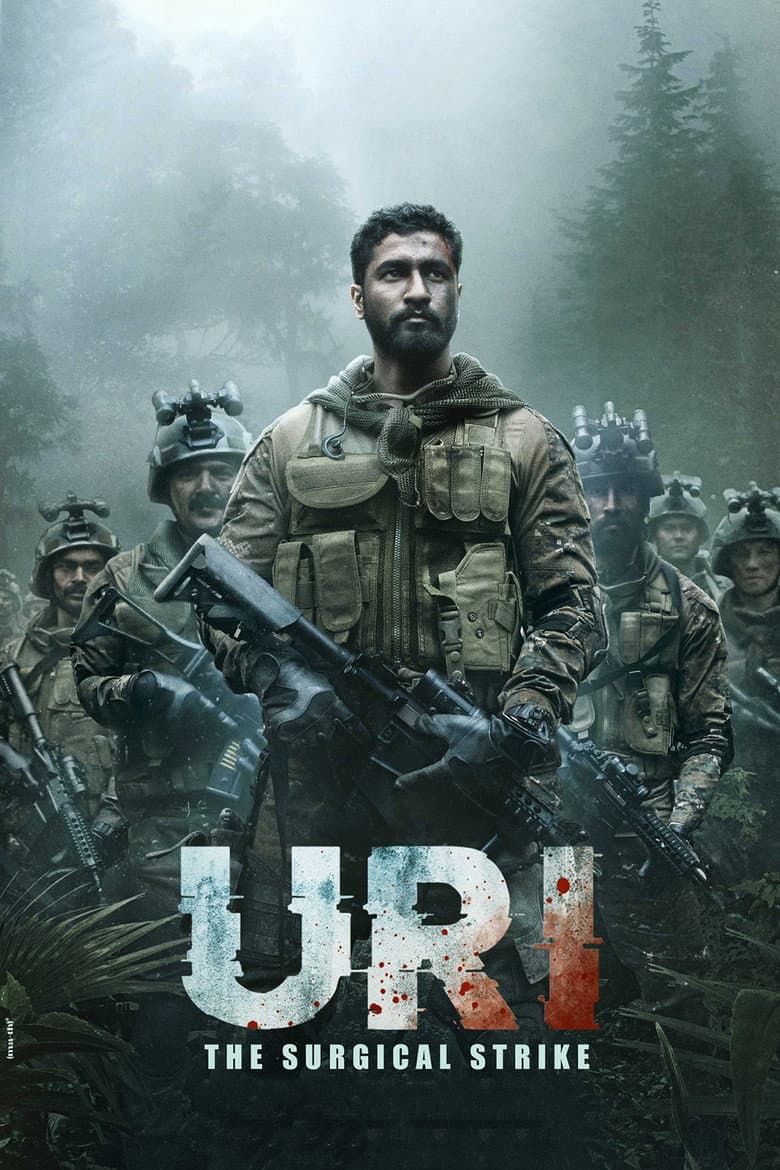
Major Vihaan Singh Shergill is a skilled Indian Army officer who leaves his desk job after terrorists attack an army camp in Uri, Kashmir. The attack kills soldiers, including his brother-in-law, and turns a national crisis into a personal fight. Vihaan returns to duty and trains a team for a secret strike across the Line of Control into Pakistan-held Kashmir. The film uses a tense, serious, and highly patriotic action style, with grief, planning, military teamwork, and revenge driving the story.
Two women have visible jobs in the mission. Pallavi is a secret intelligence officer who tracks enemy targets, and Seerat is an Air Force pilot who helps the soldiers escape. Vihaan’s young niece also says she wants to become India’s first female general, but this idea appears in one short family scene. These moments give women skill and courage, yet the main arc stays with Vihaan, the Army, national duty, and the attack on terrorist camps. The film presents patriotism and a strong security response as its main answer to violence.
Community feedback
Was our 19% Woke rating accurate?
Breakdown
These are the editorial factors and ratings behind our score for Uri: The Surgical Strike.
Woke representation / casting
Pallavi is a secret intelligence officer who helps find enemy camps. Seerat is a female Air Force pilot who protects the team during its escape. Vihaan’s niece also presents a future female general as a proud goal. These choices add a visible gender-representation layer, but the film does not build a broad diversity-first cast or make women the main heroes.
15%
Woke political dialogue
Vihaan’s niece says she plans to become India’s first female general. The line makes a gender barrier and a future woman leader part of a family scene. The rest of the film uses patriotic and military language rather than modern identity or DEI speeches.
22%
Identity-driven story themes
Pallavi gathers enemy information and helps question suspects. Seerat returns to duty after her husband’s death and saves the team during the final escape. Vihaan’s niece imagines herself as a future female general. These moments give women visible skill and courage, but Vihaan’s revenge and the army mission remain the central arc.
18%
Western institutional / cultural critique
Not present. The film does not criticize Western institutions or traditional family and gender roles. It supports the Indian Army, government, and national duty instead.
0%
Woke character or canon changes
Not relevant. The film presents fictional names and composite characters rather than altered versions of known characters. It does not change a known character’s race, gender, sexuality, or identity.
0%
Anti-woke backlash and complaints
Not present. No sustained public complaint said that Uri pushed woke, DEI, or identity-politics ideas. X reaction contained no anti-woke complaints. Right-leaning praise called the film patriotic and not woke, which is approval rather than backlash.
0%
Creator track record context
Aditya Dhar’s public work is mainly patriotic military and Kashmir stories, not woke identity politics. The mild activist context comes from Ronnie Screwvala’s films about poverty and social inequality and his rural charity. Those efforts are broad social work, not DEI or identity-politics campaigning. The other listed creators have no clear public activist pattern.
4%
Production

Movie · 2020
A first-time captain leads a convoy of allied ships carrying thousands of soldiers across the treacherous waters of the "Black Pit" to the front lines of WWII.

Movie · 2017
Set in a dugout in Aisne in 1918, a group of British officers, led by the mentally disintegrating young officer Stanhope, variously await their fate.

Movie · 2018
One year after the events of "Kickboxer: Vengeance", Kurt Sloan has vowed never to return to Thailand. However, while gearing up for a MMA title shot, he finds himself sedated and…

Movie · 2019
New Mexico Territory, 1880. Rio Cutler and his older sister Sara must abandon their home after an unfortunate event happens.

Movie · 2019
Cal is a dedicated cop who also serves as a sergeant in the Marine Corps Reserve. When his reckless half brother lands in jail for accidentally killing a man, Cal and his buddies…

Movie · 2017
May, 1980. Man-seob is a taxi driver in Seoul who lives from hand to mouth, raising his young daughter alone.

Movie · 2022
After more than thirty years of service as one of the Navy’s top aviators, and dodging the advancement in rank that would ground him, Pete “Maverick” Mitchell finds himself…

Movie · 2018
A geologist races against time to save his estranged wife and two children when a devastating earthquake strikes Oslo, Norway.
