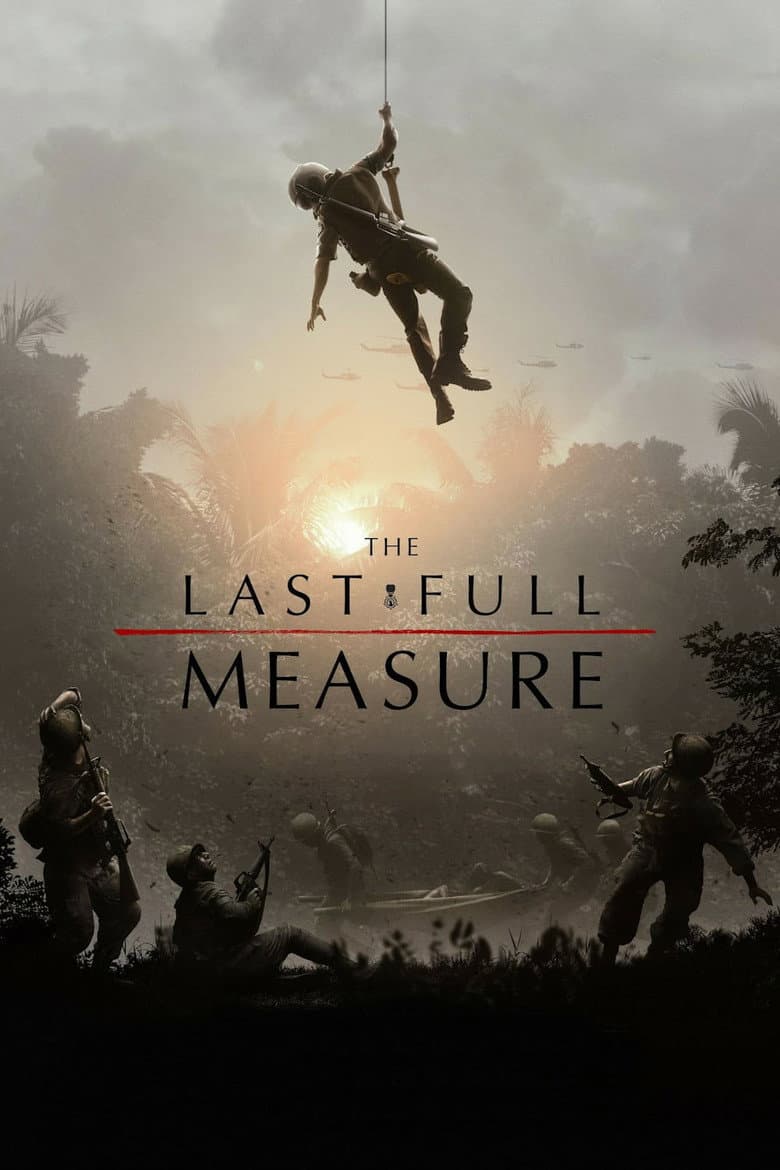
The Last Full Measure follows Scott Huffman, a young Pentagon lawyer who wants a better job and has little interest in an old medal request. In 1999, he must interview Vietnam veterans and the family of Air Force medic William Pitsenbarger, who died while saving soldiers during the 1966 Battle of Abilene. Scott learns that Pitsenbarger’s Medal of Honor was delayed for decades while the film suggests officials protected careers and buried damaging facts about the battle. The movie moves between Washington offices and Vietnam flashbacks, with a serious, emotional tone about courage, guilt, grief, and duty.
The clearest political element is a short anti-war exchange in which a veteran tells Scott that taxpayers and government workers share blame for the bombs and bullets used in Vietnam. The movie also shows Pentagon and congressional leaders as self-protective, but this conflict stays tied to the medal case rather than modern identity politics. The main message honors a fallen airman, shows how veterans live with trauma, and says that duty means standing by the men he saved. The veterans speak about survivor guilt, memory, family, and the lasting cost of war after they return home.
Community feedback
Was our 13% Woke rating accurate?
Breakdown
These are the editorial factors and ratings behind our score for The Last Full Measure.
Woke representation / casting
Not present. The film’s main roles fit a Vietnam veteran story, with Pitsenbarger and Scott Huffman presented as white men and women shown mainly as wives, mothers, or staff. Samuel L. Jackson plays a major black veteran, but the film does not frame this casting as a diversity goal.
0%
Woke political dialogue
Takoda tells Scott that taxpayers share blame for every bomb and bullet dropped in Vietnam. Takoda says that Scott has blood on his hands because he works for the government. The film uses this anti-war guilt in one short talk, while most political speech concerns the medal, elections, and military policy.
22%
Identity-driven story themes
Not present. The film centers on sacrifice, survivor guilt, PTSD, family, and the duty to honor a fallen airman. It does not build its main story around race, gender, sexuality, or modern identity politics.
0%
Western institutional / cultural critique
Not present. The film criticizes Pentagon paperwork, congressional deals, and military leaders who protect careers. Those complaints stay tied to a specific medal case and do not attack family, religion, masculinity, or Western culture through modern activist framing.
0%
Woke character or canon changes
Not relevant. The film creates the fictional staffer Scott Huffman and changes some case details, but no reported identity swap or identity-based change to Pitsenbarger or the veterans appears.
0%
Anti-woke backlash and complaints
Not present. No qualifying backlash found. Reddit and review comments mostly attacked the pacing, melodrama, dialogue, or acting. The separate X research found no anti-woke posts, boycotts, or review-bombing aimed at this title.
0%
Creator track record context
Todd Robinson has a low stored woke score of 8/100 and a career built around war, true-story, crime, and genre drama. His earlier fiction includes some LGBTQ characters and questions about masculinity. His interviews about this film focus on veterans, sacrifice, PTSD, and a hero’s journey. The listed producers and casting directors have low stored scores and no clear public DEI activism.
8%
Production
Movie · 2021
A widowed farmer and his son warily take in a mysterious, injured man with a satchel of cash. When a posse of men claiming to be the law come for the money, the farmer must decide…

Movie · 2021
After a blood- soaked jujitsu match in Dubai, fighting legend Mickey Kelley falls to superstar Blaine. But years later, an online video proves that Blaine cheated, and the world…
Movie · 2016
The story of a drifter named Paul who arrives in a small town seeking revenge on the thugs who murdered his friend.
Movie · 2020
A small unit of U.S. soldiers, alone at the remote Combat Outpost Keating, located deep in the valley of three mountains in Afghanistan, battles to defend against an overwhelming…
Movie · 2019
Vietnam War, 1966. Australia and New Zealand send troops to support the United States and South Vietnamese in their fight against the communist North.
Movie · 2017
A fast-talking lawyer transforms his body and takes a vow of silence, not to be broken until he finds out who killed his wife and daughter and has his revenge.
Movie · 2022
Harry Haft is a boxer who fought fellow prisoners in the concentration camps to survive. Haunted by the memories and his guilt, he attempts to use high-profile fights against…

Movie · 2018
One year after the events of "Kickboxer: Vengeance", Kurt Sloan has vowed never to return to Thailand. However, while gearing up for a MMA title shot, he finds himself sedated and…
