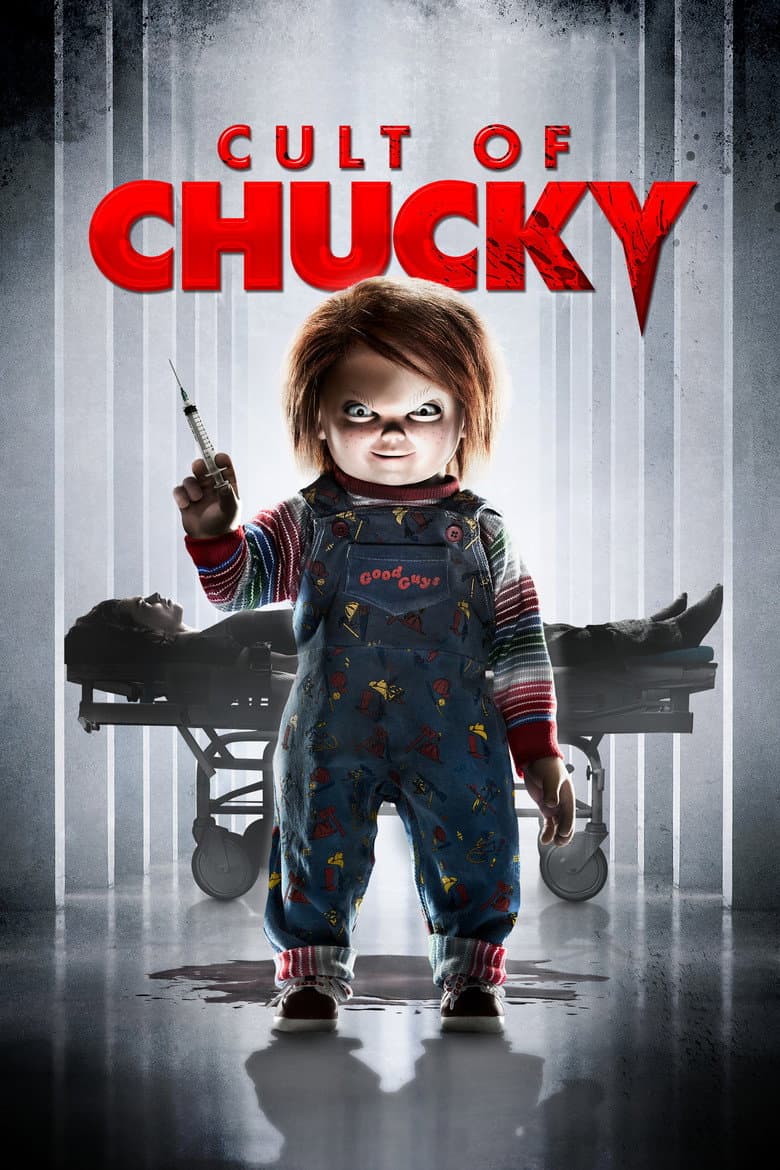
Nica Pierce has spent four years in a mental hospital after Chucky framed her for her family's murders. Her doctors have convinced her that the killer doll was a false memory and that she is dangerous. When a Good Guy doll arrives as a therapy tool, new deaths make Nica question what is real. The movie mixes cold hospital horror, bloody killings, dark jokes, and a strange magic plot.
The film includes Carlos, a gay married orderly who shares a personal link with Nica because his husband also has a disability. Tiffany shows romantic interest in Nica after Chucky puts part of his soul inside her body. The ending joins same-sex attraction, soul swapping, and a male killer living through a female body, but the movie treats these ideas as strange horror twists rather than a debate about modern identity. These moments are clear, yet they remain side threads around Nica's fight to survive and Chucky's plan.
Community feedback
Was our 28% Woke rating accurate?
Breakdown
These are the editorial factors and ratings behind our score for Cult of Chucky.
Woke representation / casting
Not present. The film has a female disabled lead, a gay Latino orderly, and a mixed hospital group, but it does not present the cast as a diversity statement. The casting fits a modern hospital setting and does not show a clear identity-first pattern.
0%
Woke political dialogue
Not present. The dialogue stays with Chucky, the murders, mental illness, sex, and survival. No recurring speech promotes modern identity politics, activist causes, or left-wing political ideas.
0%
Identity-driven story themes
Carlos tells Nica that he is gay and married, and he connects with her because his husband also has a disability. Tiffany also shows attraction to Nica after Chucky’s soul enters Nica’s body. The ending makes the killer’s life in a woman’s body part of the shock and dark humor. These identity points are clear, but they support a strange horror twist rather than the main conflict.
28%
Western institutional / cultural critique
Dr. Foley uses his power as a psychiatrist to abuse Nica, and the hospital staff dismiss her true account. The film presents a male authority figure as sexually entitled and unsafe. The story treats Foley as a personal villain, not as part of a broad message about men, medicine, or Western institutions.
18%
Woke character or canon changes
Not relevant. The film adds multiple Chucky bodies and lets Chucky possess Nica. Those changes serve the magic plot and do not rewrite an established character for an identity or representation message.
0%
Anti-woke backlash and complaints
Not present. Public discussion focused on the film’s gore, confusing plot, multiple Chuckys, and ending. No clear anti-woke campaign aimed at this movie was found, while later complaints about the television series targeted a different title.
0%
Creator track record context
Don Mancini’s stored creator score is 67/100 because he has a strong history of planned queer representation across the wider Chucky franchise. His interview about this film says Carlos was loosely based on a gay Latin friend and that the character’s husband was meant to connect with Nica. The stored scores for the other listed crew are low to moderate, with no strong activist pattern apart from workplace inclusion work. The combined context is meaningful but mixed.
45%
Production
Movie · 2022
Finney Blake, a shy but clever 13-year-old boy, is abducted by a sadistic killer and trapped in a soundproof basement where screaming is of little use.
Movie · 2016
An evening of drunken prank calls becomes a nightmare for a pair of teenagers when a mysterious stranger turns their own game against them.
Movie · 2018
A timid and socially alienated 17-year-old high school student's life is turned upside down when she switches places with her sinister mirror image.
Movie · 2023
Father Gabriele Amorth, Chief Exorcist of the Vatican, investigates a young boy's terrifying possession and ends up uncovering a centuries-old conspiracy the Vatican has…
Movie · 2017
A young man and his three younger siblings are plagued by a sinister presence in the sprawling manor in which they live.
Movie · 2026
After a young couple witnesses a gruesome highway accident, they soon realize they did not leave the crash scene alone, as a demonic presence called the Passenger that won't stop…

Movie · 2024
Nothing is what it seems when a twisted one-night stand spirals into a serial killer’s vicious murder spree.

Movie · 2026
After a catastrophic military disaster reanimates the dead, Ava searches for her missing husband amidst an increasingly hostile world.
