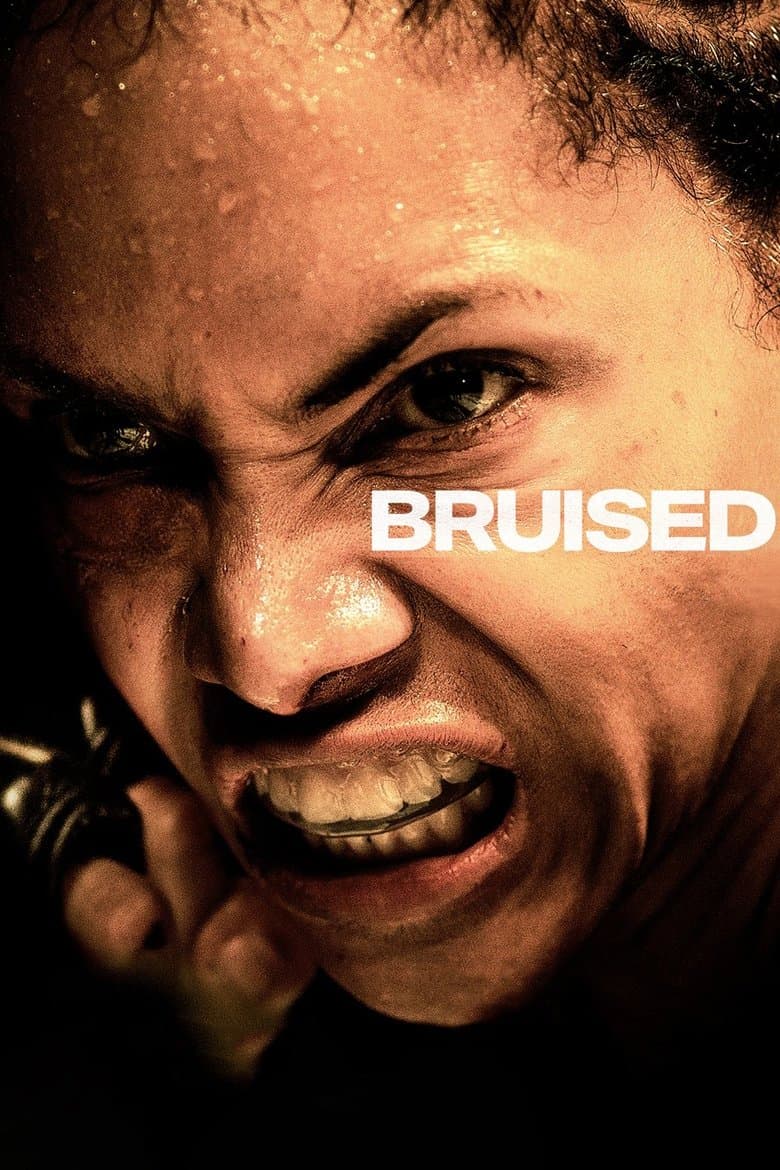
Jackie Justice is a former mixed martial arts star living in Newark after she ran away from a major fight. She drinks, cleans rich people's homes, and stays with Desi, the boyfriend and manager who helped ruin her career. When her quiet young son Manny returns after years away, Jackie must care for him while she trains for a title fight. The film mixes bloody cage action with family pain, abuse, guilt, and a slow attempt at repair.
The film puts a black woman at the center of a female fight league and gives her a black female trainer who becomes her guide and lover. Jackie also faces a violent man, a damaged mother, and the pressure to choose between her old manager and her own path. The story treats women's strength, recovery from abuse, and a same-sex relationship as important parts of Jackie's return. It also presents motherhood, breaking a family pattern of harm, and taking responsibility as the deeper meaning of victory.
Community feedback
Was our 70% Woke rating accurate?
Breakdown
These are the editorial factors and ratings behind our score for Bruised.
Woke representation / casting
The film centers on a black woman in Newark and puts women in most of the key fight roles. Jackie is the hero, Buddhakan is her main trainer, and Lady Killer is the champion. The film also publicly frames the lead as a middle-aged black woman and the story as a female point of view. The casting fits the modern setting, but the repeated focus on women and identity makes representation a clear part of the design.
55%
Woke political dialogue
The opening fight commentary says many people think women should not box. The commentator then rejects that view and says women can fight. The film returns to this idea through the all-female league and Jackie's fight for respect. The lines are brief and fit the sports setting, so the category is noticeable but not central.
26%
Identity-driven story themes
The story repeatedly presents a woman taking back control of her career and home life. Jackie leaves a violent boyfriend and rejects his control over her work. The film gives her a same-sex romance with Buddhakan and treats that relationship as part of her emotional growth. The female-led fight league and the idea of women reclaiming power give the film a strong identity-driven theme, although motherhood and personal guilt remain equally important.
58%
Western institutional / cultural critique
The film shows Desi using jealousy and violence to control Jackie. The film also shows the male manager treating her career as something he owns. The opening sports talk challenges the idea that women should not fight. The story does not build a wider attack on Western institutions, religion, or society, so this stays limited.
32%
Woke character or canon changes
The role was first written for a young white Irish Catholic woman, according to Berry's interview. Berry reworked it into a middle-aged black woman in an urban black setting. That is a clear race, age, and cultural change to the original character idea. Bruised is not based on a famous book, franchise, or real person, so the change is limited to the film's early script history.
34%
Anti-woke backlash and complaints
Small X posts called the LGBT relationship forced “wokeness” and mocked the Black heroine, women's MMA, and LGBT plot. A few Reddit comments also said the late lesbian romance felt sudden or unnecessary. Other viewers defended the film as a female fight movie with no woke fluff and zero pandering. The reaction was fringe and mixed, with no sign of a large boycott or review-bombing campaign.
29%
Creator track record context
Halle Berry's creator context is the main signal, with a cached score of 58. Her profile includes stories by and about women and women of color, plus support for authentic trans representation. The writer and most producers have low cached scores, while casting director Avy Kaufman's score is moderate because of identity-focused projects. Berry's public Bruised interviews use female-gaze and black-woman framing that matches the film's content.
35%
Production
Movie · 2016
The story of a drifter named Paul who arrives in a small town seeking revenge on the thugs who murdered his friend.
Movie · 2022
April, 1940. The eyes of the world are on Narvik, a small town in northern Norway, a source of the iron ore needed for Hitler's war machine.
Movie · 2021
After a blood- soaked jujitsu match in Dubai, fighting legend Mickey Kelley falls to superstar Blaine. But years later, an online video proves that Blaine cheated, and the world…
Movie · 2022
A fictional history of two legendary revolutionaries' journey away from home before they began fighting for their country in the 1920s.
Movie · 2017
Set in a dugout in Aisne in 1918, a group of British officers, led by the mentally disintegrating young officer Stanhope, variously await their fate.
Movie · 2019
Vietnam War, 1966. Australia and New Zealand send troops to support the United States and South Vietnamese in their fight against the communist North.
Movie · 2019
In 1897, an army of 21 Sikhs battles 10,000 Afghans to prevent the Saragarhi Fort from being taken down.
Movie · 2020
A small unit of U.S. soldiers, alone at the remote Combat Outpost Keating, located deep in the valley of three mountains in Afghanistan, battles to defend against an overwhelming…
