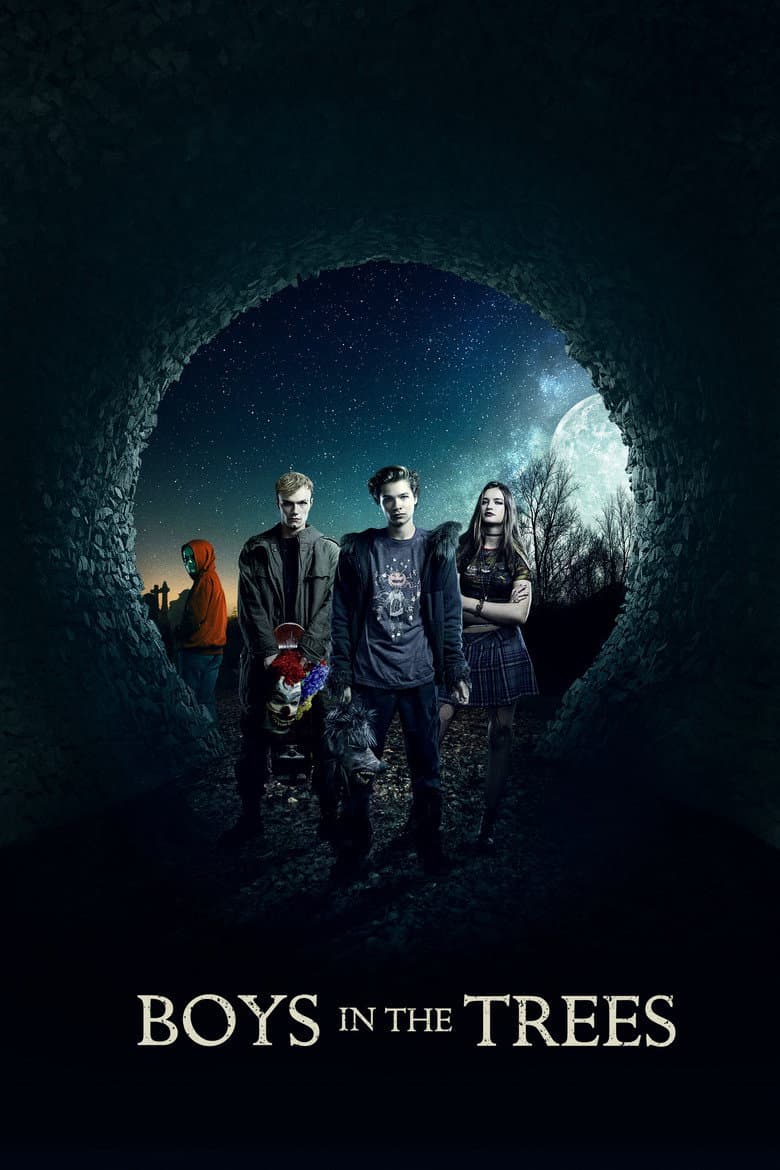
On Halloween night in 1997, Corey joins his rough skate crew in an Adelaide suburb. Corey wants to leave for New York to study photography, but he cannot let go of his old friendship with Jonah. Jonah is now a lonely target for the group after Corey chose the crowd over him. Their walk through streets, cemeteries, and woods becomes a strange trip through childhood memories, ghost stories, and fear. The film feels sad, creepy, and dreamlike as it moves toward a painful truth.
The strongest identity-driven material centers on Jonah as a gay outsider who faces homophobic abuse from Jango and the other boys. Corey must face the fear of being linked to Jonah and the guilt of leaving him alone. The story treats the boys’ need to act tough as a cause of cruelty, shame, and broken friendship. It also gives an Aboriginal actor a recurring ghost role as the Man in White and uses a Day of the Dead gathering. These elements support the film’s focus on male identity, bullying, and the cost of hiding emotion.
Community feedback
Was our 64% Woke rating accurate?
Breakdown
These are the editorial factors and ratings behind our score for Boys in the Trees.
Woke representation / casting
The main teen group is mostly white, which fits the suburban Australian setting. The film gives Aboriginal actor Trevor Jamieson a recurring ghost role as the Man in White. The film also includes Mexican musicians at a Day of the Dead gathering. The Man in White is a supernatural symbol rather than a lead hero. These choices add some visible cultural identity, but they do not form a diversity-first cast.
12%
Woke political dialogue
The film uses repeated homophobic insults as part of the bullying. Jonah’s talks with Corey connect friendship with fear, shame, and the wish to escape the boys’ pack. The dialogue keeps sexuality and male identity visible across the night. The film does not stop for a modern political speech, so the effect is noticeable but limited.
28%
Identity-driven story themes
Jonah is a gay outsider who is bullied by Jango and the other boys. Corey abandoned Jonah because he feared losing his place in the group, and the night forces him to face that guilt. The film links male friendship, fear of gay labels, and the pressure to act tough. The final truth about Jonah’s death makes the harm central to Corey’s change. The queer material stays partly implied because the film cut an earlier openly gay version of Jonah.
72%
Western institutional / cultural critique
The Gromit group rewards toughness, sexual bragging, and cruelty. The film shows that pressure driving Corey to abandon Jonah and Jango to hurt others. Romany points out that the boys are stuck while she moves toward adulthood. The story criticizes harmful male behavior and rigid gender roles, but it does not attack Christianity, family life, capitalism, or Western institutions.
44%
Woke character or canon changes
Not relevant. The film is an original story about Australian teenagers. No established character, real historical figure, or source canon is changed.
0%
Anti-woke backlash and complaints
Not present. No anti-woke backlash, boycott talk, or review-bombing was found in the reviewed coverage. The supplied X pass also found no title-specific complaints.
0%
Creator track record context
Nicholas Verso has a moderate identity-focused track record. His later series Invisible Boys centers gay teens and queer self-acceptance. His earlier work often follows troubled young people and identity struggles, and this film’s focus on male vulnerability fits that pattern. The other listed producers and casting directors have no strong matching public pattern, so Verso is the main creator signal.
58%
Production
Movie · 2016
Paralyzed by his fear of dying, Miles Grissom takes out an advert offering $30,000 in reward money to the first person who can show him evidence of an angel, a demon, or prove…
Movie · 2017
Liam wakes from a car crash with no memory of who he is. As he makes his way into town to look for help, he finds only dead bodies, all with strange pale eyes.
Movie · 2020
When an outbreak hits, Aidan barricades himself inside his apartment and starts rationing food. His complex is overrun by infected Screamers, and with the world falling apart into…
Movie · 2021
While exploring the neighboring woods, 13-year-old John discovers an unfinished bunker — a deep hole in the ground.
Movie · 2016
While surfing on a secluded beach, Nancy finds herself in the feeding grounds of a great white shark. Though stranded only 200 yards from shore, survival proves to be the ultimate…
Movie · 2018
A thief makes a disturbing discovery in the house where he breaks in. Later, when he returns to the same house with his partner in crime, things are no longer how he expected.
Movie · 2018
A teenager's quest to launch Norwegian Black Metal in Oslo in the 1990s results in a very violent outcome.
Movie · 2021
A teenage girl living with schizophrenia begins to suspect her neighbor has kidnapped a child. Her parents try desperately to help her live a normal life, without exposing their…
