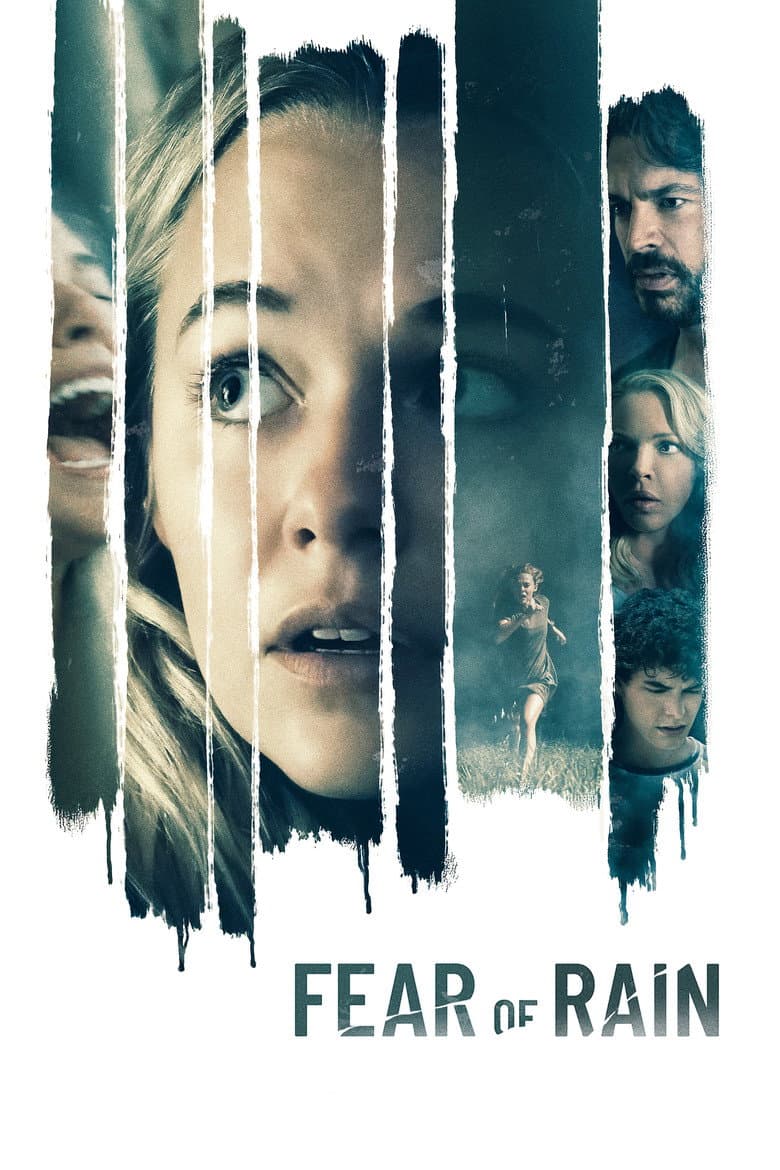
Rain Burroughs is a teenage girl in Florida who lives with schizophrenia and has trouble knowing what is real. After a frightening break from reality, she returns home and tries to live normally with help from her parents. Rain then thinks that Dani, her teacher and next-door neighbor, has locked a child in the attic. Caleb, a new boy who may be real or may be another vision, helps her search for the truth. The movie uses a dark, uneasy thriller tone with horror images, family pain, and long stretches of doubt.
The story treats mental illness as a major part of Rain's life rather than as a simple evil force. It shows therapy, medicine, hallucinations, bullying, shame, and fear of another hospital stay. Rain says that her illness does not define her, while her father tries to protect her and hide a painful family secret. The story asks viewers to trust Rain's feelings while also questioning what she sees. Its message about understanding people with mental illness stays tied to shock scenes and a mystery twist.
Community feedback
Was our 24% Woke rating accurate?
Breakdown
These are the editorial factors and ratings behind our score for Fear of Rain.
Woke representation / casting
Director Castille Landon says she likes telling stories about young women and calls Rain a strong female character. The production changed Dani from a man in the early script to a woman after Landon met Eugenie Bondurant. That gender choice is audience-visible, but the film does not use a broad diversity pattern or diversity-first marketing.
25%
Woke political dialogue
Not present. The characters discuss schizophrenia, medication, fear, and family secrets. The film has no modern political or activist speech.
0%
Identity-driven story themes
Rain's schizophrenia drives the mystery and most of her daily problems. The story shows therapy, medication, bullying, shame, fear of another hospital stay, and the belief that her illness does not define her. Landon said the film aims to reduce stigma and challenge false ideas about mental illness. This is a recurring social message, but it stays focused on one girl's health and family.
30%
Western institutional / cultural critique
Not present. The film shows school bullying and family stress, but it does not attack Western institutions, Christianity, traditional family roles, or capitalism.
0%
Woke character or canon changes
Not relevant. The film is an original story, so it does not change a known character, canon, source material, or real historical figure.
0%
Anti-woke backlash and complaints
Not present. The supplied X search found no anti-woke reaction or named complaint. Web reviews and audience posts focus on schizophrenia, suspense, and the ending rather than DEI or identity politics.
0%
Creator track record context
Castille Landon has spoken about the low number of women directors and has pursued stories about mental illness. Her wider work does not show a strong pattern of identity politics or activist campaigns. Most listed crew members have little or no high-confidence activist record. A few producers have credits in race, identity, or reproductive-rights dramas, but those credits do not show a strong personal campaign.
14%
Production
Movie · 2016
While surfing on a secluded beach, Nancy finds herself in the feeding grounds of a great white shark. Though stranded only 200 yards from shore, survival proves to be the ultimate…
Movie · 2016
Paralyzed by his fear of dying, Miles Grissom takes out an advert offering $30,000 in reward money to the first person who can show him evidence of an angel, a demon, or prove…
Movie · 2023
On the day of his scheduled execution, a convicted serial killer gets a psychiatric evaluation during which he claims he is a demon, and further claims that before their time is…
Movie · 2018
A disgraced children's puppeteer returns to his childhood home and is forced to confront his wicked stepfather and the secrets that have tortured him his entire life.

Movie · 2020
Chloe, a teenager who is confined to a wheelchair, is homeschooled by her mother, Diane. Chloe soon becomes suspicious of her mother and begins to suspect that she may be…

Movie · 2017
Though Kevin has evidenced 23 personalities to his trusted psychiatrist, Dr. Fletcher, there remains one still submerged who is set to materialize and dominate all the others.

Movie · 2021
While exploring the neighboring woods, 13-year-old John discovers an unfinished bunker — a deep hole in the ground.
Movie · 2017
In a small town in Maine, seven children known as The Losers Club come face to face with life problems, bullies and a monster that takes the shape of a clown called Pennywise.
