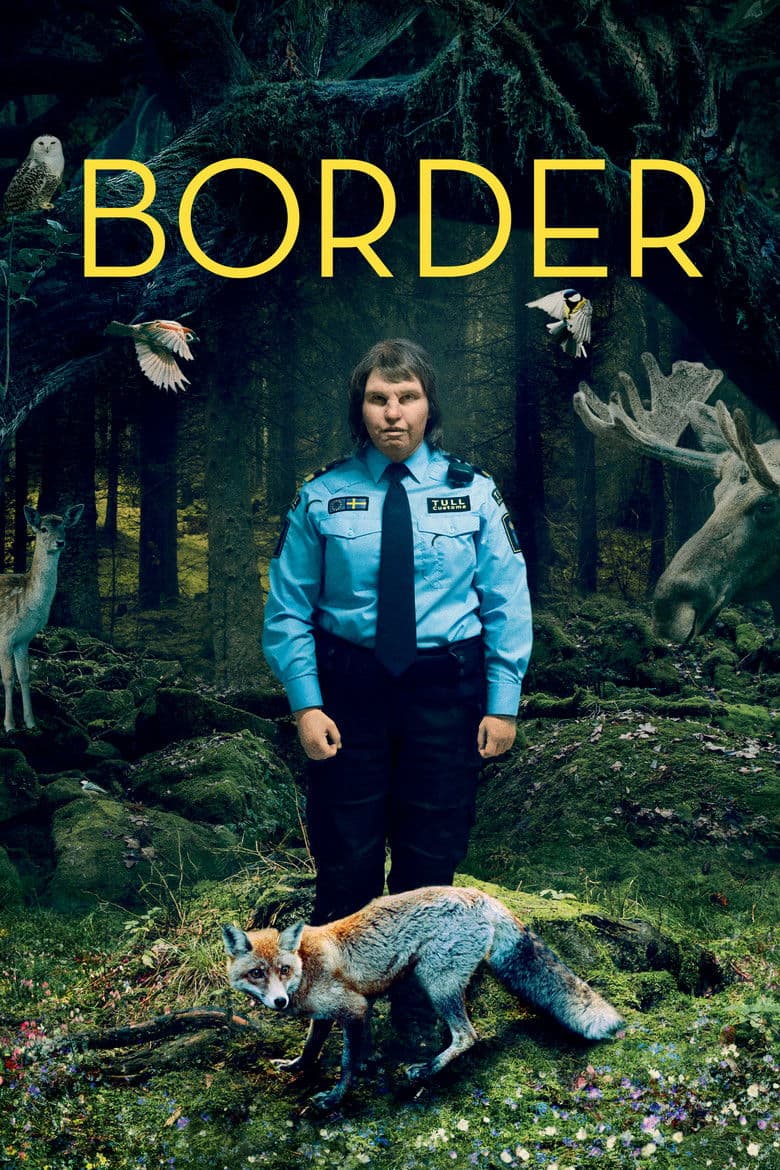
Border follows Tina, a customs officer at a ferry port in modern Sweden who can smell fear, shame, and hidden goods. She lives in a forest home with a selfish boyfriend and visits her sick father. When Tina meets Vore, a traveler with a similar rough face and strange senses, she learns that she is not human but one of the last trolls. Their romance pulls her into a hidden world while her police work uncovers a child abuse ring. The movie shifts from quiet crime drama to dark folklore, body horror, and a strange love story.
The clearest woke element is the story’s strong focus on identity outside ordinary human sex and gender. Tina has lived as a woman but discovers that her troll body has male genitals, while Vore looks male, has female organs, and can give birth. Their romance treats these differences as natural, and Tina chooses compassion over Vore’s plan to hurt humans in revenge for old experiments on trolls. The story also says that social rules can hide or harm people who do not fit, so this message shapes the main plot instead of appearing in one brief scene.
Community feedback
Was our 67% Woke rating accurate?
Breakdown
These are the editorial factors and ratings behind our score for Border.
Woke representation / casting
Not present. The main human cast is Swedish and Finnish, which fits the modern Swedish setting. Tina’s lead role and Vore’s unusual body come from the story, not from a diversity-focused cast pattern.
0%
Woke political dialogue
Border includes repeated lines about difference, human cruelty, and who gets to count as human. Vore tells Tina that her body has no flaw and that she should not listen to what humans say. He calls humans parasites and says troll revenge is justified, while Tina answers that she does not want to hurt anyone. These lines support an identity message, but the film does not use modern political slogans.
45%
Identity-driven story themes
Border makes Tina’s struggle with identity the main story. Tina has lived as a woman but discovers that her troll body has male genitals, while Vore looks male, has female organs, and can give birth. The film treats their unusual bodies and romance as a path to self-acceptance, even though Vore’s revenge makes him dangerous. Tina’s final choice says empathy matters more than fitting a human or troll label.
84%
Western institutional / cultural critique
Border shows human society calling Tina’s body a flaw and hiding the truth about her past. It links a psychiatric hospital to torture and experiments on trolls, and it presents Tina’s selfish boyfriend as another part of her unhappy human life. The police and customs service also help stop child abusers, so the film does not condemn every institution. The critique of human norms and cruelty is clear, but it is not a direct attack on Christianity, capitalism, or modern conservative politics.
41%
Woke character or canon changes
Not relevant. Border adapts John Ajvide Lindqvist’s short story, and the unusual gender-mixing troll biology is already in that source. The film adds the child-abuse investigation, but that is a new plot thread rather than an identity change to an established character.
0%
Anti-woke backlash and complaints
Not present. The X reaction pass found no anti-woke complaints. Broader reviews and audience comments focus on the shocking sex scene, body horror, and strange identity story, with no sustained complaint that the film pushes DEI or left-wing politics.
0%
Creator track record context
Several producers have progressive work in their public records. Meta Louise Foldager Sørensen is known for gender-equality advocacy, and Daniel Sachs supports inclusion and anti-racism through philanthropy. Erika Wasserman and Thomas Gammeltoft often back stories about women, outsiders, or unusual families. Abbasi and the writers have more mixed and less activist profiles, so the context is meaningful but not uniform.
41%
Production
Movie · 2022
An American priest working in Mexico is considered a saint by many local parishioners. However, due to a botched exorcism, he carries a secret that’s eating him alive until he…

Movie · 2022
Known as America’s Poet, Henry Wadsworth Longfellow leads an idyllic life – until the day his world is shattered by tragedy.
Movie · 2017
Recently deceased, a white-sheeted ghost returns to his suburban home to console his bereft wife, only to find that in his spectral state he has become unstuck in time, forced to…

Movie · 2025
In this extraordinary story of an ordinary man, Charles 'Chuck' Krantz experiences the wonder of love, the heartbreak of loss, and the multitudes contained in all of us.
Movie · 2017
A supernatural love story that centers on two parents whose life together falls apart after their son dies. The man, now a successful lawyer, and the woman, now married and an…

Movie · 2017
Manji, a highly skilled samurai, becomes cursed with immortality after a legendary battle. Haunted by the brutal murder of his sister, Manji knows that only fighting evil will…
Movie · 2016
An orphaned child's dreams—and nightmares—manifest physically as he sleeps.
Movie · 2025
During the Kadamba reign, King Vijayendra, the ruler of the fictional feudatory land of Bangra, meets his final fate while venturing into the mystical forest of Kantara.
