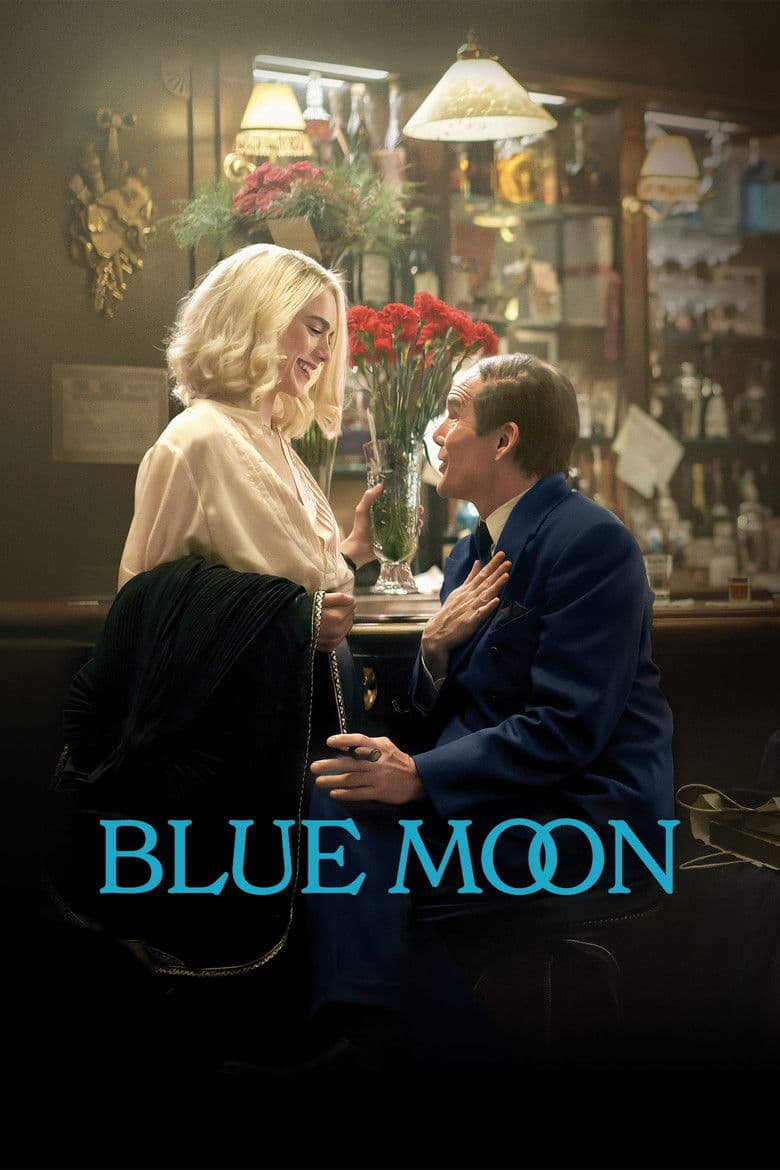
Blue Moon follows Lorenz Hart, the lyricist who once formed a famous songwriting team with Richard Rodgers. On March 31, 1943, Hart sits in Sardi’s bar while Rodgers celebrates Oklahoma! with Oscar Hammerstein. Hart drinks, talks, jokes, and tries to hide the pain of losing his partner, his career, and his hope of being loved. The film stays close to one night and feels funny, sad, tense, and deeply lonely.
Hart’s sexuality is a clear part of the story. The film shows him as a closeted gay or omnisexual man who tries to flirt with a flower delivery boy and speaks openly about attraction. He also fixates on Elizabeth Weiland, a young woman, which makes his need for love and approval more complicated. These scenes make queer identity and the pressure of hiding it important to Hart’s loneliness, but the film also spends much of its time on alcohol, failed work, friendship, and artistic pride.
Community feedback
Was our 54% Woke rating accurate?
Breakdown
These are the editorial factors and ratings behind our score for Blue Moon.
Woke representation / casting
Not present. The main cast matches the white 1943 New York theater world shown in the film. The movie does not treat the casting as a diversity or identity statement.
0%
Woke political dialogue
Lorenz Hart calls himself “omnisexual” when Eddie questions his interest in women. The word is a modern identity label placed in a 1943 conversation. The film does not build this moment into political speeches or an argument about current law or elections.
12%
Identity-driven story themes
Lorenz Hart is shown as a closeted gay man who says he is omnisexual. Hart flirts with a flower delivery boy and talks about men while also pursuing Elizabeth Weiland. His hidden sexuality, shame, and search for love shape his talks with Rodgers and his fear of being forgotten. The story treats his pain with sympathy, so queer identity is a major part of the movie rather than a side detail.
80%
Western institutional / cultural critique
Not present. The film shows that Hart had to hide his sexuality in 1943. It does not turn that period hardship into a modern attack on Western institutions, family life, or traditional social rules.
0%
Woke character or canon changes
The film creates an imagined evening from real people and letters, but those normal drama changes do not carry a woke message. Hart’s line calling himself “omnisexual” gives a real 1943 person a modern identity label. That small change affects how the film presents his sexuality, while the rest of the historical setup remains broadly recognizable.
15%
Anti-woke backlash and complaints
A tiny faith and politics account called the trailer strongly LGBT and gave it a 1 out of 10 Woke-Free Score. A small right-leaning post said the Oscars ignored Hawke because awards are a DEI fest. Mainstream coverage and audience discussion focused on Hawke’s acting, Hart’s life, and the film’s slow style. No boycott, review-bomb, or coordinated campaign tied to Blue Moon was found.
15%
Creator track record context
Richard Linklater and Robert Kaplow have low cached woke scores and are mainly linked to character-based work. Most producers also have low or mild cached scores. Donna Eperon and Lisa Crnic have stronger links to social-issue films or support for underrepresented voices, while Mike Blizzard and Steven Farneth have some social-issue work. No interview found frames Blue Moon as a diversity or activist project.
24%
Production
Movie · 2023
A curmudgeonly instructor at a New England prep school is forced to remain on campus during Christmas break to babysit the handful of students with nowhere to go.
Movie · 2025
Tenderly captures a year in the life of a family as the parents navigate their separation. Through both playful and heartfelt moments, the film portrays the bittersweet essence of…
Movie · 2023
Two mismatched entrepreneurs – egghead innovator Mike Lazaridis and cut-throat businessman Jim Balsillie – joined forces in an endeavour that was to become a worldwide hit in…
Movie · 2017
Matt Ryder is convinced to drive his estranged and dying father Benjamin Ryder cross country to deliver four old rolls of Kodachrome film to the last lab in the world that can…
Movie · 2024
In 2008, during the last month of summer before high school begins, an impressionable 13-year-old Taiwanese American boy learns what his family can't teach him: how to skate, how…
Movie · 2020
Scott has been a case of arrested development ever since his firefighter father died when he was seven. He's now reached his mid-20s having achieved little, chasing a dream of…
Movie · 2023
Allison's life falls apart following her involvement in a fatal accident. The unlikely relationship she forms with her would-be father-in-law helps her live a life worth living.
Movie · 2022
After discovering a once-in-a-lifetime player with a rocky past abroad, a down on his luck basketball scout takes it upon himself to bring the phenom to the States without his…
