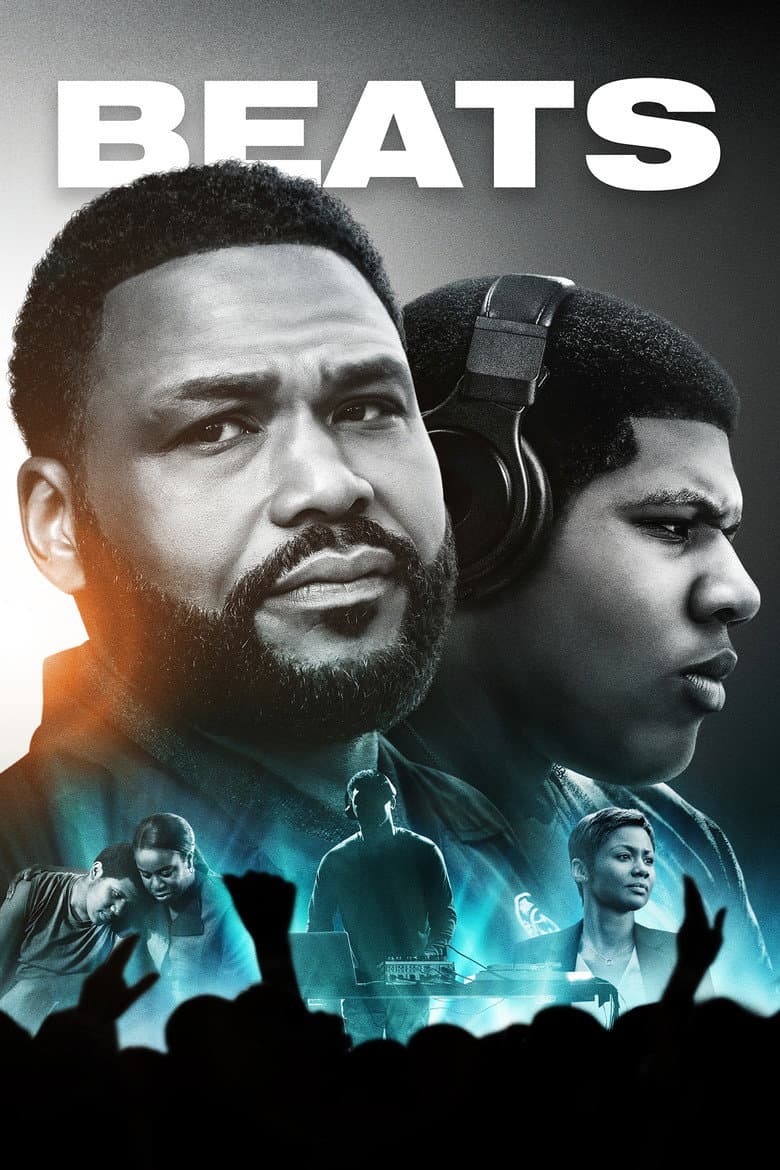
Beats follows August Monroe, a gifted teenager who makes hip-hop beats in his bedroom on Chicago’s South Side. After a gunman kills his sister, August suffers panic attacks and feels guilty for surviving, so he stops leaving home and stops attending school. Romelo Reese, a former music manager who now works as a school security guard, discovers August and tries to bring him back to music and daily life. The story has a heavy but hopeful tone, with grief, street danger, family tension, humor, and the energy of Chicago hip-hop.
The film repeatedly focuses on black community life, gun violence, and the mental pain left behind by violence. It treats music as a way for August to face fear and recover, while it shows the pressure on boys to hide weakness and act tough. It also points to school funding pressure and neighborhood barriers that limit the choices of local families. These ideas shape August’s healing, his bond with Romelo, and the film’s view of life on the South Side.
Community feedback
Was our 44% Woke rating accurate?
Breakdown
These are the editorial factors and ratings behind our score for Beats.
Woke representation / casting
Not present. The main cast is mostly Black because the story takes place in a real Black Chicago neighborhood and follows its local hip-hop scene. The film does not frame this story-accurate casting as a wider diversity program.
0%
Woke political dialogue
Lazarus tells August to “man up” when August is afraid to leave his room. The film presents that demand as harmful because August’s panic comes from real trauma. The school staff also talk about attendance money and neighborhood boundaries. The dialogue does not repeat a large identity or activist message.
24%
Identity-driven story themes
The film centers a black teenager, his family, and a South Side community shaped by gun violence. August’s trauma, his fear of leaving home, and his recovery through music stay at the center of the story. The film also shows boys being pushed to hide fear and act tough, then treats help and honesty as better answers. These are recurring identity and community themes, but they stay tied to one boy’s healing rather than a broad political campaign.
42%
Western institutional / cultural critique
The school ties attendance to lost money and sends Romelo to bring absent students back. The film shows Carla fearing that school staff cannot keep her son safe on the streets. The story also points to neighborhood boundaries and to residents who have never reached downtown. These moments suggest that public systems and city divisions limit opportunity, but the critique remains a supporting part of the drama.
30%
Woke character or canon changes
Not relevant. The film is an original story about Chicago characters, not an adaptation of known characters or a retelling of real events. No identity-based change to established material appears.
0%
Anti-woke backlash and complaints
Not present. No anti-woke or right-leaning complaints were found in the title-specific coverage reviewed. The visible reaction focused on acting, music, trauma, gun violence, and story quality.
0%
Creator track record context
Chris Robinson has a cached creator score of 58 and a history of black cultural stories and representation-focused work. Miles Orion Feldsott has a cached creator score of 59 and a record of black and identity-centered storytelling. Their stored context supports a moderate creator track record signal, while the title-specific interviews focus on mental health, Chicago, and community.
59%
Production
Movie · 2025
Diagnosed with Tourette Syndrome at 15, John Davidson navigates his way against the odds through troubled teenage years and into adulthood, finding inspiration in the kindness of…

Movie · 2023
American ballet dancer Joy Womack is accepted into Moscow's infamously tough Bolshoi Ballet Academy, with the dream of becoming a great ballerina.
Movie · 2017
In 1950, amidst the ravages of the Korean War, Sergeant Süleyman stumbles upon a a half-frozen little girl, with no parents and no help in sight and he risks his own life to save…
Movie · 2023
The story of J. Robert Oppenheimer's role in the development of the atomic bomb during World War II.
Movie · 2025
A logger leads a life of quiet grace as he experiences love and loss during an era of monumental change in early 20th-century America.
Movie · 2016
On 15 January 2009, the world witnessed the 'Miracle on the Hudson' when Captain 'Sully' Sullenberger glided his disabled plane onto the Hudson River, saving the lives of all 155…
Movie · 2024
On the brink of the Second World War, a young Norwegian man's drive to resist the Nazis sets a new course for his future – and the future of his country.
Movie · 2017
Members of the Granite Mountain Hotshots battle deadly wildfires to save an Arizona town.
