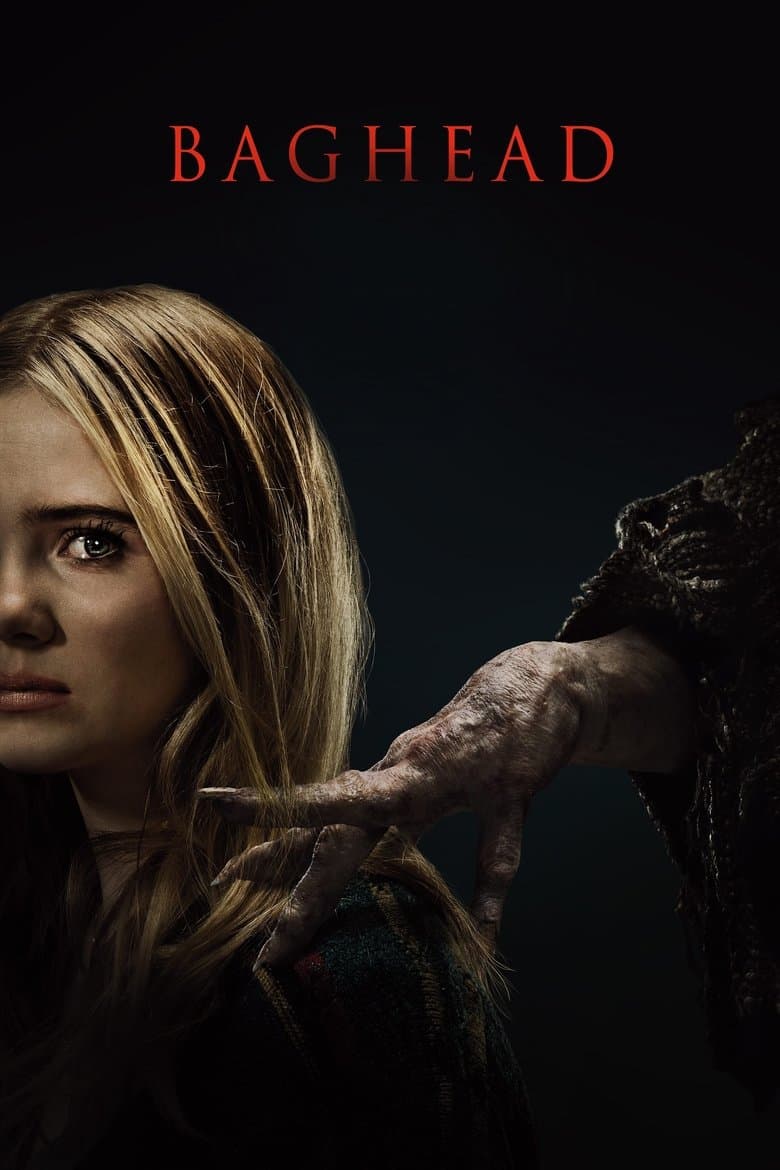
Iris Lark travels from London to Berlin after her estranged father dies. She inherits his old pub and learns that a woman called Baghead lives in the basement and can take the shape of dead people for two minutes. Iris accepts money to let grieving visitors speak with the dead, but she soon learns that Baghead grows stronger when people break the rules. The film uses a dark, tense horror tone as Iris tries to escape the curse and face the damage left by her family.
The main identity-driven element is a female witch who was branded, burned, and later kept as a tool by a male brotherhood. The film presents the brotherhood as cruel and shows men trying to control or use Baghead, Iris, and Sarah. Baghead and Iris are linked by a struggle to escape male control, and Baghead's final escape gives that theme a clear payoff. The film still treats these ideas as part of a supernatural revenge story, and it has no political speeches, queer plot, or diversity-first message.
Community feedback
Was our 20% Woke rating accurate?
Breakdown
These are the editorial factors and ratings behind our score for Baghead.
Woke representation / casting
Not present. The film centers on a white woman and her mixed-race friend in modern Berlin, with a mostly white cast and a normal gender balance. No identity statement or unusual diversity pattern is shown.
0%
Woke political dialogue
Not present. The characters discuss grief, family pain, money, and the curse. The film has no current political or activist speeches.
0%
Identity-driven story themes
The story gives Baghead a history as a woman who was branded a witch, burned, and then kept as a tool by a male brotherhood. The brotherhood treats her power as something to control, and the film presents her escape as the result of that abuse. Neil drugs his wife and later tries to control Iris, which makes male control part of the final conflict. These ideas recur in the backstory and ending, but the film presents them through supernatural horror rather than current activist debate.
28%
Western institutional / cultural critique
The film criticizes a centuries-old brotherhood that imprisons and uses a woman with supernatural power. Neil is shown drugging his wife and trying to take over Iris's pub and body. Baghead becomes the winner of this struggle, while the men who try to control her are punished. The critique stays inside the cursed brotherhood and abusive relationships, and it does not become a broad attack on modern Western institutions.
24%
Woke character or canon changes
Not relevant. The feature changes the short's grieving man into Iris and adds a larger family story. The director described the change as part of casting and expanding the short, and no identity or DEI message is attached to it.
0%
Anti-woke backlash and complaints
Not present. The separate X search found no anti-woke posts about this title. Web and audience discussion focused on horror, grief, plot choices, and comparisons with Talk to Me, not on woke or DEI complaints.
0%
Creator track record context
Not present. Cached creator summaries describe the writers and director as horror-focused and show no high-confidence activist or DEI pattern. The stored scores for the listed creators and producers are all low, from 0 to 16.
0%
Production

Movie · 2022
Trapped on her family’s isolated farm, Pearl must tend to her ailing father under the bitter and overbearing watch of her devout mother.
Movie · 2016
Rebecca must unlock the terror behind her little brother's experiences that once tested her sanity, bringing her face to face with a supernatural spirit attached to their mother.
Movie · 2024
A boy and his stepmother fear for their safety after an eerie creature resembling the boy's recently deceased father visits them.
Movie · 2023
Still reeling from the tragic death of their mother, a teenage girl and her younger sister find themselves plagued by a sadistic presence in their house and struggle to get their…
Movie · 2026
After breaking the mysterious "One Wish Willow" to win his crush's heart, a hopeless romantic finds himself getting exactly what he asked for but soon discovers that some desires…

Movie · 2024
A live broadcast of a late-night talk show in 1977 goes horribly wrong, unleashing evil into the nation's living rooms.
Movie · 2016
Lorraine and Ed Warren travel to north London to help a single mother raising four children alone in a house plagued by malicious spirits.
Movie · 2023
Eight year old Peter is plagued by a mysterious, constant tapping from inside his bedroom wall—one that his parents insist is all in his imagination.
