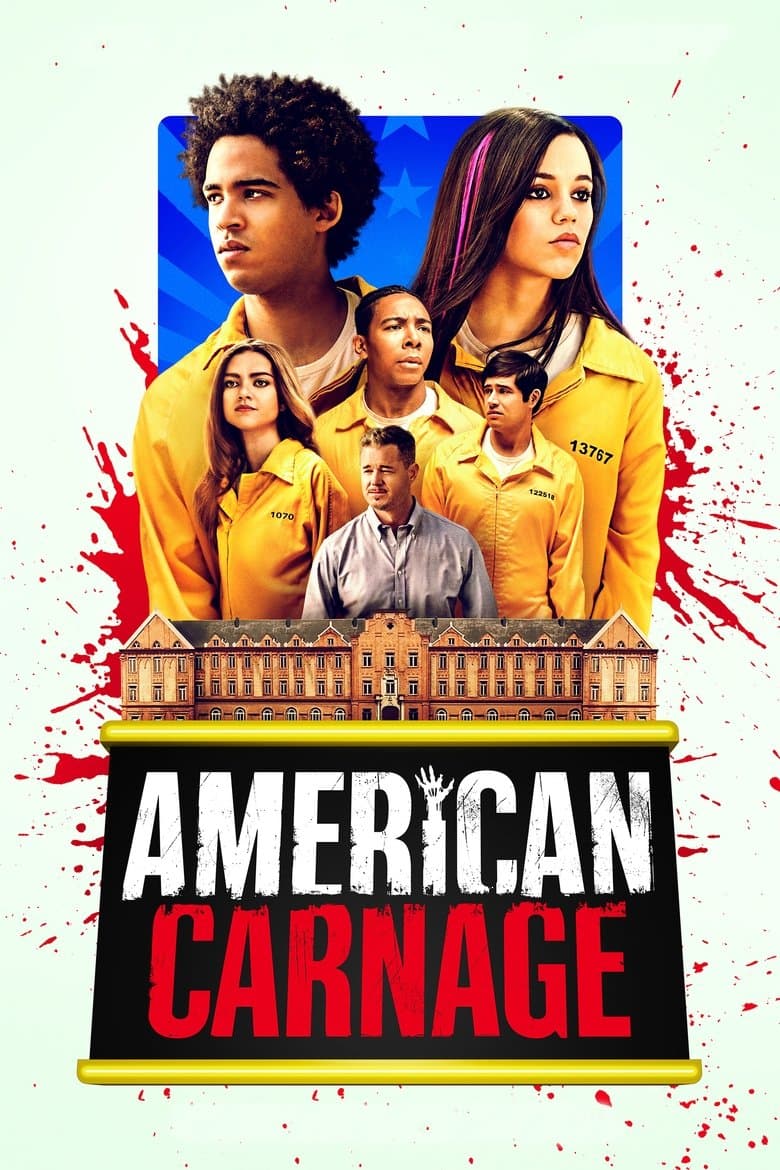
JP is a Texas teenager who works at a fast-food restaurant and tries to protect his mother and sister. A governor orders the arrest of children whose parents came to the country without legal papers, even when the children were born in the United States. JP and other teens avoid deportation by joining a care program at a nursing home, but the home hides a deadly secret. The movie mixes blood, crude jokes, mystery, and horror with a dark story about power and survival.
The film makes immigration and anti-Latino racism part of its main story from the opening news montage through the detention plot and the final reveal. The young group is built around Latino identity, with a black teen and several Latino national backgrounds discussed on screen. Characters joke about race, work, citizenship, and being used for low-paid labor, while the governor and care-home leaders stand for fear-based politics and exploitation. These ideas are not a side note because JP's family, legal danger, work, and fight to escape all depend on them.
Community feedback
Was our 84% Woke rating accurate?
Breakdown
These are the editorial factors and ratings behind our score for American Carnage.
Woke representation / casting
The detained youth form a mixed group built around Latino identity, with a black teen and a character with Argentine parents. These characters are the main sympathetic group, and the film gives their race and national backgrounds direct dialogue. Public coverage also presents the group as an all-Latinx ensemble with different races and nationalities. The governor and care-home leaders are white, so the pattern does not cover every major role.
52%
Woke political dialogue
The opening montage uses speeches and news clips about immigrants and border politics. The governor's order is described as an election move, and characters argue about citizenship, racism, and voting. Big Mac asks if he was detained for being Latino, Black, or both, while Micah calls herself a Democrat socialist. The villain later says immigrants were used for cheap labor and that they are no longer needed.
64%
Identity-driven story themes
JP's family is threatened because his mother lacks legal papers, so identity decides who can stay free. The detained youth face anti-Latino abuse, forced care work, and a plan that treats their bodies as useful resources. The film presents different Latino and black characters who share the same danger. Their fight against the governor and care-home leaders makes immigration, race, and representation central to the plot.
76%
Western institutional / cultural critique
The governor uses fear of immigrants to win an election, and the courts fail to stop him. The film shows police detention, legal systems, news media, and elder care as tools that powerful people can abuse. A villain praises manifest destiny, cheap immigrant labor, and automation while calling JP obsolete. The story also attacks the way the country treats old people, so its critique reaches beyond immigration.
62%
Woke character or canon changes
Not relevant. The film is an original story rather than an adaptation of known characters or real events. It does not change established characters or canon.
0%
Anti-woke backlash and complaints
A Rotten Tomatoes audience review calls the movie a political hit job and says conservative Americans are painted as cartoon villains. An IMDb user review complains that white or lighter-skinned characters are villains while immigrants are heroes. An Italian film-site review labels the movie strongly politicized and woke. The supplied X pass found no large right-leaning response, boycott, or review bomb, so the backlash remains scattered.
30%
Creator track record context
Diego Hallivis has a stored score of 60/100, and Julio Hallivis has 55/100, based on recurring work about immigration, racism, and government power. Their interviews about this film connect the story to how politics uses Latinos and how one class consumes another. Carla Hool has a stored score of 40/100 because she has spoken about diversity and Latinx casting. Braden Aftergood at 8/100 and Andres Rosende at 15/100 add little activist context.
55%
Production

Movie · 2022
A college reunion goes awry when Pete suspects his friends may be out to get him... As their weekend getaway grows more and more uncomfortable, should Pete be worried about his…

Movie · 2017
In downtown Madrid, a series of mysterious gunshots trap a motley assortment of people in a decrepit bar.

Movie · 2016
Ronnie runs a Disco walking tour with his son, Brayden. When a sexy woman takes the tour, it begins a competition between father and son for her love.

Movie · 2025
After escaping from a mental hospital, a violent sociopath named Paul begins a dangerous rampage targeting Sofia, a world-famous pop star.

Movie · 2022
When twin brothers arrive home to find their mother’s demeanor altered and face covered in surgical bandages, they begin to suspect the woman beneath the gauze might not be their…

Movie · 2019
When their car breaks down, a couple on the run headed southbound for a fresh start in the Sunshine State break into a nearby house looking for a new set of wheels.
Movie · 2020
Hubie Dubois, despite his devotion to his hometown of Salem, Massachusetts (and its legendary Halloween celebration), is a figure of mockery for kids and adults alike.

Movie · 2019
Agent Sai Srinivasa Athreya is a brilliant, underrated detective from Nellore who runs an agency called FBI which sees no business.
