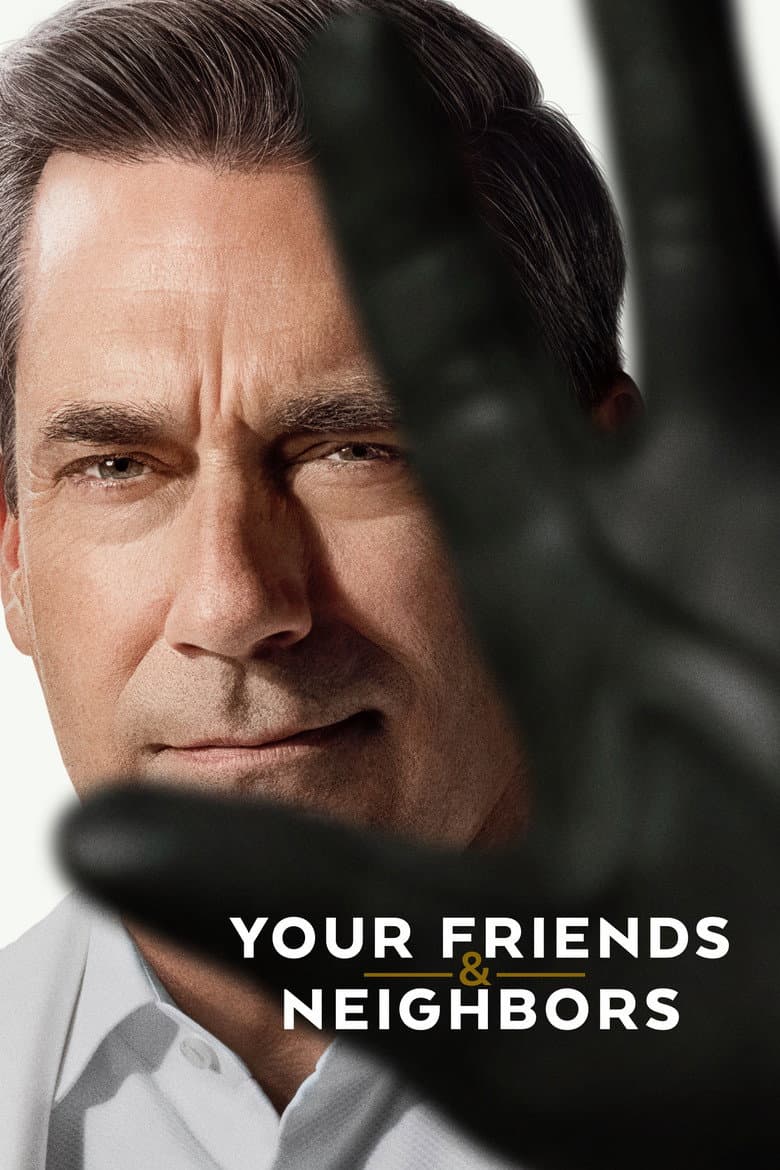
Started April 10, 2025 · Returning Series · Based on 2 seasons, 19 episodes through May 21, 2026 · TV-MA
Andrew “Coop” Cooper is a rich hedge fund manager whose marriage and job fall apart at the same time. He starts stealing watches, art, cash, and other luxury goods from his neighbors in Westmont Village, a rich New York suburb. His crimes bring trouble from the police, his family, his former friends, and a dangerous new neighbor. The show uses dark jokes, sex, murder, and family drama to mock a life built on money, status, and keeping up appearances.
The main woke elements appear in a few clear places. Season 2 gives Jewish identity a full Passover meal episode, and the creator openly calls that a representation choice. One Season 2 scene has a character attack Ivy League donors and speak about capitalism, systemic racism, anti-Semitism, sexism, and rich people taking the planet’s wealth. Season 1 also shows two people treating Catholic Communion wafers as food and beginning sex in a church pew. Season 2 uses menopause, aging, and female sexual needs as major story lines, but the show is still mainly a crime story about rich adults, cheating, grief, and personal failure.
Community feedback
Was our 40% Woke rating accurate?
Breakdown
These are the editorial factors and ratings behind our score for Your Friends & Neighbors.
Woke representation / casting
The main cast includes a black former basketball star, a Korean American accountant, and a Latina housekeeper in major roles. Season 2 puts Jewish identity on screen through a full Passover seder. Tropper said he wanted to do Jewish representation and worked with Jewish staff on the details. The show does not make race or gender the main conflict, so the identity signal stays limited.
27%
Woke political dialogue
Season 2 episode 1 includes a long speech about college donations and rich families. The speaker says capitalism harmed the planet and calls the Ivy system racist, anti-Semitic, sexist, and unfair. The speaker also says rich families use donations to keep their children in elite schools. The rest of the show mostly discusses crime, sex, family trouble, and money, so this is a sharp but occasional burst of woke political dialogue.
18%
Identity-driven story themes
Season 2 makes a Passover seder central to one episode and treats Jewish ritual as part of the neighbors’ shared life. The episode gives several characters lines about Jewish history, food, and family customs. Season 2 also gives Mel a major story about menopause, aging, sexual needs, and feeling unseen. These themes matter for the newer season, but the full series still centers on crime, marriage, wealth, and grief.
24%
Western institutional / cultural critique
The show repeatedly attacks the rich world it portrays. Coop and Barney question why people buy so much, while a Season 2 speech blames capitalism and elite college systems for helping rich families keep power. Season 1 also turns a Catholic church and Communion wafers into a scene of mockery, food, and sex. The story offers no socialist answer, but its attacks on wealth, elite institutions, and Christianity are clear audience-visible Western institutional / cultural critique.
34%
Woke character or canon changes
Not relevant. original series with no established characters, canon, or historical figures altered for identity or DEI reasons.
0%
Anti-woke backlash and complaints
CatholicVote asked Apple to remove the church scene after Season 1. The Catholic League and National Catholic Register called the scene an anti-Catholic attack and a sign of hostility toward a Western faith. A Catholic podcast host later called for an Apple TV boycott. No large backlash about DEI casting, race swaps, or queer politics was found.
23%
Creator track record context
Jonathan Tropper and Jon Hamm describe the show as a story about consumerism, status, and the emptiness of success. Most key writers and directors have little public activist history. Danielle DiPaolo has a mild focus on gender themes, while Stacie Passon has a strong queer-focused past. Passon worked on two episodes, but the show does not become a queer story or a representation-first project.
32%
Production

TV Show · 2026
Ben Reilly, an aging and down on his luck private investigator in 1930s New York, is forced to grapple with his past life as the city's one and only superhero.
TV Show · 2025
Two lifelong friends in Philadelphia pose as DEA agents to rob small-time drug dealers. It's a perfect grift—until they choose the wrong mark and become targets of a massive…

TV Show · 2017
A financial adviser drags his family from Chicago to the Missouri Ozarks, where he must launder $500 million in five years to appease a drug boss.
TV Show · 2016
The story of Mac Conway, a Marine who returns home to Memphis from Vietnam in 1972 and finds himself shunned by those he loves and demonized by the public.
TV Show · 2019
Gypsy Blanchard struggles to deal with the toxic relationship with her overprotective mother, but her attempts to free herself lead to murder.

TV Show · 2021
The remarkable story of how murderer Charles Sobhraj was captured. As the chief suspect in unsolved murders of young Western travellers across India, Thailand and Nepal’s ‘Hippie…
TV Show · 2020
New Orleans judge Michael Desiato is forced to confront his own deepest convictions when his son is involved in a hit and run that embroils an organized crime family.
TV Show · 2018
Ray Shoesmith is a father, ex-husband, boyfriend and best friend: tough roles to juggle in the modern age. Even harder when you’re a criminal for hire.
