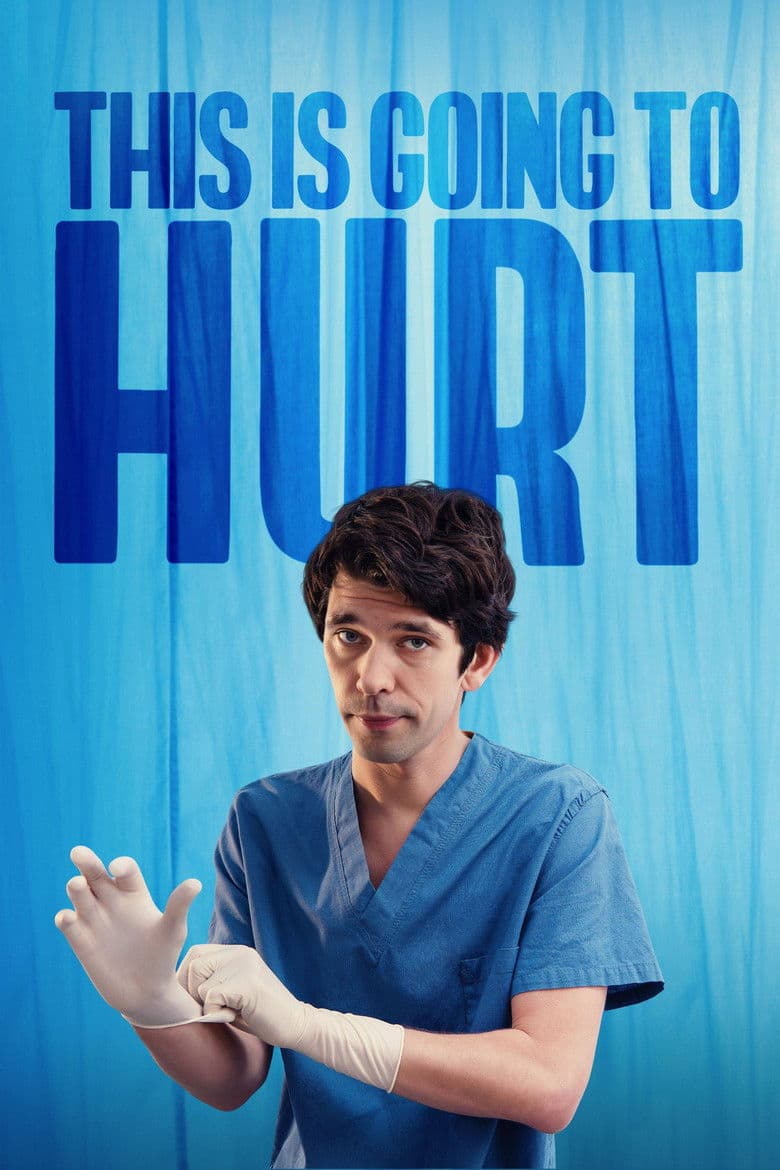
Started February 8, 2022 · Ended · Based on 1 season, 7 episodes through March 22, 2022 · TV-14
This one-season drama follows Adam, a tired junior doctor in a London NHS maternity ward. He rushes between difficult births, sick patients, and long shifts while trying to keep his job and his home life together. He trains Shruti, a smart young doctor who is also close to breaking point. The show mixes sharp jokes with painful medical scenes and a bleak look at burnout.
Adam hides his relationship with his boyfriend, Harry, from parts of his work and family life, so his fear of being known shapes several episodes. The story also follows Shruti, a South Asian doctor, and Tracy, a black head midwife, as they face heavy workloads, racist abuse, sexism, and little support. The hospital is shown as short-staffed and badly managed, and the series links those failures to harm for workers and patients. These themes are recurring and visible, but the main focus stays on medical pressure, grief, and the cost of treating people as if they can work without limits.
Community feedback
Was our 59% Woke rating accurate?
Breakdown
These are the editorial factors and ratings behind our score for This Is Going to Hurt.
Woke representation / casting
The show gives major roles to a gay white doctor, a South Asian female trainee doctor, and a black female head midwife. The London NHS setting makes the ethnic mix believable, so there is no strong mismatch with the story world. The repeated prominence of minority women and a gay lead creates a clear audience-visible representation pattern. The series does not strongly market the casting as a diversity campaign.
26%
Woke political dialogue
The show repeatedly talks about an underfunded NHS, staff shortages, unsafe discharge decisions, and government responsibility. A politician’s ward visit and the final tribunal make public health care part of the season’s conflict. The message favors protecting the NHS and giving workers more support, which is a clear left-leaning theme but is not mainly about identity politics.
32%
Identity-driven story themes
The show makes Adam’s gay identity a continuing part of his life. Adam hides his boyfriend from people at work and from his parents, and his fear of being open harms the relationship. The story shows homophobic attitudes and racist abuse toward Shruti, while women workers face pressure and disrespect. These identity themes recur across the season, but the main plot remains the cost of a broken medical workplace.
48%
Western institutional / cultural critique
The hospital is shown as an institution that overworks young doctors, hides mistakes, and protects senior staff. The ward has too few people and too few beds, so patients are sent home too soon and workers are blamed when care fails. The show also exposes class divisions, racial abuse, and sexist treatment inside the medical system. This critique runs through the season, although it attacks bad management and public neglect more than Western culture as a whole.
46%
Woke character or canon changes
The TV version gives Adam a male partner, Harry, and makes Adam’s gay identity and slow coming out central to his personal story. The source memoir kept the partner’s gender and Adam’s sexuality unclear. The adaptation adds an identity-focused change that recurs across the season. The medical storyline remains the main focus, so this is important but not the whole show.
43%
Anti-woke backlash and complaints
Not present. The supplied X pass found no anti-woke complaints, boycott calls, or clear claims that the show pushed DEI or identity politics. News coverage did report complaints that the birth scenes were misogynistic, but those complaints were not anti-woke backlash.
0%
Creator track record context
Adam Kay has a mild creator-context signal because he is gay and supports junior doctors, NHS funding, and open sex education. Ben Whishaw has spoken about LGBTQ representation, while Naomi de Pear and Holly Pullinger have strong records of backing queer and underrepresented voices. Other cached crew profiles show little political or identity advocacy. This gives the team a mixed but noticeable context signal that matches the show’s gay lead and NHS criticism.
38%
Production

TV Show · 2019
In a city of coaching centers known to train India’s finest collegiate minds, an earnest but unexceptional student and his friends navigate campus life.

TV Show · 2020
After being bullied and discriminated because of her ugly looks, a high school girl transforms herself into a gorgeous "goddess" and quickly rises to fame after mastering the art…
TV Show · 2020
The heartwarming and humorous adventures of a young country vet in the Yorkshire Dales in the 1930s. A remake of the 1978 series.

TV Show · 2022
In disguise as her friend, Ha-ri shows up to a blind date to scare him away. But plans go awry when he turns out to be her CEO — and makes a proposal.

TV Show · 2016
Rebellious Mickey and good-natured Gus navigate the thrills and agonies of modern relationships.
TV Show · 2016
Set nearly a decade after the finale of the original series, this revival follows Lorelai, Rory and Emily Gilmore through four seasons of change.
TV Show · 2019
Following an emotional breakup, tough but tender FBI super-agent Will Chase (codename: “Whiskey Cavalier”) is assigned to work with badass CIA operative Frankie Trowbridge…
TV Show · 2019
Tony had a perfect life. But after his wife Lisa suddenly dies, Tony changes. After contemplating taking his own life, he decides instead to live long enough to punish the world…
