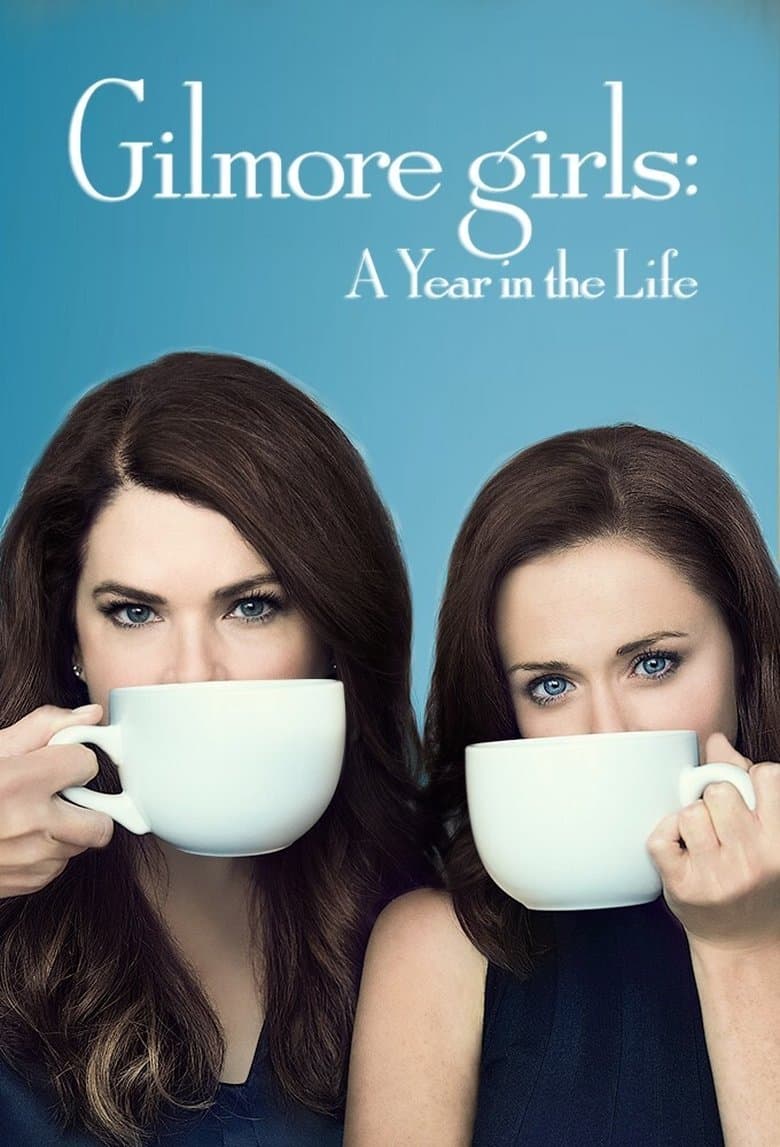
Started November 25, 2016 · Based on 1 season, 4 episodes · TV-14
Gilmore Girls: A Year in the Life follows Lorelai Gilmore, her daughter Rory, and Lorelai’s mother Emily in Stars Hollow, Connecticut. The story begins nearly a decade after the original show and covers one year in four long episodes. Lorelai runs the Dragonfly Inn while trying to settle her future with Luke. Rory struggles to find steady work as a writer and keeps returning to an affair with Logan, who is engaged to another woman. Emily grieves Richard’s death and tries to build a new life.
Most of the revival stays with family, romance, work, grief, and small-town jokes. It also gives Michel a husband and adds Donald as an openly gay town resident, while a planned gay pride parade becomes a brief comic scene. Rory and Lorelai remain strong female leads, and the show values their work, independence, and bond. The revival does not turn those ideas into long political speeches. Its most disputed story choice is Rory’s pregnancy, which repeats Lorelai’s early motherhood in a new generation.
Community feedback
Was our 25% Woke rating accurate?
Breakdown
These are the editorial factors and ratings behind our score for Gilmore Girls: A Year in the Life.
Woke representation / casting
Michel is played by a black actor and says he is married to a man. Donald is shown as an openly gay resident of Stars Hollow. The main cast returns from the original show, so the identity emphasis stays limited.
18%
Woke political dialogue
Taylor announces a planned Stars Hollow gay pride parade at a town meeting. The residents joke that there are not enough gay people to join it, and they point to Donald as an openly gay resident. The scene is short and comic, so it is a small identity-based political moment rather than a message that drives the plot.
12%
Identity-driven story themes
The revival makes Michel’s marriage to a man part of his personal life and gives him a question about having children. Donald’s sexuality is named during the gay pride parade joke. Lorelai, Rory, and Emily carry stories about women’s independence, work, motherhood, and family choices. These ideas are visible, but the revival treats them as personal parts of life and comedy rather than as an activist program.
24%
Western institutional / cultural critique
Not present in this title.
0%
Woke character or canon changes
The original show did not explicitly state Michel’s sexuality, but the revival makes it clear that he is married to a man. That change adds an identity detail to an established supporting character. The change is brief and does not rewrite a main character or change the central story.
15%
Anti-woke backlash and complaints
Not present in this title.
0%
Creator track record context
Writers Amy Sherman-Palladino and Daniel Palladino build fast comedies around complex women, family life, and sharp dialogue. Their work uses a liberal view of female ambition and relationships, but it usually avoids modern DEI or activist messaging. Their track record adds a light background signal because the title itself remains focused on personal stories.
22%
Production

TV Show · 2022
In disguise as her friend, Ha-ri shows up to a blind date to scare him away. But plans go awry when he turns out to be her CEO — and makes a proposal.
TV Show · 2016
After being pulled into the webtoon world created by her father, a surgical resident gets entangled in a murder mystery involving the story's hero.
TV Show · 2020
The heartwarming and humorous adventures of a young country vet in the Yorkshire Dales in the 1930s. A remake of the 1978 series.

TV Show · 2021
A secret life is the one thing they have in common. At school, Hori is a prim and perfect social butterfly, but the truth is she's a brash homebody.
TV Show · 2019
Tony had a perfect life. But after his wife Lisa suddenly dies, Tony changes. After contemplating taking his own life, he decides instead to live long enough to punish the world…

TV Show · 2020
New passions. New fashions. New Emily? A plucky American marketing whiz spreads her wings in life and love after landing her dream job in Paris.
TV Show · 2019
In a city of coaching centers known to train India’s finest collegiate minds, an earnest but unexceptional student and his friends navigate campus life.

TV Show · 2018
Puberty Syndrome—a rumored, mysterious syndrome that only affects those in their puberty. For example, a bunny girl suddenly appeared in front of Sakuta Azusagawa.
