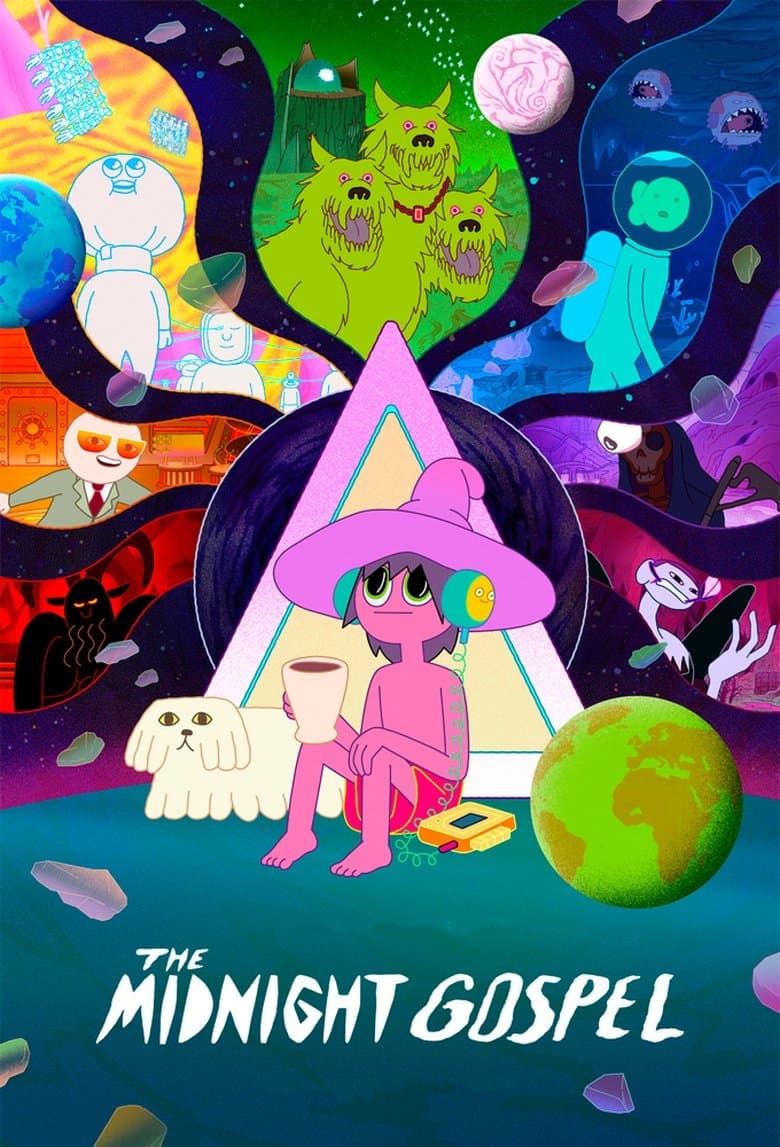
Started April 20, 2020 · Canceled · Based on 1 season, 8 episodes through April 20, 2020 · TV-MA
Clancy Gilroy is a lazy spacecaster who lives on the Chromatic Ribbon with a failing multiverse simulator. He jumps into dying worlds to interview strange residents while ignoring repairs, money, and calls from his family. Each trip brings zombies, clown creatures, magic, monsters, or a strange journey through death. The show mixes crude jokes, gore, sex, drugs, bright colors, and serious talks about grief, love, birth, and dying.
The clearest political material appears in the talks about drug use and the American funeral business. Episode 1 treats drugs as tools whose harm depends on how people use them, while episode 7 attacks paid embalming and calls the funeral trade a capitalist system. The season also presents meditation, Buddhism, magic, reincarnation, and personal spiritual truth as useful ways to face pain. These ideas shape several interviews, but race, gender, sexuality, and identity politics do not drive Clancy's story.
Community feedback
Was our 32% Woke rating accurate?
Breakdown
These are the editorial factors and ratings behind our score for The Midnight Gospel.
Woke representation / casting
Not present. The show uses surreal creatures and guest voices instead of a realistic human cast. It does not frame its character or voice choices around race, gender, or diversity.
0%
Woke political dialogue
Episode 1 treats drugs as neither good nor bad and stresses how setting and personal use can make them safer or more dangerous. Clancy and the President discuss marijuana, psychedelics, addiction, and public health during a zombie attack. Episode 7 adds a direct attack on the capitalist funeral business. These ideas appear in two episodes, but they do not form a continuing political plot.
34%
Identity-driven story themes
Not present. The main themes are meditation, grief, forgiveness, birth, death, and personal spiritual change. The story does not make race, gender, sexuality, or group identity a central character issue.
0%
Western institutional / cultural critique
Episode 7 calls the American funeral trade a death industrial complex and a capitalist model. Death says funeral workers turned grief into a paid service and urges families to care for the dead at home. Episode 3 also shows a powerful politician father abusing his son, but it does not connect that abuse to a wider modern system. This is a strong one-episode critique, not the season's main story.
35%
Woke character or canon changes
Not relevant. The show is an original animated series built from podcast interviews. It does not adapt established characters, canon, or real historical figures.
0%
Anti-woke backlash and complaints
Not present. Public reaction focuses on the show's format, drug talk, spiritual claims, gore, and hard-to-follow stories. No clear anti-woke backlash about DEI, identity politics, or left-wing messaging became a notable part of coverage.
0%
Creator track record context
Pendleton Ward is mainly known for broad, subversive humor, and no high-confidence record of identity-focused activism is attached to him. Duncan Trussell has publicly supported LGBT rights, women's reproductive rights, universal health care, universal basic income, and Bernie Sanders. He has also explored anti-capitalist ideas, which fits the show's funeral-business criticism. The season still focuses more on spirituality and death than on identity politics.
28%
Production
TV Show · 2020
Smiling Friends Inc. is a small company whose main purpose is to bring happiness and make people smile. The series follows the day-to-day lives and misadventures of its…
TV Show · 2019
Emma, Norman and Ray are the brightest kids at the Grace Field House orphanage. And under the care of the woman they refer to as “Mom,” all the kids have enjoyed a comfortable…
TV Show · 2019
After a demon attack leaves his family slain and his sister cursed, Tanjiro embarks upon a perilous journey to find a cure and avenge those he's lost.
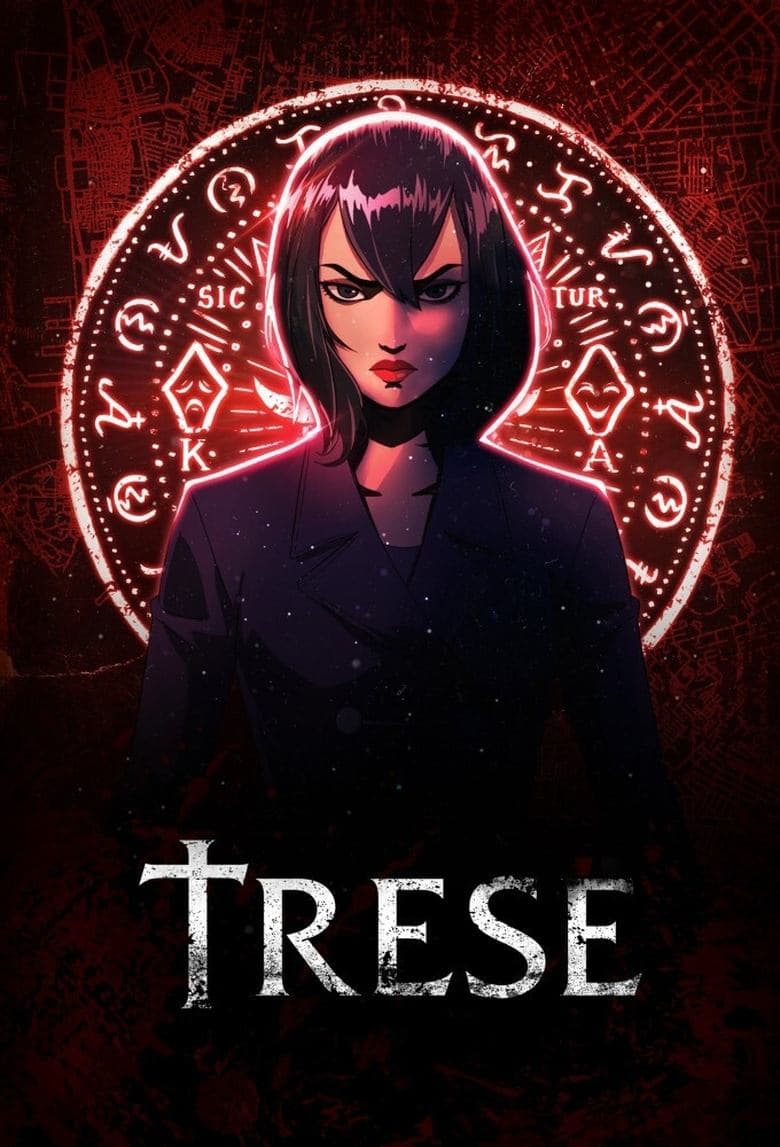
TV Show · 2021
In Manila, where dark supernatural forces pervade the criminal underworld, it’s up to Alexandra Trese to keep the peace — but there’s a storm brewing.
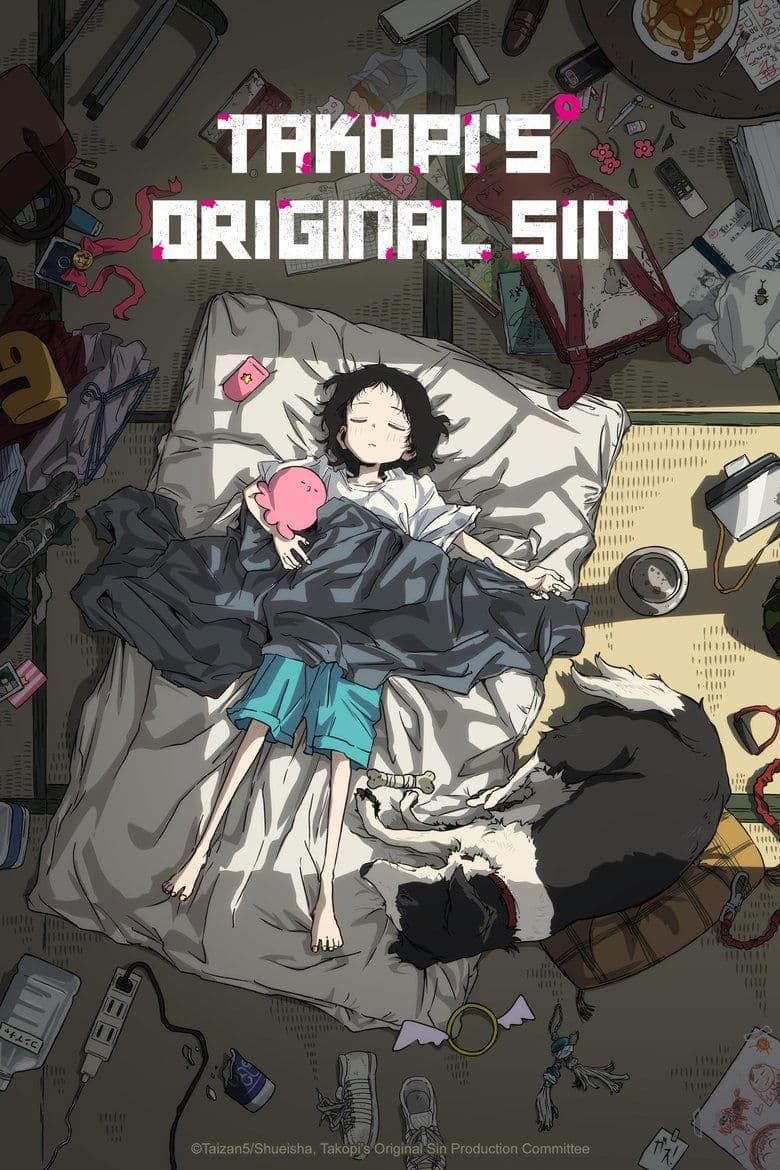
TV Show · 2025
A Happy alien, Takopi, lands on Earth with one mission: to spread happiness! When he meets Shizuka, a lonely fourth grader, he vows to bring back her smile using his magical Happy…
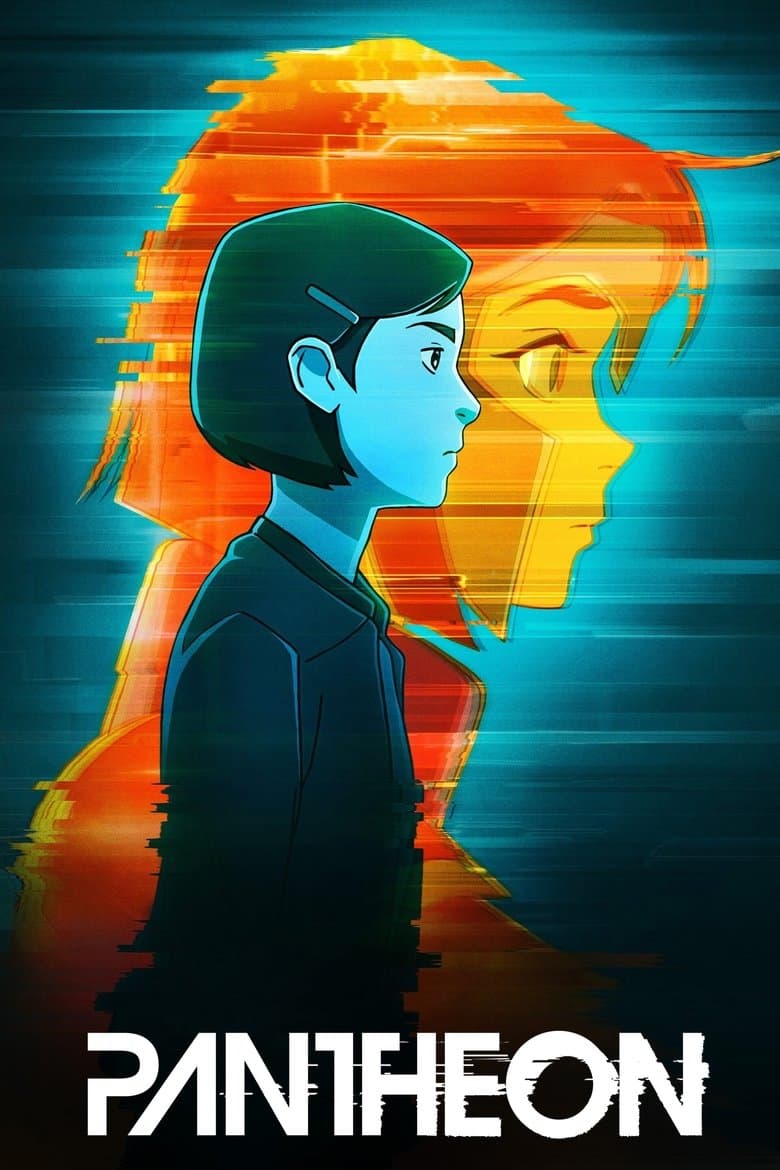
TV Show · 2022
A bullied teen receives mysterious help from someone online: a stranger soon revealed to be her recently deceased father, David, whose consciousness has been uploaded to the Cloud…
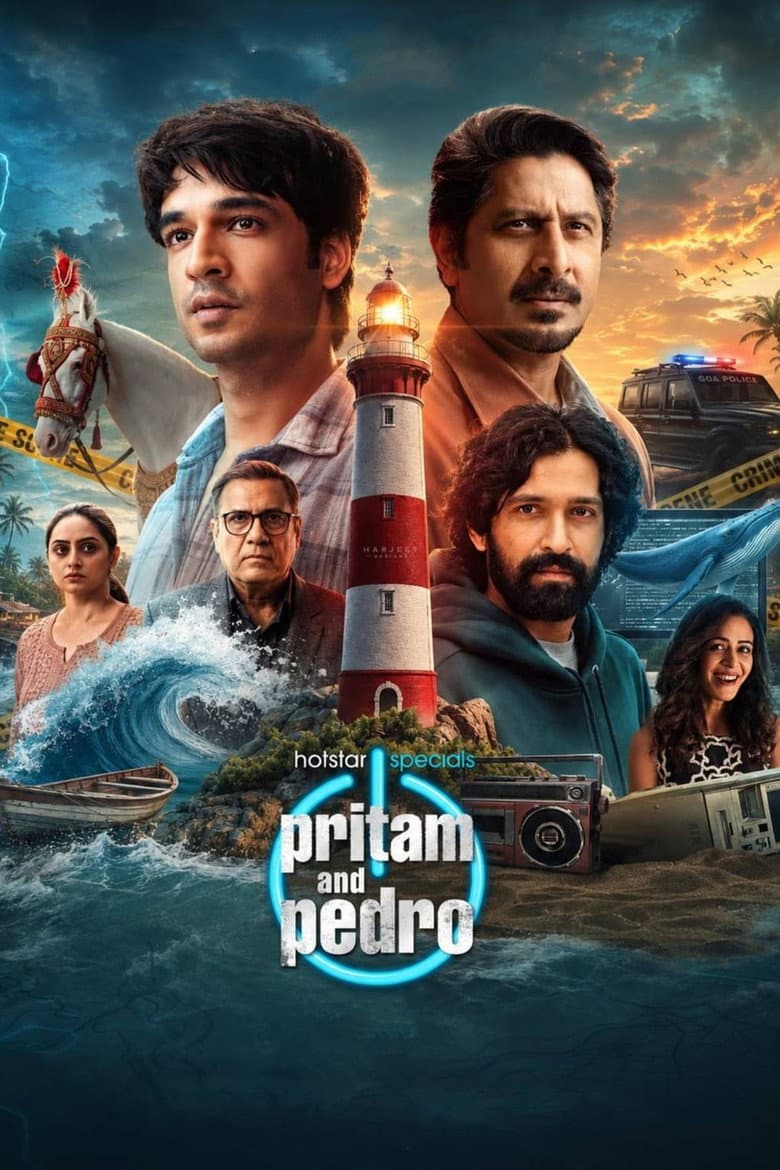
TV Show · 2026
The dynamic between the two contrasting personalities, a seasoned cop who prefers old-school methods and a tech-savvy cop who relies on modern technology for investigations, as…
TV Show · 2022
A spy, an assassin and a telepath come together to pose as a family, each for their own reasons, while hiding their true identities from each other.
