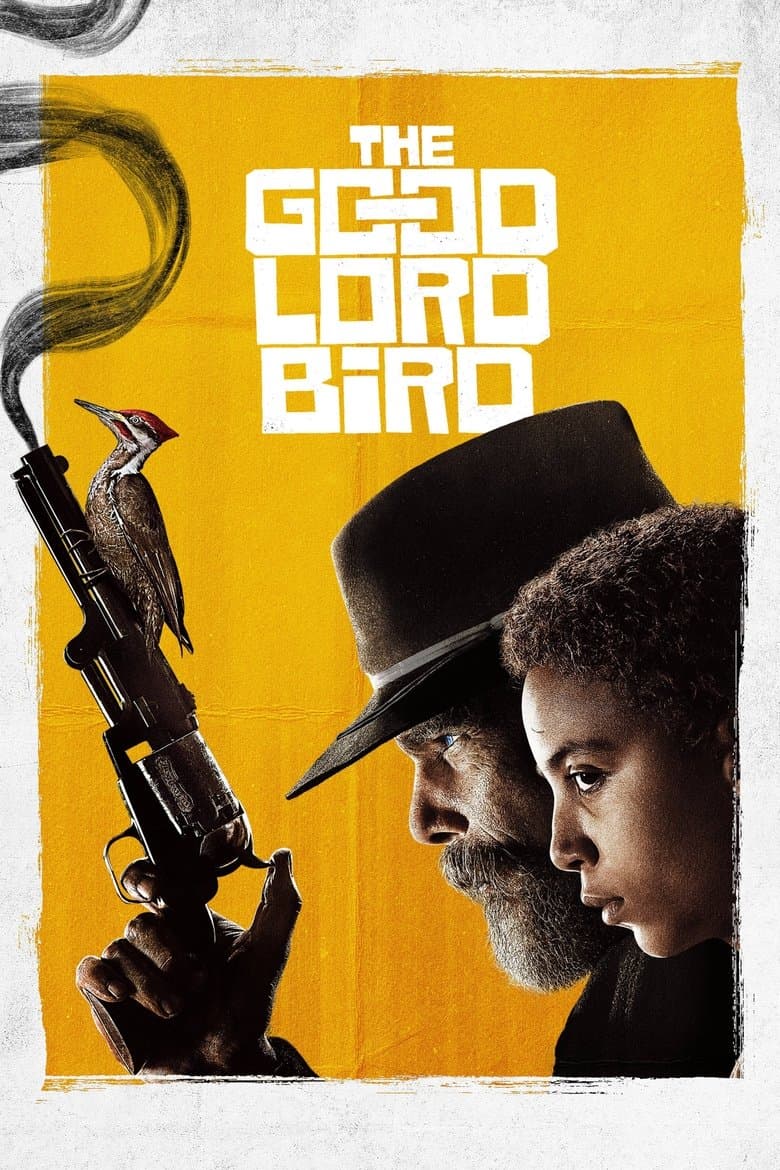
Started October 4, 2020 · Ended · Based on 1 season, 7 episodes through November 15, 2020 · TV-MA
Henry “Little Onion” Shackleford is a newly freed black teenager who guides the story. John Brown takes him across Kansas, the North, and Virginia while Brown tries to start an armed fight against slavery. Onion meets Frederick Douglass and Harriet Tubman before the failed 1859 raid on Harpers Ferry. The show mixes harsh violence, dark jokes, Bible talk, and a story about growing up.
Race and freedom shape every major event because the story follows a boy escaping slavery and joining a fight for freedom. The show gives Onion a clear voice and lets him question Brown's white-savior role, while Tubman, Douglass, Bob, and Sibonia show different Black views of the fight. Brown's religious belief and his call for violent action are treated as both brave and reckless. Onion's forced disguise as a girl creates repeated gender jokes, but the story treats it as survival and confusion rather than a queer identity story.
Community feedback
Was our 37% Woke rating accurate?
Breakdown
These are the editorial factors and ratings behind our score for The Good Lord Bird.
Woke representation / casting
Not present. The show casts black actors as enslaved people, Frederick Douglass, Harriet Tubman, and other abolitionists. Those roles fit the story's time, place, and subject, and the show does not make casting a diversity-first message.
0%
Woke political dialogue
Brown, Douglass, Tubman, and other characters give repeated speeches about slavery, freedom, and the nation's moral failure. Brown's speeches also mock white audiences that discuss Black suffering without listening to black people. The language stays in the historical setting, so the modern woke signal is limited.
24%
Identity-driven story themes
The show repeatedly centers black characters who question white control over the fight against slavery. Onion's narration points out the white-savior problem, and Tubman, Douglass, Bob, and Sibonia give different Black views of freedom and revolt. These ideas recur from the early episodes through Harpers Ferry, so the identity-driven framing shapes the season. The show still presents these ideas through a 1850s story rather than a current campaign.
38%
Western institutional / cultural critique
The show mocks white abolitionist crowds that talk about Black suffering while black people stay silent. It also shows Brown's Christian certainty and armed mission as dangerous, even when his cause is just. Onion, Douglass, Tubman, and other black characters expose the limits of white allies and religious hero stories. This recurring critique points toward white ally culture and the wider social order around Brown.
28%
Woke character or canon changes
Not relevant. The show changes real events and historical figures for a comic adaptation of James McBride's novel. Those changes support the fictional Onion narrator and the show's tone, not a woke or identity-driven rewrite of canon.
0%
Anti-woke backlash and complaints
Not present. The separate X pass found no anti-woke reaction, and reviewed news coverage had no clear DEI or identity-politics complaint. Some viewers debated historical accuracy and the gender disguise, but those are different complaints.
0%
Creator track record context
The available creator profiles show a mixed record. Mark Richard, Ethan Hawke, James McBride, and most of the crew have low or mild scores, while Erika Johnson, Kevin Hooks, Darnell Martin, and Kim Taylor-Coleman have stronger race or diversity-related context. Hawke's interviews frame the series around slavery, John Brown's faith, and its relevance during the 2020 racial debate. This supports a moderate context score, but it does not show a broad activist campaign around the title.
35%
Production
TV Show · 2020
A wary CIA officer investigates a charismatic man who sparks a spiritual movement and stirs political unrest. Who exactly is he? And what does he want?
TV Show · 2022
Bosch is now making a living as a private investigator two years after he quit the LAPD and finds himself working with one time enemy and top-notch attorney Honey “Money”…
TV Show · 2022
Oscar-winning producer Al Ruddy’s never before revealed experiences of making the iconic 1972 film The Godfather that Francis Ford Coppola directed and adapted with Mario Puzo.

TV Show · 2022
This sweeping saga chronicles the hopes and dreams of a Korean immigrant family across four generations as they leave their homeland in an indomitable quest to survive and thrive.
TV Show · 2019
The true story of one of the worst man-made catastrophes in history: the catastrophic nuclear accident at Chernobyl.
TV Show · 2021
Follow the Dutton family as they embark on a journey west through the Great Plains toward the last bastion of untamed America.
TV Show · 2021
Inspired by the true story of Marty and the therapist who turned his life around...then took it over. When he first meets Dr. Ike, Marty just wants to get better at boundaries.
TV Show · 2026
Rip Wheeler and Beth Dutton gamble everything on a new life in South Texas, but the promise of building a future far from the ghosts of Yellowstone quickly collides with brutal…
