Started March 20, 2020 · Ended · Based on 1 season, 6 episodes through March 20, 2020 · TV-14
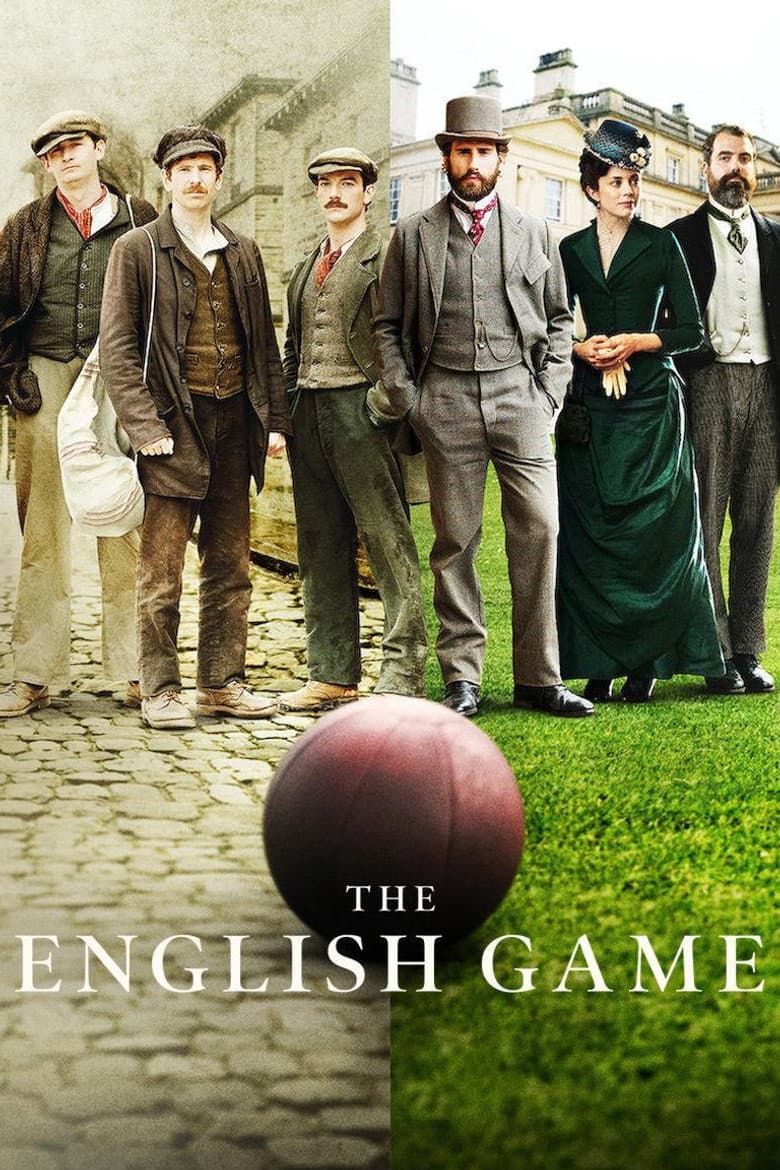
The English Game is a six-part drama set in England and Scotland in the 1870s. Fergus Suter is a skilled Scottish player who joins the mill team in Darwen, while Arthur Kinnaird leads the wealthy Old Etonians. The two men face each other as football moves from private schools toward working towns and paid players. The show mixes football matches with family pain, strikes, romance, and a serious period drama tone.
Class conflict drives nearly every episode, as factory workers fight wage cuts and the Football Association tries to protect the old amateur game. The show also follows women whose choices are limited by marriage, pregnancy, and shame, especially Martha Almond and Alma Kinnaird. Arthur changes from a defender of the old order into a supporter of working-class teams, while Fergus argues that players who work all day should be allowed to earn money. These ideas are clear and recurring, but they are presented through a Victorian sports story rather than a modern identity campaign.
Community feedback
Was our 26% Woke rating accurate?
Breakdown
These are the editorial factors and ratings behind our score for The English Game.
Woke representation / casting
Not present. The main characters are white British or Scottish people in a 19th-century English and Scottish story. The women and working-class players fit the setting, and the show does not frame the casting as a diversity message.
0%
Woke political dialogue
Workers repeatedly speak about wage cuts, union membership, and their right to representation. The team stops work and play after the mill owners cut wages, and the workers later strike and riot. Fergus and Arthur also argue that working men should share control of football and that paid players should not be shut out. The ideas are clear, but they are tied to the period's labor dispute rather than modern identity politics.
20%
Identity-driven story themes
The show repeatedly follows women who lose status or choices because of pregnancy, marriage, and social rules. Martha is an unmarried mother who is fired after her past with a married mill owner becomes known. Alma helps a woman recover a baby taken by a refuge, and her own miscarriage shapes her actions. These scenes give the series a clear message about the unfair treatment of women, but the theme stays inside the Victorian story.
29%
Western institutional / cultural critique
The Football Association is shown as an elite body that tries to keep working-class teams and paid players outside the game. Mill owners and guild leaders are shown cutting wages while workers have little power. The women's refuge and its adoption system are also shown as harsh toward unmarried mothers. The show criticizes these period institutions, but it does not turn that criticism into a broad modern attack on Christianity or Western culture.
18%
Woke character or canon changes
Not relevant. The show changes teams, dates, family events, and relationships to create drama. Those changes are ordinary historical-fiction choices, and none is used to add an identity-focused message.
0%
Anti-woke backlash and complaints
The supplied X pass found no anti-woke posts or specific complaints. One verified audience review called the series a “leftie-infused period stereotype.” A right-leaning review criticized its focus on class struggle, labor strikes, and pregnancies, but it did not describe the show as woke or DEI. The visible backlash was small and scattered.
5%
Creator track record context
The cached scores for Tony Charles, Oliver Cotton, and Sam Hoare are very low, and Julian Fellowes is only mildly scored. Fellowes has a clear record of class-focused period stories, which fits this show's concern with old elites and working people. Tim Fywell has one limited women-focused production signal, while Birgitte Stærmose is mainly linked to human stories about war's effects. The group has no strong shared record of activist or DEI work.
14%
Production
TV Show · 2016
The love story of young Countess Natasha Rostova and Count Pierre Bezukhov is interwoven with the Great Patriotic War of 1812 against Napoleon's invading army.

TV Show · 2020
A wary CIA officer investigates a charismatic man who sparks a spiritual movement and stirs political unrest. Who exactly is he? And what does he want?
TV Show · 2026
As the Kargil War erupts between India and Pakistan, the Golden Arrows squadron of the Air Force takes flight on a dangerous mission behind enemy lines.
TV Show · 2024
In Japan in the year 1600, at the dawn of a century-defining civil war, Lord Yoshii Toranaga is fighting for his life as his enemies on the Council of Regents unite against him…
TV Show · 2024
The powerful real-life story of Lali Sokolov, a Jewish prisoner who was tasked with tattooing ID numbers on prisoners' arms in the Auschwitz-Birkenau concentration camp during…
TV Show · 2021
Inspired by the true story of Marty and the therapist who turned his life around...then took it over. When he first meets Dr. Ike, Marty just wants to get better at boundaries.
TV Show · 2022
Oscar-winning producer Al Ruddy’s never before revealed experiences of making the iconic 1972 film The Godfather that Francis Ford Coppola directed and adapted with Mario Puzo.
TV Show · 2019
In the 1960s, Israeli clerk-turned-secret agent Eli Cohen goes deep undercover inside Syria on a perilous, years-long mission to spy for Mossad.
