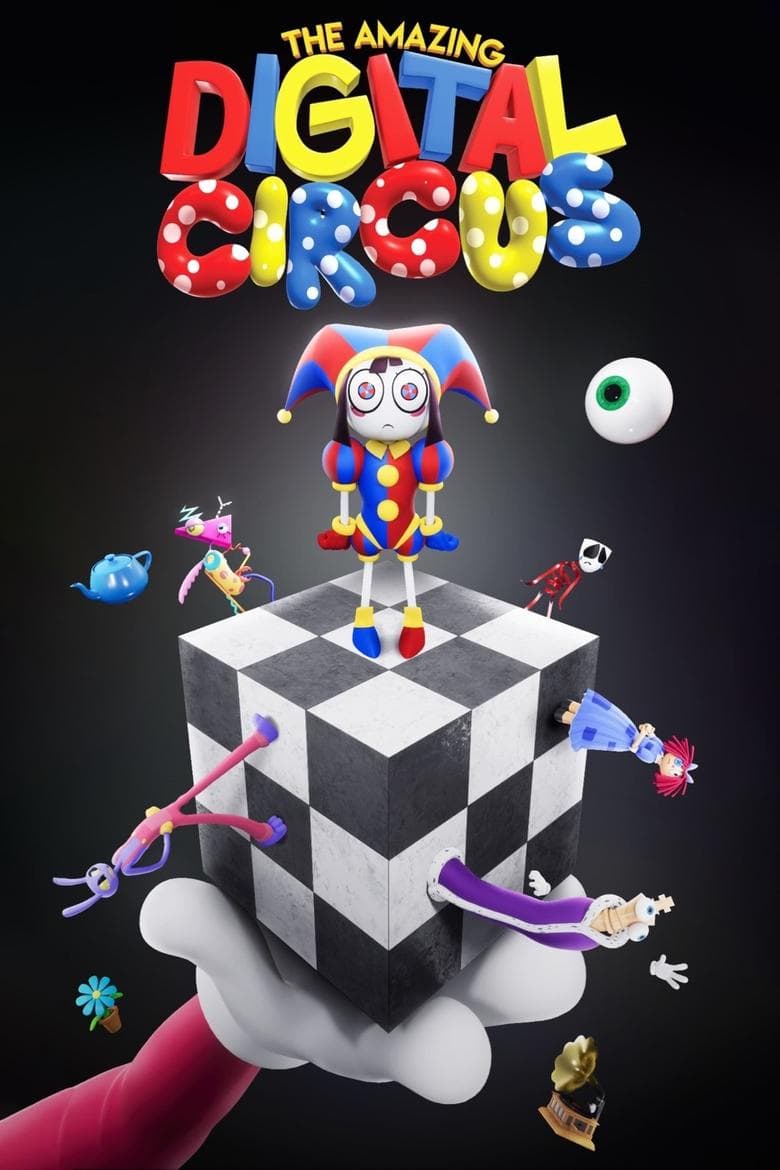
Started October 13, 2023 · Returning Series · Based on 1 season, 9 episodes through March 20, 2026 · TV-PG · 26 min
Pomni is a young woman who wakes up inside a bright virtual circus after putting on a headset. Caine, a playful but controlling AI, gives Pomni and five other trapped humans strange adventures while hiding the truth about their prison. The group faces monsters, broken memories, fear, and the risk of turning into strange creatures and losing their minds. The show mixes silly jokes, colorful toy-like animation, dark horror, and questions about how people keep going when escape seems impossible.
The clearest woke element is Zooble, a main character who is called by the pronouns they and them in the English version and has no fixed gender label. Zooble often changes their mix-and-match body because no version feels right, and episode 3 gives this struggle a full therapy scene. Later episodes show Zooble becoming more comfortable with changing parts, so the identity theme returns across the season. The rest of the show focuses more on trauma, grief, friendship, control, and finding meaning in a trapped life than on politics or wider social issues.
Community feedback
Was our 37% Woke rating accurate?
Breakdown
These are the editorial factors and ratings behind our score for The Amazing Digital Circus.
Woke representation / casting
Zooble is a prominent character whose mix-and-match body and use of the pronouns they and them make gender identity visible to the audience. The other trapped humans are cartoon avatars, not a clear race or ethnicity mix. The show gives no diversity-first casting message. This makes the identity representation noticeable but limited.
30%
Woke political dialogue
Not present. No political or activist dialogue. Characters discuss personal traumas, relationships, and absurd situations in the digital world.
0%
Identity-driven story themes
Zooble repeatedly says that their digital body feels wrong, even after they switch its parts. The English show calls Zooble by the pronouns they and them, while their gender has no fixed label. Episode 3 gives this struggle a full therapy scene, and episode 7 shows Zooble becoming more at ease with changing parts. The larger story still centers on being trapped, trauma, grief, friendship, and finding meaning, so this is a recurring subplot rather than the whole show.
45%
Western institutional / cultural critique
Not present. The show satirizes forced entertainment and entrapment in a digital simulation run by a chaotic AI. There is no framing of real-world institutions, patriarchy, capitalism, or systemic identity issues.
0%
Woke character or canon changes
Not relevant. This is an original IP with no established characters, source material, or historical figures reinterpreted through identity or DEI lenses.
0%
Anti-woke backlash and complaints
A few online comments call the show woke or complain about Zooble’s pronouns and gender presentation. Those comments target the show’s visible identity element, but they are small and mostly come from fringe fan discussions. Larger disputes concern fandom behavior, character focus, and AI copying of actors’ voices. No major news report found a sustained anti-DEI campaign against the show.
9%
Creator track record context
Gooseworx is a trans woman, and Jasmine Yang is also a trans woman. Public summaries show limited wider political activism from both people, while the other listed producers have no known activist record. Gooseworx’s interviews describe a strange dark comedy with deeper character stories and human psychology. This gives the Zooble subplot some creator context, but it does not show a broad activist pattern.
28%
Production
TV Show · 2025
Two outlaws must navigate the galaxy's dangerous underworld as they chart their destinies.
TV Show · 2020
Merlin’s apprentice joins Arcadia’s heroes on a time-bending adventure in Camelot, where conflict is brewing between the human, troll and magical worlds.
TV Show · 2026
After the Clone Wars, Maul plots to rebuild his criminal syndicate on a planet untouched by the Empire.
TV Show · 2021
The 'Bad Batch' of elite and experimental clones make their way through an ever-changing galaxy in the immediate aftermath of the Clone Wars.
TV Show · 2022
Journey into the lives of two distinctly different Jedi from the prequel era – Ahsoka Tano and Count Dooku. Each will be put to the test as they make choices that will define…
TV Show · 2021
Frozen’s beloved snowman retelling several classic Disney tales as only he can.
TV Show · 2022
There's no guarding the galaxy from this mischievous toddler! Get ready as Baby Groot takes center stage in his very own collection of shorts, exploring his glory days growing up…
TV Show · 2018
The Boss Baby brings his big brother Tim to the office to teach him the art of business in this animated series sprung from the hit film.
