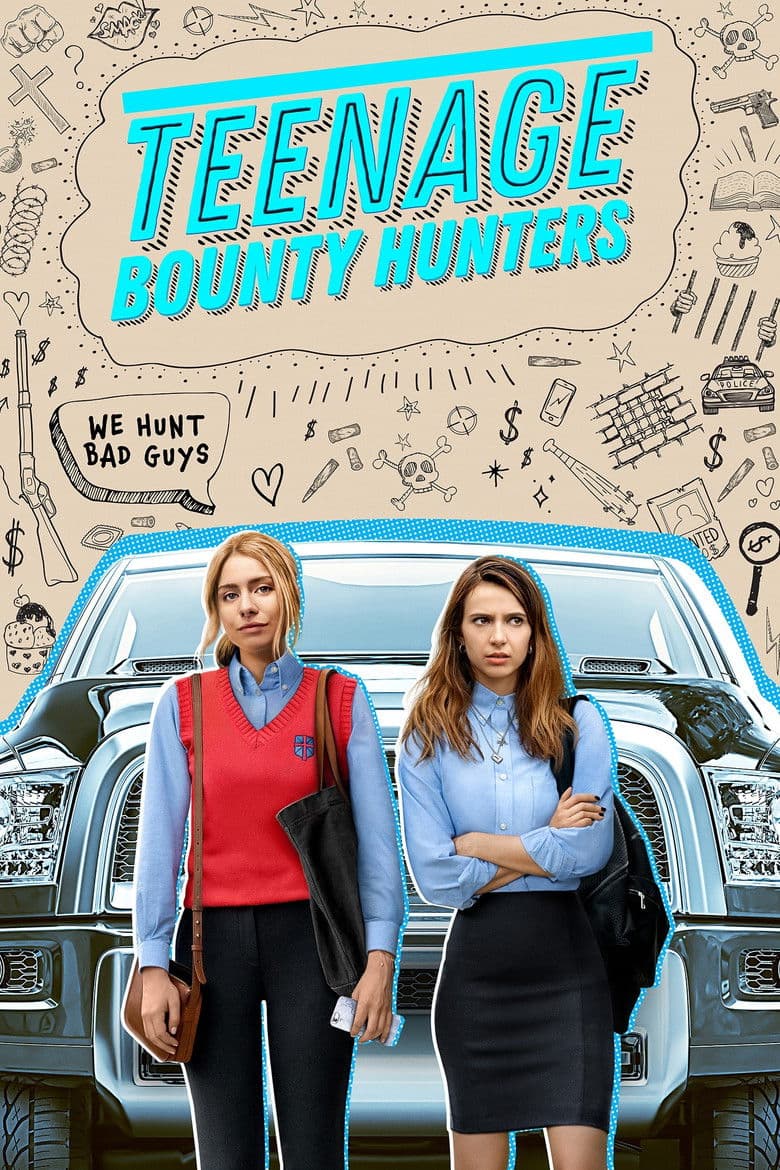
Started August 14, 2020 · Canceled · Based on 1 season, 10 episodes through August 14, 2020 · TV-MA · 49 min
Sterling and Blair Wesley are sixteen-year-old twin girls who attend a strict Christian school in suburban Atlanta. After they wreck their father’s truck, they begin helping Bowser Jenkins, a veteran bounty hunter, catch people who skipped bail. The sisters hide this job from their parents while dealing with school pressure, family secrets, dating, and sex. The show mixes silly action, sharp jokes, family drama, and a darker mystery.
The show gives Sterling a major story about attraction to boys and girls. She falls for April, a former friend and rival who identifies as a lesbian, and the two begin a secret relationship while trying to stay part of their Christian community. The sisters also challenge rules about sex before marriage, shame, and what a good Christian girl should be. The story presents female sexual desire as something the girls can discuss and control, while it treats some older Christian and Southern social rules as unfair. The same-sex romance becomes especially important in the second half, but the bounty hunts and the twins’ family mystery remain central.
Community feedback
Was our 58% Woke rating accurate?
Breakdown
These are the editorial factors and ratings behind our score for Teenage Bounty Hunters.
Woke representation / casting
The two white teenage girls become the action leads and are shown as skilled with guns and bounty work. Coverage framed them as female action heroes, and Jordan said choosing gun-toting girls was deliberate. The show also includes a prominent black mentor and an interracial teen relationship. The modern Atlanta setting makes the racial mix plausible, but the strong female-action focus gives this a mild score.
30%
Woke political dialogue
A few episodes discuss racism at a country club, Confederate statues, an abortion-clinic bombing, and sex rules at a Christian school. These topics appear inside family and bounty cases rather than long political speeches. The show questions some Southern and religious attitudes, but politics is not the main story.
18%
Identity-driven story themes
Sterling’s attraction to girls and boys becomes a main thread from the middle of the season through the finale. Sterling and April move from enemies to a secret romance while remaining in a strict Christian school. The show presents sex before marriage and female pleasure as choices the girls can discuss and control. These themes recur across several episodes and shape the girls’ relationships, but bounty work and family secrets share the story.
55%
Western institutional / cultural critique
The school repeatedly shames sex before marriage and treats being gay as something that must be hidden. Sterling and April keep their faith while rejecting shame and judgment. The show also exposes a racist country club and Confederate symbols, while the family mystery includes an abortion-clinic bombing. This critique recurs in school and family stories, but the show gives some Christian characters warmth and does not reject Christianity itself.
38%
Woke character or canon changes
Not relevant. The show is an original Netflix series. It does not adapt an established character, book, comic, or real historical event.
0%
Anti-woke backlash and complaints
One user review called the show “woke” while objecting to the sexual opening and the lack of bounty hunting. Most published reaction praised the cast, humor, and queer story. News coverage centered on cancellation and fan attempts to save the show, so anti-woke backlash appears small and scattered.
5%
Creator track record context
The supplied creator context rates Kathleen Jordan at 72 and Jenji Kohan at 68. Several writers, including Robert Sudduth, Zoë Jarman, Tara Herrmann, and Aziza Barnes, have supplied scores from 54 to 88. Other listed writers, directors, and producers range from low to mid scores. The strongest creator signal comes from Jordan, Kohan, and the writers’ room.
68%
Production
TV Show · 2019
In this gritty and sometimes bloody tale, sixteen year-old Wayne sets out on a dirt bike with his new crush Del to take back the 1978 Pontiac Trans Am that was stolen from his…
TV Show · 2022
With the aid of unexpected friends, a gifted but introverted student confronts bullies and violent foes — unaware of how dangerous his world will become.
TV Show · 2016
In 18th-century North America, ruthless trappers and entrepreneurs fight to wrest control of the fur trade from the mighty Hudson's Bay Company.
TV Show · 2018
When CIA analyst Jack Ryan stumbles upon a suspicious series of bank transfers his search for answers pulls him from the safety of his desk job and catapults him into a deadly…
TV Show · 2016
Lone-wolf detective Angie Tribeca and a squad of committed LAPD detectives investigate the most serious cases, from the murder of a ventriloquist to a rash of baker suicides.
TV Show · 2026
A century before the events of Game of Thrones, two unlikely heroes wandered Westeros: a young, naive but courageous knight, Ser Duncan the Tall, and his diminutive squire, Egg.
TV Show · 2018
This Karate Kid sequel series picks up 30 years after the events of the 1984 All Valley Karate Tournament and finds Johnny Lawrence on the hunt for redemption by reopening the…
TV Show · 2025
In the early Meiji era, Shujiro, once known as an undefeated samurai, decides to participate in a deadly survival game to save his family and villagers.
