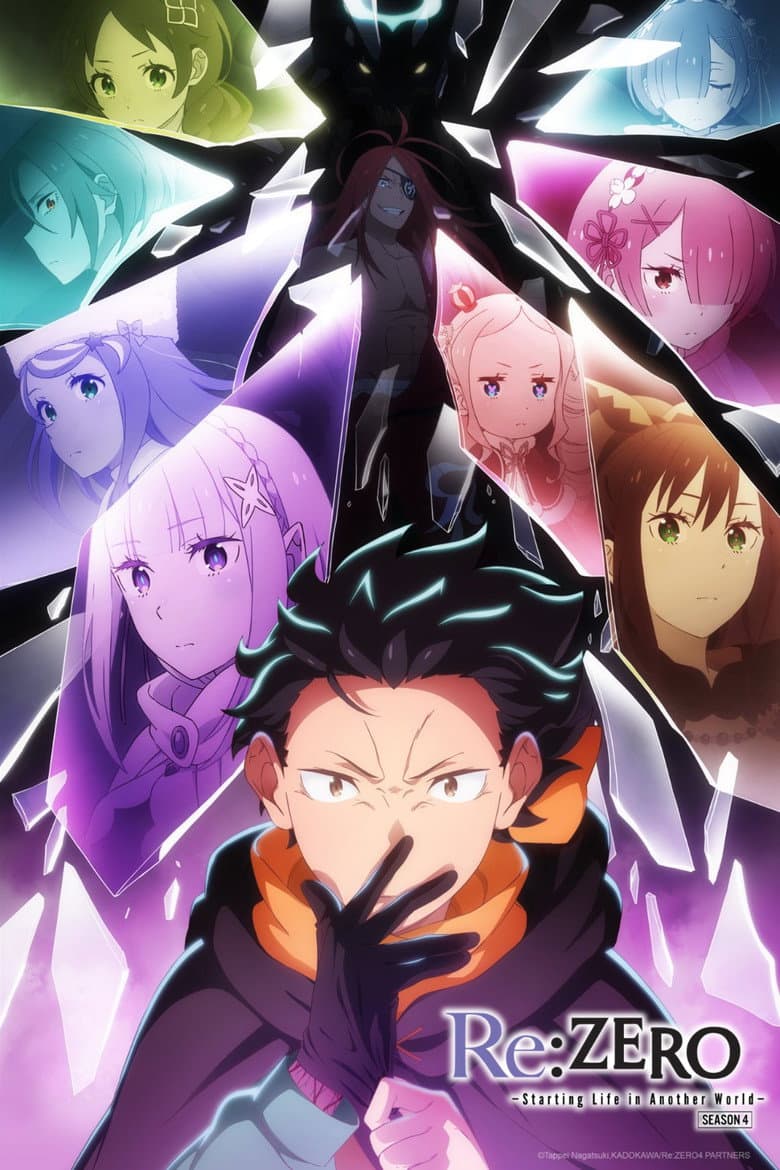
TV Show review
Started April 4, 2016 · Returning Series · Based on 1 season, 79 episodes through August 19, 2026 · TV-14 · 25 min · Japanese
Subaru Natsuki is an ordinary Japanese high-school student who is suddenly taken from a convenience store to a dangerous fantasy world. He meets Emilia, a silver-haired half-elf who wants to become ruler of Lugunica, and he joins her search for a stolen badge. Subaru can return to an earlier point after he dies, but he cannot tell anyone about the power, so every victory costs him fear, pain, and loneliness. The show mixes mystery, fantasy battles, dark horror, romance, and long talks about guilt, trust, courage, and learning to ask for help.
Several seasons give visible weight to identity and social conflict. Emilia faces hatred because people link her half-elf appearance to the Witch of Envy, and her story repeatedly presents a fairer world as a goal. Season 3 adds a forced-marriage plot in which Emilia helps abused wives resist a cruel man, while Subaru is made to face his pride and sense of entitlement. The released part of season 4 shifts toward memory, names, and personal identity, so the show has recurring equality and gender and power themes without becoming a modern political drama.
Community feedback
Was our 39% Woke rating accurate?
Breakdown
These are the editorial factors and ratings behind our score for Re:ZERO -Starting Life in Another World-.
Woke representation / casting
The show makes all five royal-selection candidates women, and women repeatedly lead camps, serve as elite fighters, healers, and magic users. Emilia, Crusch, Anastasia, Priscilla, and Felt hold high political power, while Rem, Beatrice, Ram, Elsa, Capella, and Shaula are major fighters or magic users. The story also gives major roles to men such as Subaru, Reinhard, Julius, Wilhelm, Garfiel, and Roswaal. The show does not present this pattern as a diversity campaign.
31%
Woke political dialogue
Emilia says that she is a half-elf after noticing that people fear her appearance. She tells Regulus’s wives that people can understand each other even when they are different. Other scenes discuss mixed-blood people, prejudice, and the need to free those trapped by the Sanctuary barrier. The show keeps these lines inside its fantasy plot and does not use modern party slogans or speeches about current politics.
34%
Identity-driven story themes
The story returns to Emilia’s struggle with hatred aimed at half-elves across several seasons. The Sanctuary arc makes mixed-blood freedom part of the main problem. The Priestella arc gives Emilia a major role in helping women reject a man who controls them through forced marriage. The latest released arc focuses on lost memories, names, and the question of what makes a person the same person. These themes recur, but the series remains mainly a dark fantasy about survival, relationships, and personal growth.
46%
Western institutional / cultural critique
Subaru is repeatedly forced to face his pride, entitlement, and need to act like a hero. The story treats Regulus’s control of his wives as abuse and lets Emilia help them resist him. The show also questions leaders who use royal, military, or magical power for selfish ends. The conflicts stay inside a fantasy world and are not tied to modern Western institutions, Christianity, capitalism, or party politics.
30%
Woke character or canon changes
Not relevant. The anime uses its own light-novel characters and fantasy setting. No identity-based rewrite of an established character or real historical figure is shown.
0%
Anti-woke backlash and complaints
Not present. Public discussion centers on Subaru, Emilia, Rem, pacing, violence, and character treatment. No notable anti-woke campaign or major complaint that the show pushes DEI or identity politics appeared in the research.
0%
Creator track record context
Not present. The cached profiles describe the named directors, writers, and producers as craft-focused anime professionals. Those profiles show no sustained DEI advocacy, activist work, or identity-first public persona.
0%
Production
TV Show · 2021
When a 34-year-old underachiever gets run over by a truck, his story doesn't end there. Reincarnated in a new world as an infant, Rudy will seize every opportunity to live the…
TV Show · 2024
They say whatever doesn’t kill you makes you stronger, but that’s not the case for the world’s weakest hunter Sung Jinwoo.
TV Show · 2019
Year 198 of the Solar Era in Tokyo, special fire brigades are fighting against a phenomenon called spontaneous human combustion where humans beings are turned into living infernos…
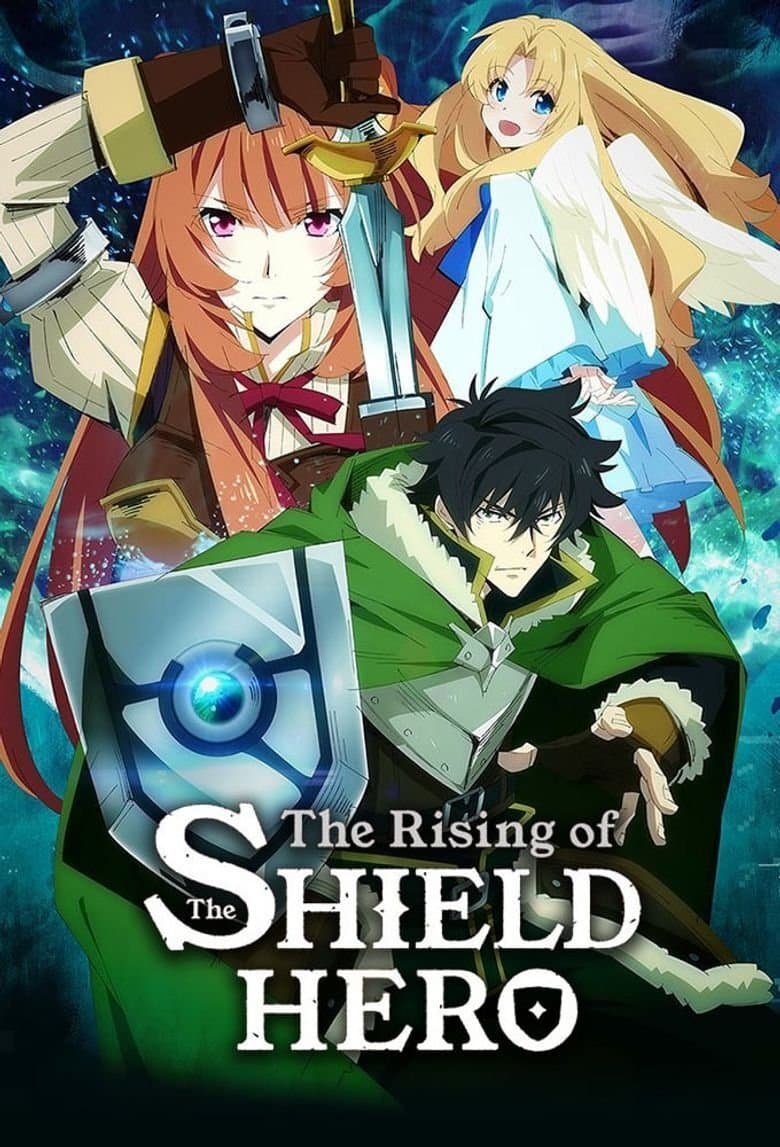
TV Show · 2019
Iwatani Naofumi, a run-of-the-mill otaku, finds a book in the library that summons him to another world. He is tasked with joining the sword, spear, and bow as one of the Four…
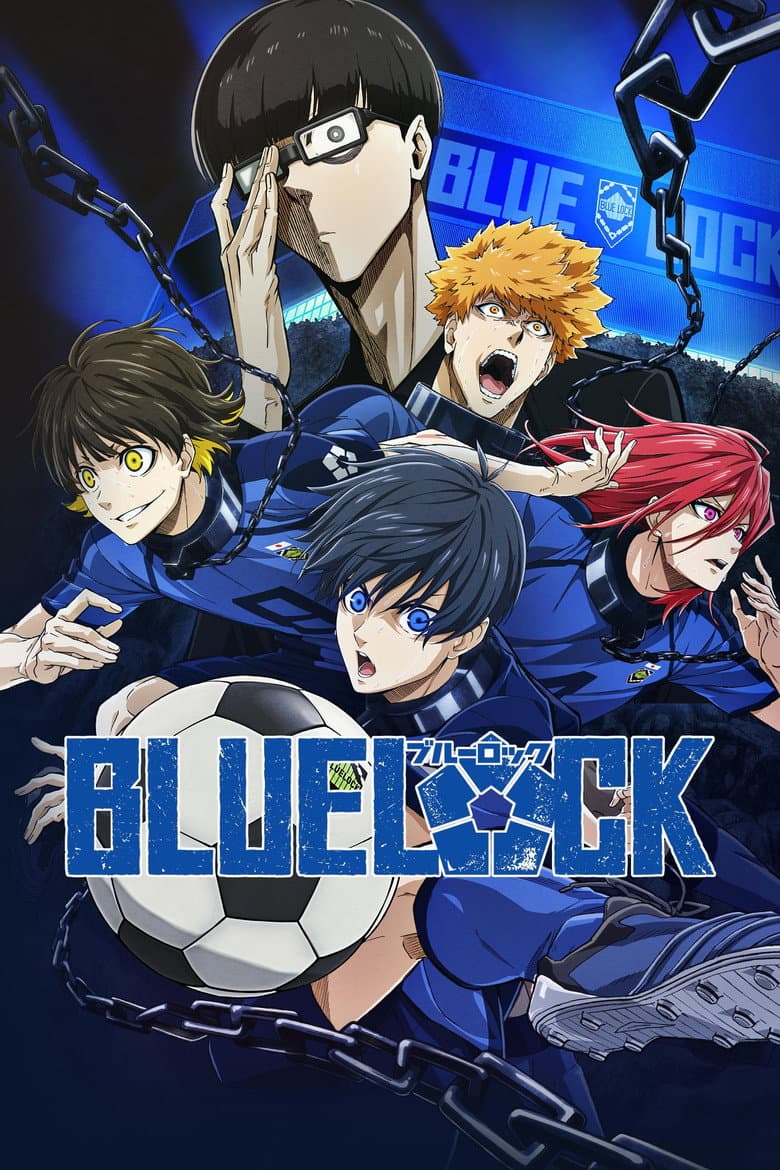
TV Show · 2022
High school soccer players from across Japan gather for a controversial project designed to create the best — and most egoistic — striker in the world.
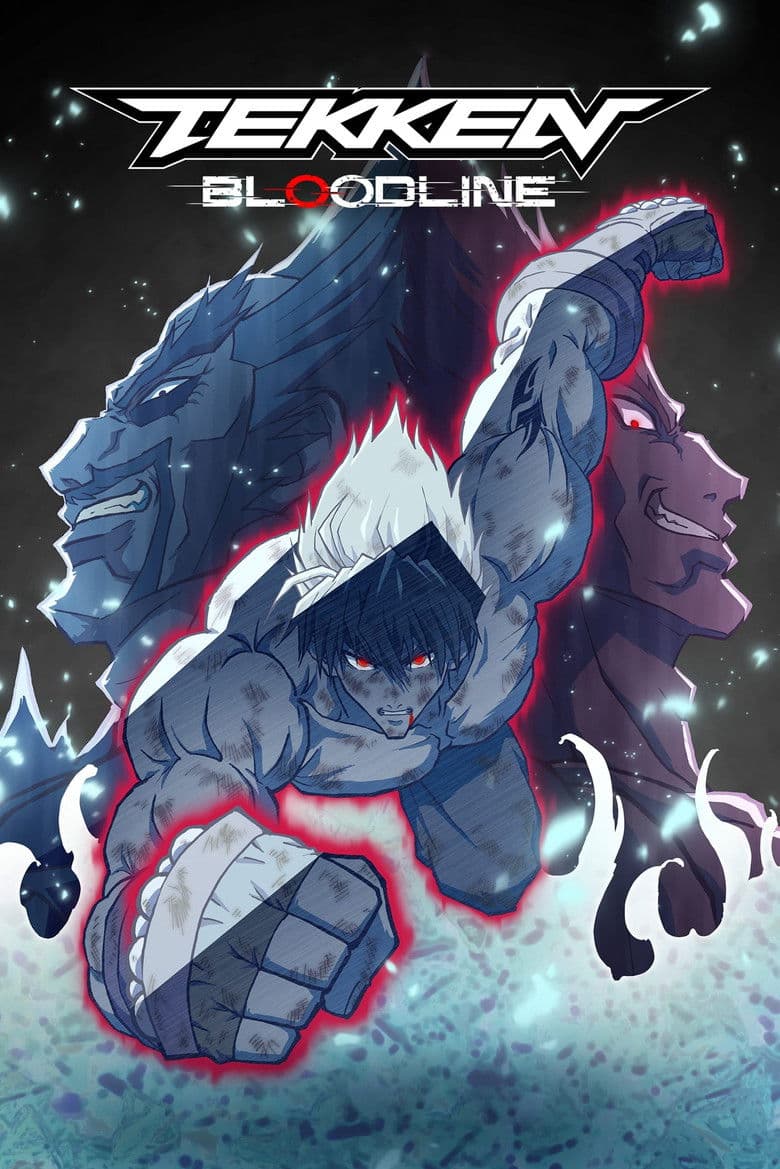
TV Show · 2022
After losing his home to a powerful enemy, a hot-tempered fighter trains under his zealous grandfather while awaiting his chance for revenge.
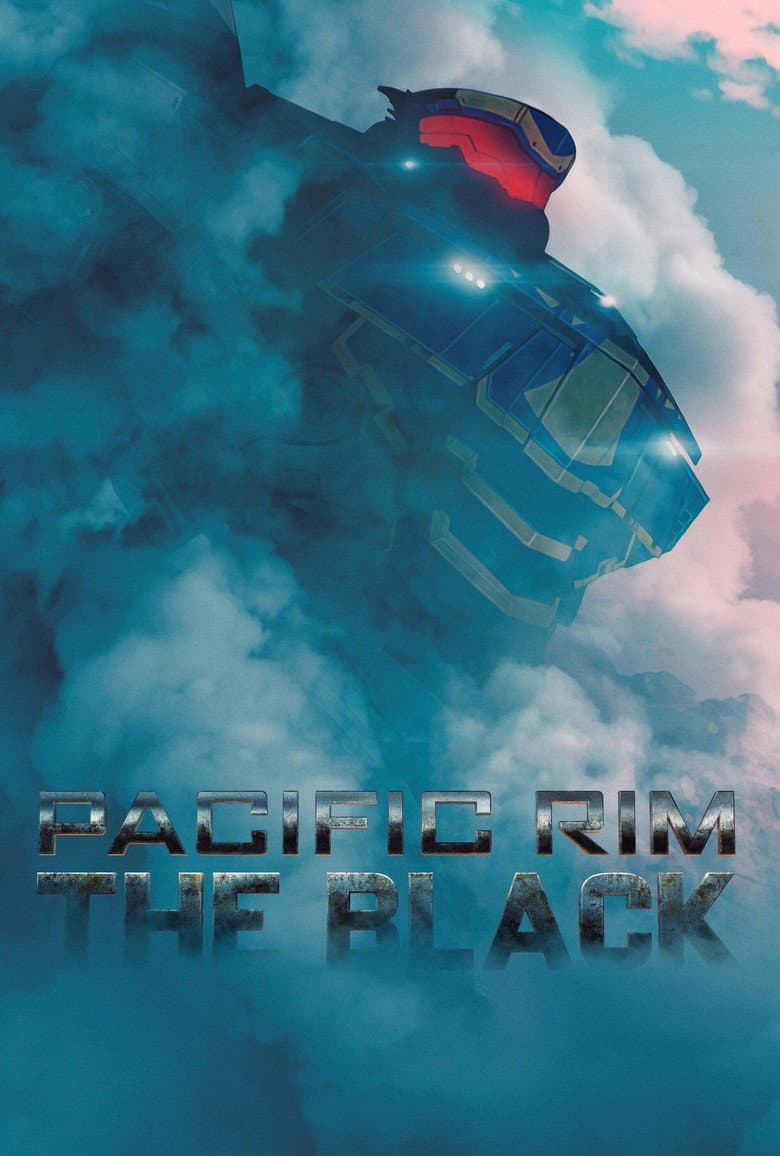
TV Show · 2021
Two siblings - an idealistic teenage boy and his naive younger sister - are forced to pilot an abandoned Jaeger across a hostile landscape in a desperate attempt to find their…
TV Show · 2022
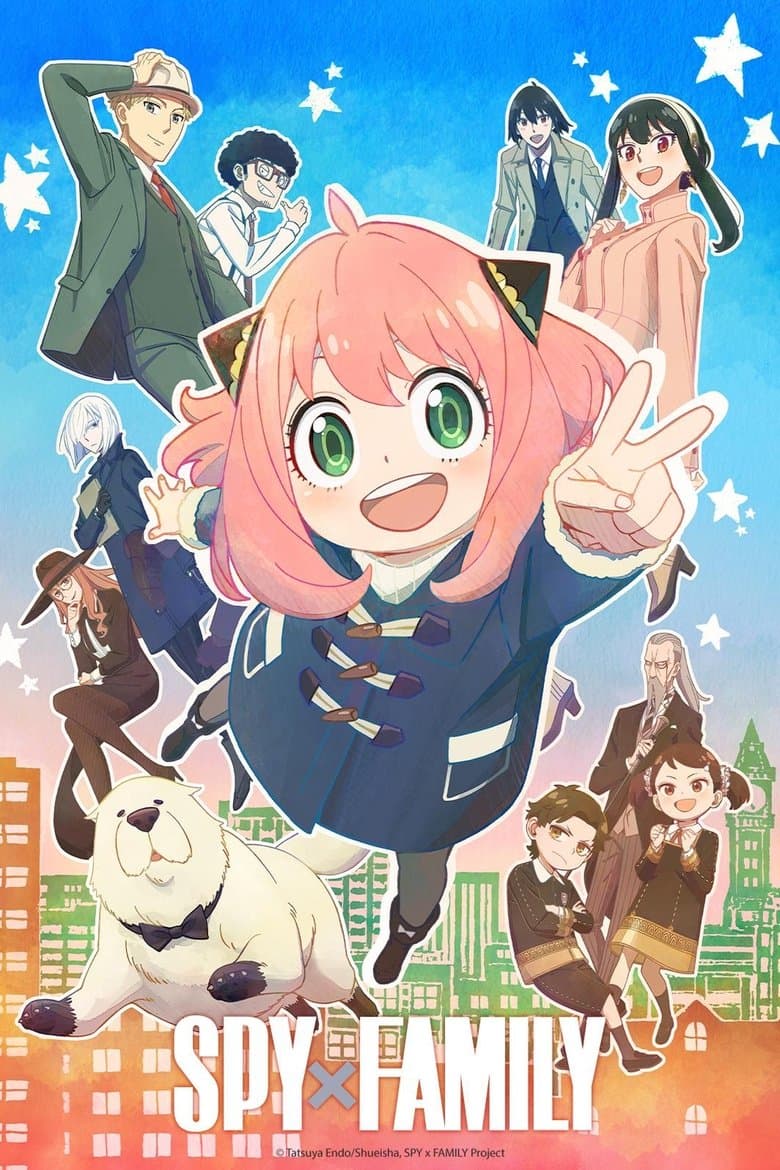
A spy, an assassin and a telepath come together to pose as a family, each for their own reasons, while hiding their true identities from each other.
