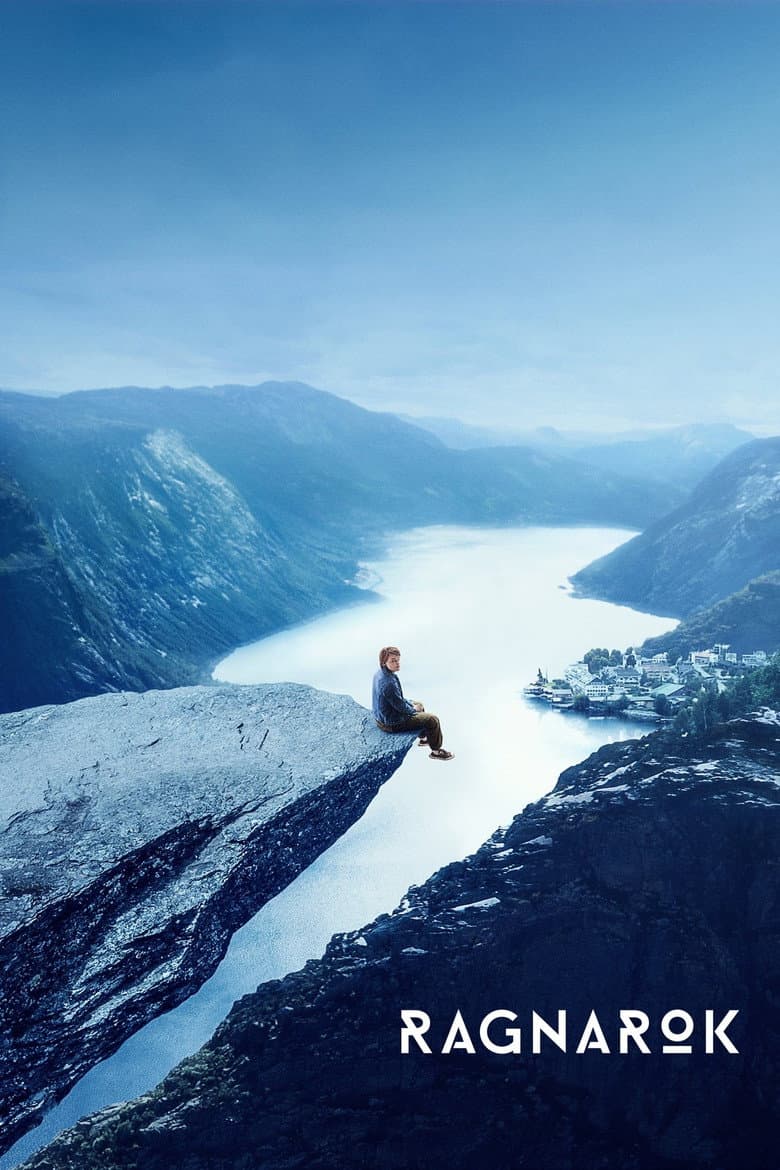
Started January 31, 2020 · Ended · Based on 3 seasons, 18 episodes through August 24, 2023 · TV-MA · Norwegian
Magne Seier moves with his mother and younger brother, Laurits, back to the small Norwegian town of Edda. Magne soon gains the powers of Thor and learns that the wealthy Jutul family are ancient giants who control the town. The family’s factories poison the water, damage the land, and may be behind the death of Magne’s friend Isolde, so Magne gathers other young gods to stop them. The show mixes school drama, family fights, strange humor, romance, and a dark battle drawn from Norse mythology.
Environmental activism drives the main conflict because young people protest pollution and demand that the Jutuls answer for sickness and ruined nature. Isolde is a lesbian activist, and her death pushes Magne deeper into the fight. Laurits is a major character who rejects fixed ideas about gender, wears makeup and dresses at times, and dates Jens, another boy. Iman, a Tamil Norwegian girl, joins the god group as Freyja, while Saxa’s rise over her brother challenges the family’s old rule that women should rank lower.
Community feedback
Was our 81% Woke rating accurate?
Breakdown
These are the editorial factors and ratings behind our score for Ragnarok.
Woke representation / casting
The show places a Tamil Norwegian girl, Iman, in the recurring god group as Freyja. The show gives Isolde a visible lesbian identity and makes her an important early ally. The show also includes Laurits as a gender-nonconforming co-lead and Harry as a mechanic with one arm who joins the fight. The pattern is noticeable in the main young cast, although the setting is modern Norway and most major characters are still Norwegian and white.
53%
Woke political dialogue
Isolde calls out pollution and posts videos about the local factory. Gry says the town has pollution and sick people but no one talks about it. Magne and his allies discuss exposing Jutul Industries and protecting the water. Laurits gives a mocking speech about democracy while the Jutuls control jobs and money. The dialogue is clear and repeated, but it mainly serves the climate and company plot.
44%
Identity-driven story themes
Environmental activism drives the hero plot from Isolde’s videos and death through Magne’s fight against Jutul Industries. Laurits is a major character who rejects fixed gender labels, wears makeup and dresses at times, and dates Jens. The show makes his queer and gender-fluid identity part of the Loki story across the seasons. Saxa’s rise over her brother also repeats a message that old gender rules should be challenged.
58%
Western institutional / cultural critique
The show makes Jutul Industries a wealthy family that poisons water and hides illness. The show depicts local people as dependent on the same company they blame. Gry and Laurits say the town has no real choice while the Jutuls control jobs and power. The story also treats Saxa’s rise over her brother as a challenge to the family’s rule that women should rank lower.
53%
Woke character or canon changes
The show reworks Loki as Laurits, a modern boy whose gender and sexuality do not fit fixed labels. The show gives him makeup, dresses, a male relationship, and a pregnancy-like birth of the world serpent. The old Norse stories already link Loki with shape-shifting and unusual family ties, so this is a strong modern emphasis rather than a totally new idea. The show also gives Freyja’s role to Iman, a Tamil Norwegian teen, even though the myths do not set her race.
50%
Anti-woke backlash and complaints
Small X accounts called the show woke, woke garbage, or a soft woke Netflix series. One user review on Rotten Tomatoes complained about gay, lesbian, transgender, and immigrant characters, and an AdoroCinema review accused Netflix of adding a woke LGBT agenda. A Reddit discussion also called the show woke and stupid. No large right-leaning account, boycott, or review-bombing campaign appeared, so the backlash is scattered rather than major.
38%
Creator track record context
Adam Price has a repeated liberal and feminist-leaning pattern through Borgen and other political drama. Meta Louise Foldager Sørensen has a strong public record on feminism, gender equality, and representation. Emilie Lebech Kaae and some writers show milder social themes, while the listed directors and many other crew members have no clear activist record. The overall context is mixed but it supports the show’s climate and identity focus.
45%
Production
TV Show · 2021
This terrifying thriller follows widow Lisey Landon as a series of disturbing events revives memories of her marriage to author Scott Landon and the darkness that plagued him.
TV Show · 2017
A missing child sets four families on a frantic hunt for answers as they unearth a mind-bending mystery that spans three generations.
TV Show · 2018
After 250 years on ice, a prisoner returns to life in a new body with one chance to win his freedom: by solving a mind-bending murder.
TV Show · 2021
A year after a subglacial volcano erupts, mysterious elements from prehistoric times emerge from the melting ice, bringing unforeseen consequences.

TV Show · 2023
At the brink of going to hell, Yee-jae must cycle through twelve separate lives and twelve separate deaths in this reincarnation drama.
TV Show · 2020
The story of the town and people who live above “The Loop,” a machine built to unlock and explore the mysteries of the universe – making things possible that were previously…
TV Show · 2016
Hundreds of years from now, the last surviving humans discover the means of sending consciousness back through time, directly into people in the 21st century.
TV Show · 2024
When a fatal accident occurs on board the International Space Station, a lone astronaut makes the heroic journey back to Earth, only to discover key pieces of her life—including…
