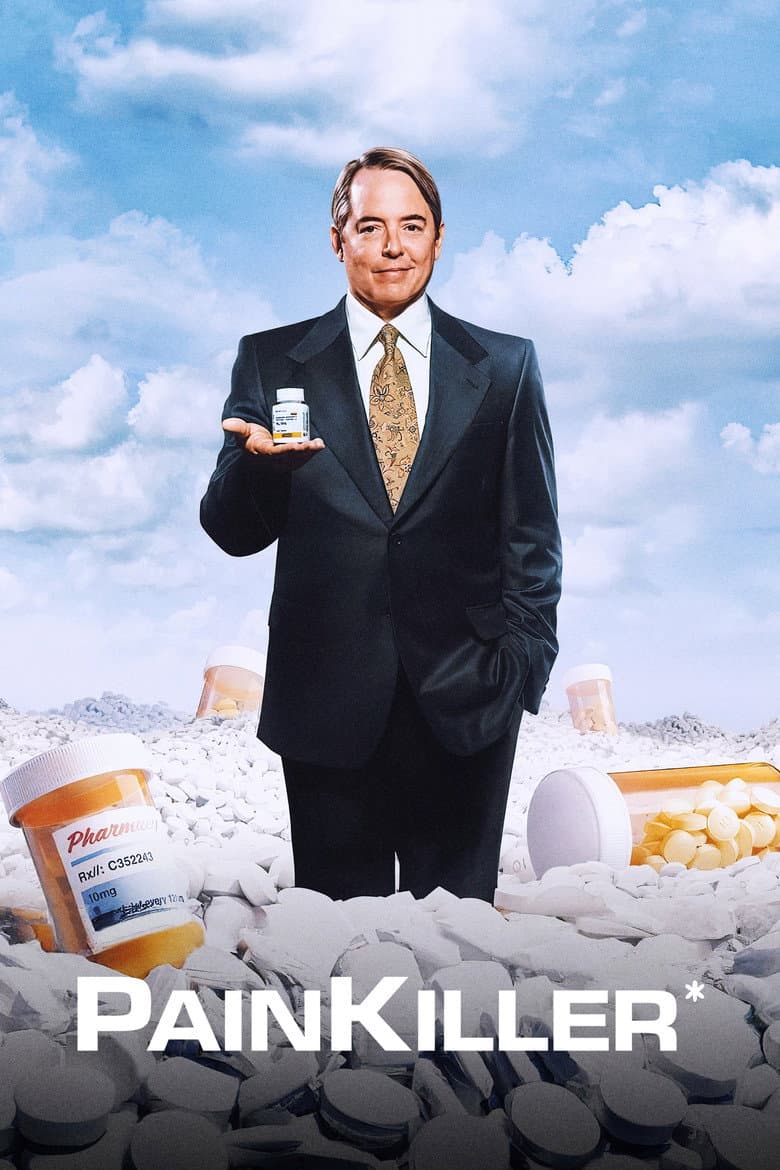
Started August 10, 2023 · Ended · Based on 1 season, 6 episodes through August 10, 2023 · TV-MA
Painkiller is a six-episode drama about the rise of OxyContin in the United States. Federal investigator Edie Flowers traces Purdue Pharma’s actions while mechanic Glen Kryger becomes addicted after a work injury. Sales worker Shannon Schaeffer helps doctors sell the drug before she starts to see the harm around her. The show moves between company offices, courtrooms, homes, and drug-affected towns, and its tone is angry, grim, and sometimes strange.
The show places a fictional black woman at the center of the investigation, and Edie is shown as a sharp, forceful guide through the story. Her family story links the drug crisis to the different ways street dealers and corporate leaders are punished. The series repeatedly presents Purdue, drug marketing, the FDA, and the Justice Department as parts of a system that protects profit and fails ordinary people. These themes matter across the season, but the main message is a warning about corporate greed, addiction, and weak oversight rather than a story built around race or sexuality.
Community feedback
Was our 52% Woke rating accurate?
Breakdown
These are the editorial factors and ratings behind our score for Painkiller.
Woke representation / casting
The show makes Edie Flowers, a fictional black woman, the main investigator and moral guide. She is a highly capable federal lawyer who explains the crisis and drives the case. The plot gives her a family link to drug crime, but it does not explain her race or gender. Other women hold important sales jobs, yet the season does not build a broad diversity group or a queer lead.
40%
Woke political dialogue
Edie repeatedly talks about Purdue’s marketing, the FDA, the Justice Department, and the failure to stop OxyContin. The show says corporate leaders can avoid serious punishment while street dealers go to prison. The story treats the crisis as a crime made for profit and urges viewers to question large institutions. This is recurring anti-corporate and anti-system dialogue, but it is not built around party politics or identity slogans.
33%
Identity-driven story themes
Edie’s race and gender are visible parts of the lead role, but the show does not make black identity its main subject. Her brother’s prison story supports a contrast between street drug crime and corporate wrongdoing. Shannon’s story shows a young woman pulled between money, success, and her conscience. The season’s main subject remains addiction and corporate harm.
24%
Western institutional / cultural critique
The story treats Purdue’s sales system, drug rules, the FDA, and the Justice Department as linked parts of a failed system. It shows companies hiding danger, doctors chasing money, and officials accepting a weak deal. The finale says the system protects powerful people more than ordinary families. This critique runs through the season, but it targets corporate and government failures rather than race, gender, or religion.
46%
Woke character or canon changes
Not relevant. The main roles are fictional composites rather than established characters. The show changes real events for drama, but no clear identity-driven rewrite of an established fictional canon or real person’s identity is shown.
0%
Anti-woke backlash and complaints
Right-leaning accounts and outlets accused Netflix of race swapping real Purdue investigators into Edie Flowers, a fictional black woman. Some posts called her a made-up strong black woman or GirlBoss version of the story. The claim was repeated with notable reach. No clear boycott or organized review-bomb campaign appeared, so the backlash was real but limited.
38%
Creator track record context
Peter Berg has a low activist profile and is mainly known for action and disaster stories. Alex Gibney often attacks corporate abuse, government failure, and unchecked power. The other cached producer profiles focus on empathy, crime, real-world harm, and reporting. The group adds some institutional criticism, but it does not show a strong shared DEI or queer-centered record.
24%
Production
TV Show · 2019
Within the walls of an interrogation room, London investigators question suspects accused of grievous crimes until the truth comes to light.

TV Show · 2021
The remarkable story of how murderer Charles Sobhraj was captured. As the chief suspect in unsolved murders of young Western travellers across India, Thailand and Nepal’s ‘Hippie…
TV Show · 2023
Candy and Pat Montgomery and Betty and Allan Gore — two churchgoing couples — enjoy their small town Texas life... until an extramarital affair leads somebody to pick up an axe.

TV Show · 2024
Through the eyes of various Irish Republican Army (IRA) members, explore the extremes some people will go to in the name of their beliefs, the way a deeply divided society can…

TV Show · 2018
The stranger-than-fiction account of a prison break in upstate New York in the summer of 2015, which spawned a massive manhunt for two convicted murderers who were aided in their…

TV Show · 2025
In the working-class suburbs of Philadelphia, an FBI agent heads a task force assembled to put an end to a string of violent robberies led by an unsuspecting family man.
TV Show · 2022
Bosch is now making a living as a private investigator two years after he quit the LAPD and finds himself working with one time enemy and top-notch attorney Honey “Money”…

TV Show · 2016
17-year-old Joshua "J" Cody moves in with his freewheeling relatives in their Southern California beach town after his mother dies of a heroin overdose.
