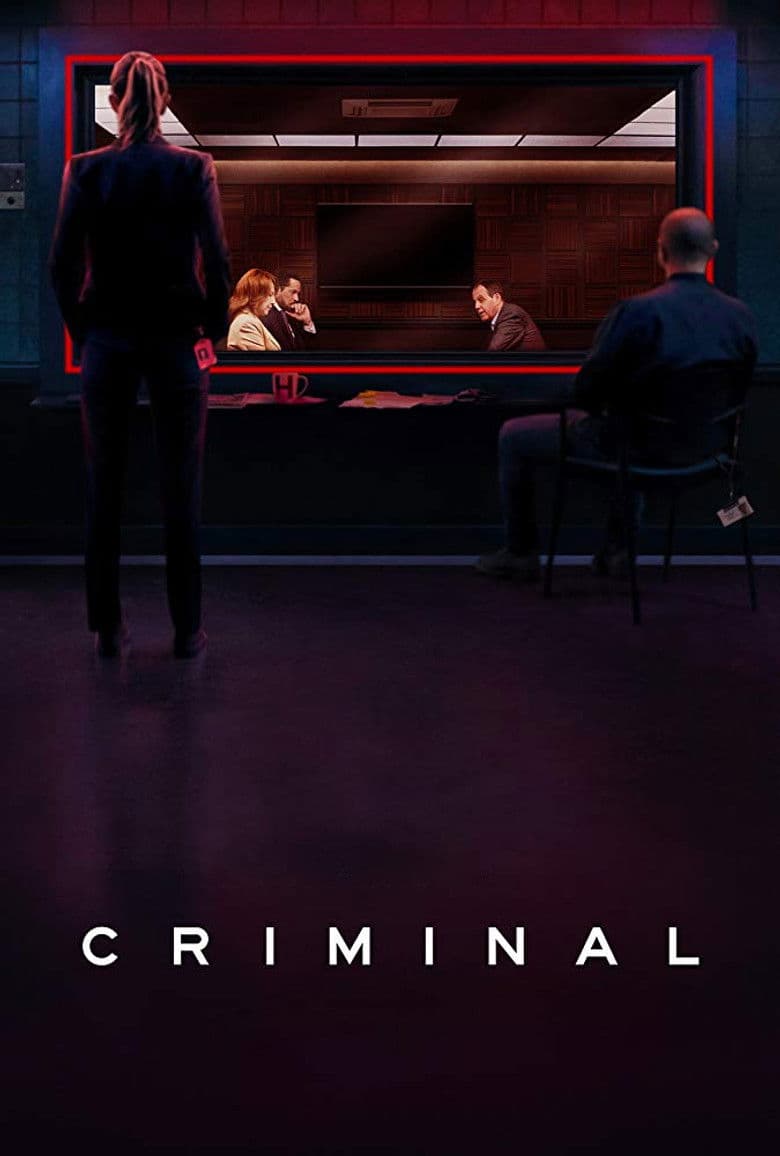
Started September 20, 2019 · Canceled · Based on 2 seasons, 7 episodes through September 16, 2020 · TV-MA · 43 min
Criminal: UK follows a small London police team that questions suspects in a glass-walled interview room. Detective Chief Inspector Natalie Hobbs leads the unit, while Tony, Vanessa, Kyle, and Hugo work through each case. The seven episodes cover murder, sexual abuse, migrant smuggling, a rape claim, online predator hunting, and another murder. The tone stays tense and quiet because the show builds its drama from words, lies, evidence, and changing views of guilt.
The clearest woke-linked material appears in the second season. The Alex case debates consent, rape claims, workplace power, and the damage an accusation can cause to an accused man. The Danielle case asks whether a woman who exposes online predators is protecting children or acting outside the law, and the Jay case follows migrants caught in a smuggling chain. These issues create some modern social debate, but the show presents both sides and mainly aims to test evidence, police judgment, and personal motives.
Community feedback
Was our 26% Woke rating accurate?
Breakdown
These are the editorial factors and ratings behind our score for Criminal: UK.
Woke representation / casting
The police unit includes a white woman boss, two white men, a black woman, and a South Asian man. Other Black and minority officers also hold visible police roles, and the guest cast includes Sophie Okonedo and Kunal Nayyar in major episodes. This creates clear on-screen diversity in a modern London team, but the show never sells it as a diversity message. The cases do not depend on race or gender, so the score stays low.
18%
Woke political dialogue
The show has recurring talk about modern social questions. Alex's episode debates consent, rape claims, workplace power, and the harm an accusation can cause to both sides. Danielle's episode argues over whether private predator hunters protect children or damage justice. Jay's episode adds a debate about migrant smuggling and the duty to save people in danger. The dialogue stays tied to cases rather than party politics or activist speeches.
26%
Identity-driven story themes
Sex and gender are central to several cases. Edgar and Alex involve sexual abuse or rape claims, while Danielle centers on a woman who hunts online predators. The show asks how women are believed, how men are judged, and whether personal pain excuses harmful actions. These themes recur across both seasons, but the stories stay focused on crime and doubt instead of a broad identity program.
25%
Western institutional / cultural critique
Police methods and legal rules are questioned in several episodes. The detectives bend rules, disagree about fairness, and worry about evidence, while Alex and Danielle challenge how the justice system treats victims, suspects, and private investigators. The show presents the police as necessary but imperfect, not as an evil Western institution. It does not attack family, religion, capitalism, or traditional culture.
22%
Woke character or canon changes
Not relevant. The show is an original police anthology, not an adaptation of an established story or real history. No established character or canon is changed for identity reasons.
0%
Anti-woke backlash and complaints
Not present. The supplied X pass found no anti-woke reaction. Web discussion focused on claims that the false-rape episode was misogynistic or harmful, which is not anti-woke backlash.
0%
Creator track record context
The stored creator scores are 6 for Jim Field Smith and 15 for George Kay. Their recorded work centers on comedy, crime, thrillers, and historical crime, with no documented activist or identity-focused pattern. The stored scores are 14 for Amy Hubbard and 11 for Georgie Fallon, and they also have no recorded activist casting or production focus. The overall context is low.
11%
Production
TV Show · 2025
Two lifelong friends in Philadelphia pose as DEA agents to rob small-time drug dealers. It's a perfect grift—until they choose the wrong mark and become targets of a massive…
TV Show · 2022
A psychotherapist finds himself held prisoner by a serial killer with an unusual request: curb his homicidal urges.
TV Show · 2025
In the working-class suburbs of Philadelphia, an FBI agent heads a task force assembled to put an end to a string of violent robberies led by an unsuspecting family man.
TV Show · 2021
A world-famous comedian desperately searches for a way out after a night in Philadelphia with his brother threatens to sabotage more than his success.
TV Show · 2025
When a prison transport plane crashes in the remote Alaskan wilderness—freeing dozens of violent inmates—the region's lone marshal must protect the town he's vowed to keep safe.
TV Show · 2018
Ray Shoesmith is a father, ex-husband, boyfriend and best friend: tough roles to juggle in the modern age. Even harder when you’re a criminal for hire.
TV Show · 2016
A 26-year-old woman learns to live again after 13 years in captivity.
TV Show · 2020
New Orleans judge Michael Desiato is forced to confront his own deepest convictions when his son is involved in a hit and run that embroils an organized crime family.
