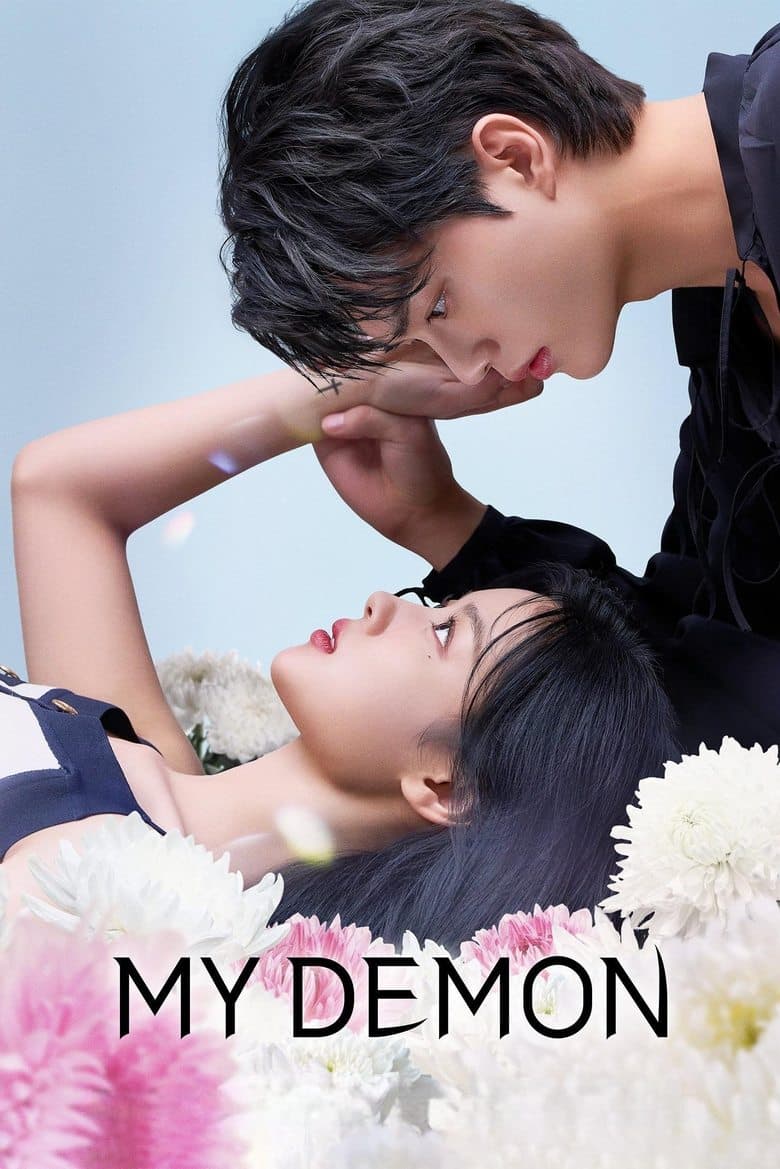
Started November 24, 2023 · Ended · Based on 1 season, 16 episodes through January 20, 2024 · TV-14 · Korean
My Demon is a South Korean fantasy romance set in modern Seoul, with a short story in Joseon history. Do Do Hee is a guarded food company CEO and heiress who trusts almost no one after losing her parents. Jung Gu Won is a 200-year-old demon who trades wishes for souls, but he loses his powers after meeting her. The pair enter a contract marriage while they face a killer inside her rich family, old secrets, and the danger of loving someone who may not be human. The tone moves between glossy comedy, suspense, faith imagery, grief, and a warm happy ending.
The clearest woke element is the gender role setup. Do Hee holds the company power, leads the search for the killer, asks the male lead to marry her, and becomes the person who holds the key to his powers. Gu Won is the stronger supernatural being, but he must follow her as a bodyguard and depends on her to survive, while several male relatives are shown as weak, greedy, or violent. The story also uses Catholic symbols in a nontraditional way, with a demon named Gu Won acting as a savior and God appearing as a woman. These choices are repeated through the season, but the show stays focused on romance, fate, family, and personal sacrifice instead of modern political speeches or identity campaigns.
Community feedback
Was our 45% Woke rating accurate?
Breakdown
These are the editorial factors and ratings behind our score for My Demon.
Woke representation / casting
The show repeatedly places women in major power roles. Do Do-hee is a CEO, Joo Cheon-sook is a group chairwoman, and other women hold executive or skilled roles. Men also hold major jobs, and no diversity-first casting message is shown. The pattern is noticeable but fits a modern Korean business story and is not a dominant representation-first design.
18%
Woke political dialogue
Do Do-hee criticizes a rise in company profits that came from cutting staff costs and employee benefits. She says the company should value the way results are made and avoid shortcuts. This gives the finale one brief pro-worker and anti-cost-cutting message, but it does not become a repeated identity or activist debate.
22%
Identity-driven story themes
Do Do-hee is repeatedly shown as the main social and business force. She runs a company, leads the murder search, proposes the contract marriage, and holds the power that keeps Gu-won alive. Gu-won is a powerful demon, but the romance makes him follow her as a bodyguard and depend on her touch, while several male relatives are greedy, violent, or foolish. The show still gives Gu-won heroic rescues and makes the love mutual, so the female-dominance pattern is strong but is not the whole message.
55%
Western institutional / cultural critique
The show uses Catholic prayers, a cross, and Philippians 4:13 in its demon story. Gu-won, whose name means salvation in the drama, performs a saving miracle and becomes the hero who rescues Do-hee. The story presents God as a woman who makes bets and treats the demon’s return as a personal decision. These choices unsettle traditional Christian symbols, but the show treats them as fantasy romance and does not build a modern attack on churches.
25%
Woke character or canon changes
Not relevant. My Demon is an original drama rather than an adaptation. It does not alter a known character or real historical figure.
0%
Anti-woke backlash and complaints
A Korean Christian opinion column called the show anti-Christian, irrational Korean feminism, and women’s supremacy. The writer objected to the demon acting as a savior and to Christian symbols being given new meanings. Most other coverage and audience posts praised the lead chemistry or criticized pacing, weak plotting, and the ending instead. The anti-woke reaction is real but appears limited to a small religious and opinion-based part of the debate.
28%
Creator track record context
Not present. The supplied creator record describes Choi A-il, Kim Jang-han, and Kwon Da-som as mainstream genre creators with no documented activist, DEI, or identity-first track record. The title-specific interviews found no creator statement that frames this show as a political or representation project.
0%
Production
TV Show · 2018
When his secretary unexpectedly quits, an arrogant executive will do anything to bring her back.

TV Show · 2022
In disguise as her friend, Ha-ri shows up to a blind date to scare him away. But plans go awry when he turns out to be her CEO — and makes a proposal.
TV Show · 2016
Set nearly a decade after the finale of the original series, this revival follows Lorelai, Rory and Emily Gilmore through four seasons of change.
TV Show · 2020
The heartwarming and humorous adventures of a young country vet in the Yorkshire Dales in the 1930s. A remake of the 1978 series.
TV Show · 2020
New passions. New fashions. New Emily? A plucky American marketing whiz spreads her wings in life and love after landing her dream job in Paris.
TV Show · 2019
Tony had a perfect life. But after his wife Lisa suddenly dies, Tony changes. After contemplating taking his own life, he decides instead to live long enough to punish the world…
TV Show · 2019
Burned out on life, Miles undergoes a strange procedure at a strip mall spa -- and wakes to find he's been replaced by a better version of himself.
TV Show · 2019
In a city of coaching centers known to train India’s finest collegiate minds, an earnest but unexceptional student and his friends navigate campus life.
