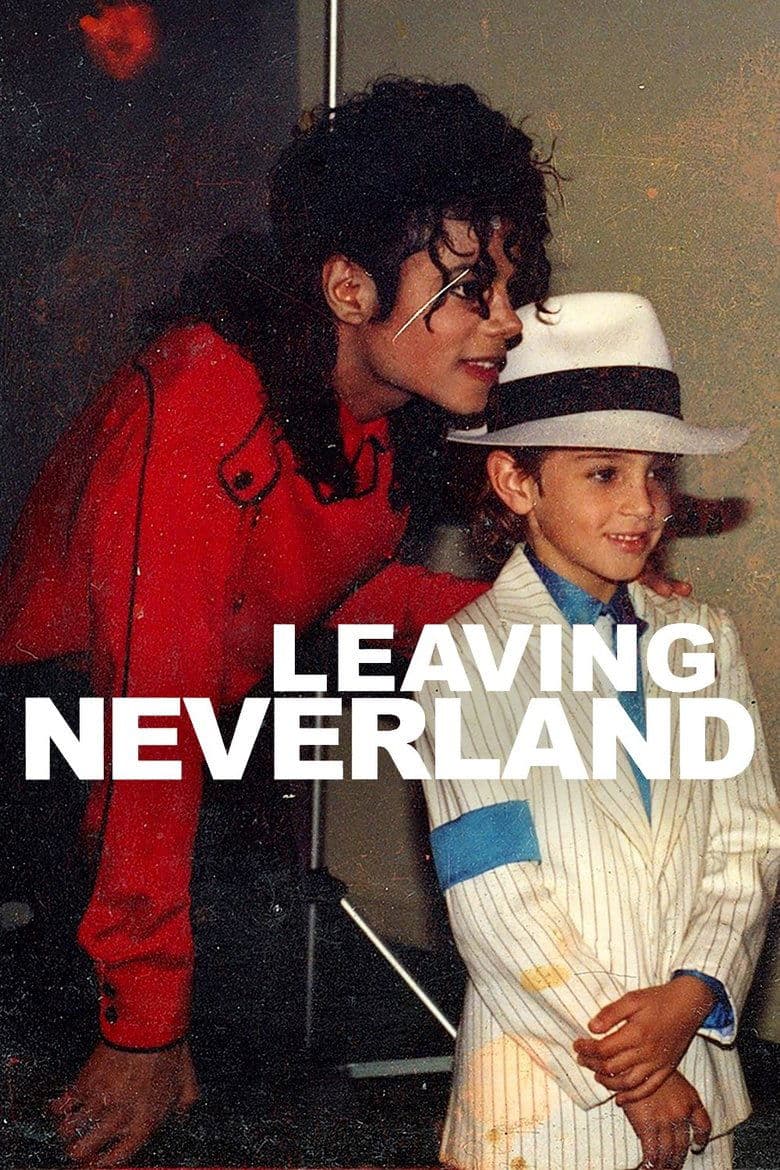
Started March 3, 2019 · Ended · Based on 1 season, 2 episodes through March 4, 2019 · TV-MA · 118 min
Leaving Neverland follows James Safechuck and Wade Robson, two adults who say Michael Jackson sexually abused them when they were children. The story moves between their childhood visits to Jackson's Neverland ranch and their later lives with wives, families, and sons. The two men describe how Jackson's fame, gifts, and promises made the abuse hard to see and harder to discuss. Their memories also show how they defended Jackson for years before facing what they say happened. The four-hour documentary has a serious, painful, and disturbing tone.
The film gives repeated attention to male survivors and to the shame that kept both men silent. It says ideas about being strong or masculine can make boys less willing to name sexual abuse. It asks viewers to listen to people who report abuse even when the accused was a beloved star. The story questions celebrity worship, parental trust, and the adults who allowed Jackson to stay close to children. It also follows the pain these memories cause for mothers, siblings, wives, and the two men's own children.
Community feedback
Was our 27% Woke rating accurate?
Breakdown
These are the editorial factors and ratings behind our score for Leaving Neverland.
Woke representation / casting
Not present. The people on screen are the real subjects, their relatives, and archive figures. The documentary does not use a chosen cast to make a diversity statement.
0%
Woke political dialogue
Not present. The interviews discuss alleged abuse, shame, fame, family trust, and silence. They do not build a recurring debate about elections, parties, capitalism, religion, or another current political cause.
0%
Identity-driven story themes
The documentary repeatedly centers two male survivors and treats their delayed disclosure as a social issue, not only a private event. It says ideas about being strong or masculine can make boys less willing to name sexual abuse. The film asks viewers to listen to victims even when the accused was a beloved star. The abuse story remains the main focus, so the identity message is meaningful but not dominant.
32%
Western institutional / cultural critique
The documentary repeatedly questions how fame, money, family trust, and the entertainment world let a powerful adult stay close to children. The mothers and other relatives speak about their own failures and the warning signs they missed. The film also links silence to strict ideas about how men should act. Its criticism is aimed at celebrity culture and social silence, not at Christianity, democracy, or Western society as a whole.
27%
Woke character or canon changes
Not relevant. The show presents real people and their accounts of events. It does not rewrite an established character, story world, or historical figure for identity reasons.
0%
Anti-woke backlash and complaints
Not present. Jackson's family, estate, and fans called the film one-sided, sensationalist, and propaganda, but their main claims concerned evidence, editing, the accusers' credibility, and Jackson's acquittal. The reported backlash did not mainly say that the documentary pushed DEI, identity politics, or a left-wing cause.
0%
Creator track record context
Nancy Abraham's previous HBO work includes abortion rights, rape kits, domestic violence, and interracial-marriage rights. Dan Reed and Owen Phillips mainly made war, crime, disaster, politics, and current affairs documentaries. This gives some social-justice context, but it does not show a strong identity-politics pattern across the team.
22%
Production

TV Show · 2023
With never-before-seen footage, this docuseries follows David Beckham's meteoric rise from humble beginnings to global football stardom.
TV Show · 2021
The three-part documentary series, compiled from over 60 hours of unseen footage, captures the warmth, camaraderie, and creative genius that defined the legacy of music's most…
TV Show · 2023
Follow the bruised bodies, soul-crushing fumbles, agonizing losses, and pure joy of three NFL quarterbacks during one season.
TV Show · 2017
A four-part documentary series that tells the stories of Jimmy Iovine and Dr. Dre -- one the son of a Brooklyn longshoreman, the other straight out of Compton - -- and their…

TV Show · 2021
Dynamic reenactments and expert commentaries bring to life the tumultuous history and power struggles of a warring 16th-century feudal Japan.

TV Show · 2022
When a 20-year-old attempts to win a fighter jet in a Pepsi sweepstakes, he sets the stage for a David versus Goliath court battle for the history books.

TV Show · 2023
In 2014, a plane with 239 people aboard vanishes from all radar. This docuseries delves into one of our greatest modern mysteries: Flight MH370.

TV Show · 2019
These blockbusters brought us together and gave us the time of our lives. Meet the actors, directors and industry insiders who made them happen.
