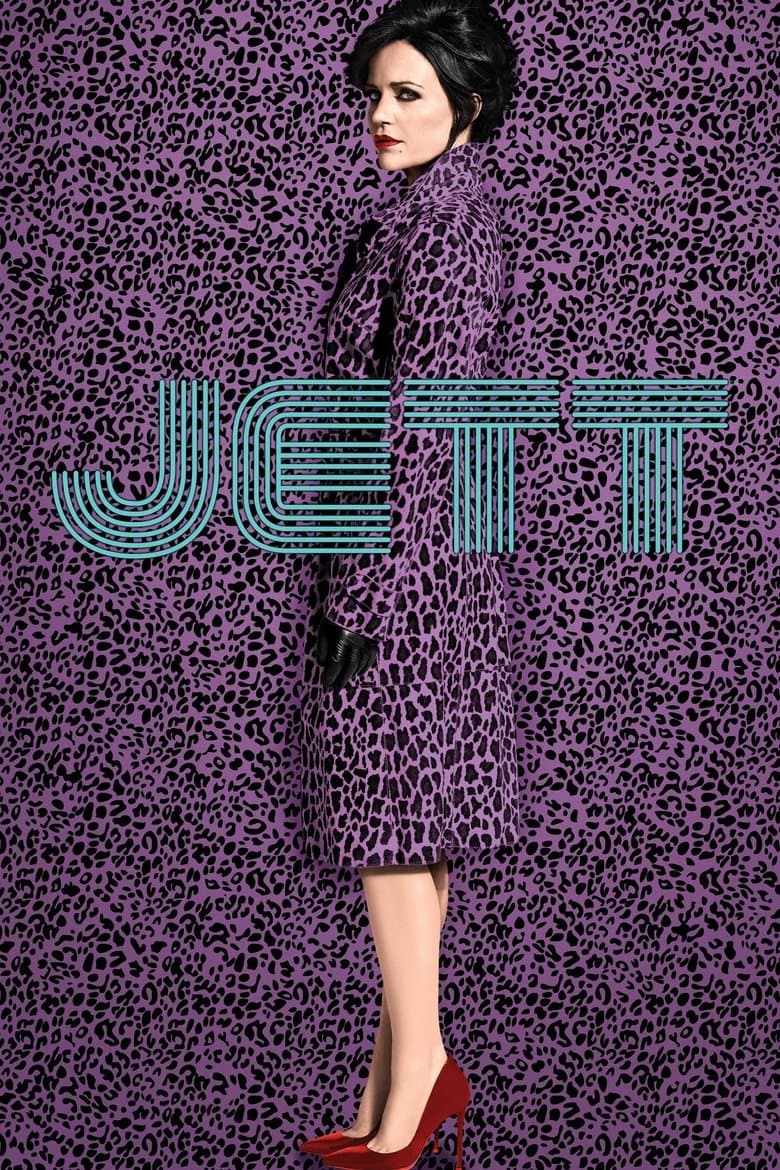
Started June 14, 2019 · Canceled · Based on 1 season, 9 episodes through August 9, 2019 · TV-MA · 60 min
Jett follows Daisy “Jett” Kowalski, a skilled thief who has just left prison and wants a quiet life with her daughter Alice. A crime boss pulls her into one last job, but the job ties her to rival criminals, police officers, old partners, and people who want revenge. Jett moves between homes, bars, prisons, clubs, and Cuba while she tries to protect her family. The show uses bright colors, sharp talk, sex, and sudden violence to create a stylish but harsh crime story.
The show puts a highly capable woman at the center of a crime world usually led by men. Jett plans jobs, controls many tense meetings, and uses her looks, nerve, and skill without asking anyone to approve of her. Maria and Phoenix are important women in her home and criminal life, and the story gives their pain and choices real space. A smaller plot includes Junior as a gay man with a male lover, while men often appear as violent, controlling, foolish, or trapped by their own desires. These ideas make female power, sexual freedom, and nontraditional relationships visible through the season, even though the main plot stays focused on crime, family, and survival.
Community feedback
Was our 40% Woke rating accurate?
Breakdown
These are the editorial factors and ratings behind our score for Jett.
Woke representation / casting
The show centers a highly skilled woman thief in a genre usually led by men. Jett leads the plans and survives as the most capable person in many rooms. Maria, Phoenix, and Josie also hold important roles, and the cast includes several black characters in crime and police jobs. Gutierrez and Gugino publicly framed the lead as a female antihero, so the gender choice carries a clear representation message. The modern setting makes the mixed cast believable, so the score stays moderate.
36%
Woke political dialogue
Not present. The characters do not hold recurring talks about current politics, activist movements, or identity policy. The dialogue stays focused on crime, family, sex, and survival.
0%
Identity-driven story themes
The story makes female agency a recurring part of the season. Jett chooses when to use her sexuality and refuses to act like a helpless victim. Maria and Phoenix are trusted women who help protect Alice and support Jett through illness, prison, and violence. The season also gives a smaller place to a gay male relationship through Junior and Bobby. These ideas are visible across several episodes, but the show does not turn them into a direct activist campaign.
45%
Western institutional / cultural critique
The show repeatedly puts women against male control and entitlement. Rosalie faces an abusive husband, Jett rejects men who try to command her, and Junior's father is called a homophobe. Several men are violent, foolish, or ruled by desire, while women often keep control of the plan. The story presents these as personal crime conflicts instead of a broad attack on patriarchy, religion, capitalism, or Western institutions.
22%
Woke character or canon changes
Not relevant. Jett is an original series with no earlier character, canon, or real history to change. It does not retell a known story through an identity-based rewrite.
0%
Anti-woke backlash and complaints
One r/MensRights poster called Jett part of a woke Hollywood trend. The poster complained that the show's men were weak or stupid while the female lead was the strong role model. The comment was isolated, and the supplied X pass found no anti-woke reaction.
6%
Creator track record context
Gutierrez has a recurring focus on complex women and said he wanted a female antihero. Gugino has supported female-led stories and has spoken about women's sexuality being misused. The other listed producers have little or no public activist record. This creates a mild creator-context signal, not a strong activist one.
18%
Production
TV Show · 2025
Two lifelong friends in Philadelphia pose as DEA agents to rob small-time drug dealers. It's a perfect grift—until they choose the wrong mark and become targets of a massive…

TV Show · 2017
Detective John Cardinal attempts to uncover the mystery of what happened to the missing 13-year-old girl whose body is discovered in the shaft-head of an abandoned mine.
TV Show · 2021
In a small Michigan town where the business of incarceration is the only thriving industry, the McClusky family are the power brokers between the police, criminals, inmates…

TV Show · 2019
Two detectives are dispatched to investigate the murder of a young girl on the outskirts of Dublin, but as the case of the missing children intensifies, both are forced to…
TV Show · 2020
New Orleans judge Michael Desiato is forced to confront his own deepest convictions when his son is involved in a hit and run that embroils an organized crime family.
TV Show · 2025
Notorious gang boss Ronnie (Sean Bean) steps back from his criminal empire, triggering a violent power struggle between his volatile son Jamie (Jack McMullen) and trusted…
TV Show · 2020
Picking up just days after the “Power” finale, this sequel series follows Tariq navigating his new life, in which his desire to shed his father’s legacy comes up against the…
TV Show · 2021
A world-famous comedian desperately searches for a way out after a night in Philadelphia with his brother threatens to sabotage more than his success.
