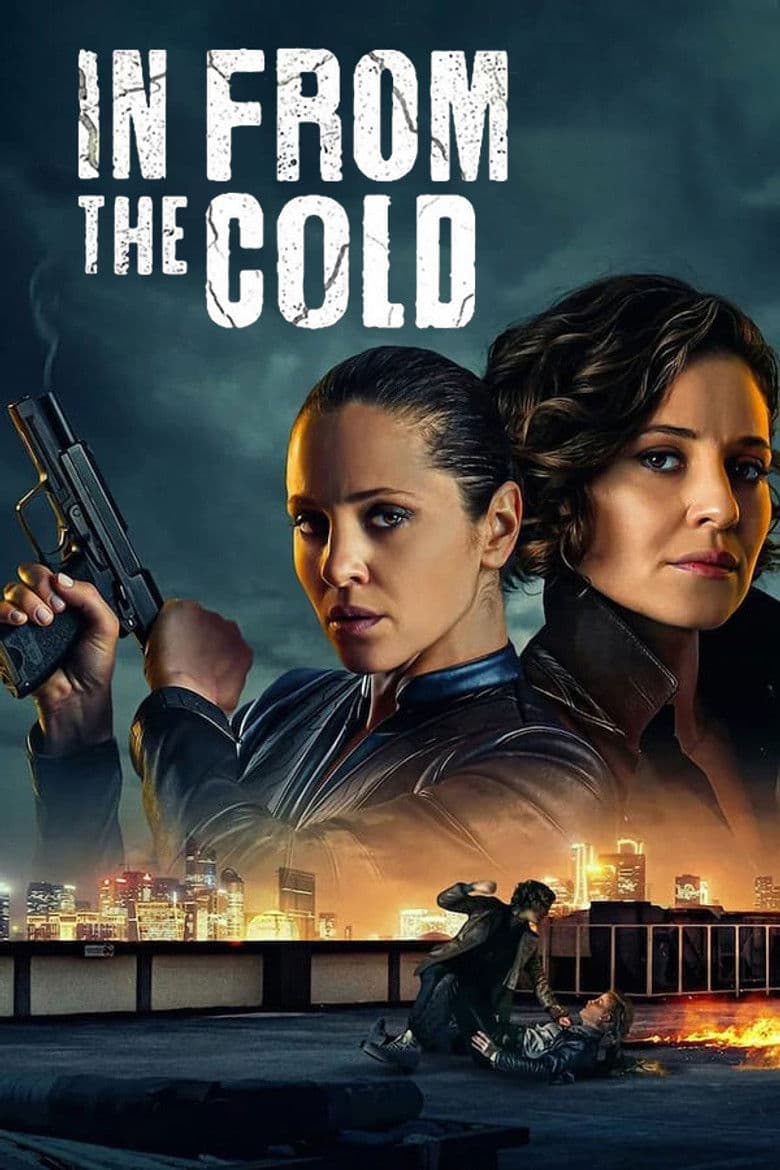
Started January 28, 2022 · Canceled · Based on 1 season, 8 episodes through January 28, 2022 · TV-MA · 60 min
In From the Cold follows Jenny Franklin, a divorced American mother who takes her teenage daughter to Madrid for an ice skating event. The CIA exposes Jenny as Anya Petrova, a former Russian spy and killer who was changed by a secret experiment. She must use painful shape shifting and old spy skills to stop a violent plot while protecting her daughter and hiding her real loyalties. Flashbacks move between 1990s Russia and present-day Spain, and the tone mixes family drama with fast, bloody, and twist-heavy action.
The show gives visible power to women as spies, fighters, handlers, and leaders. Jenny’s past includes a repeated love story with Faina, a young Russian woman, so LGBTQ content has a meaningful place in the flashback plot. Jenny’s story also fights the idea that a mother or older woman should fade from public life. The season includes a right-wing plot against a Spanish prime minister, but it does not spend most of its time on current identity politics. These ideas create a moderate woke signal inside a violent spy thriller, rather than turning the whole show into an activist drama.
Community feedback
Was our 45% Woke rating accurate?
Breakdown
These are the editorial factors and ratings behind our score for In From the Cold.
Woke representation / casting
Women fill the main action roles, with Jenny as the lead fighter, Anya as a top Russian agent, and Svetlana as her handler and later enemy. Netflix marketed the series as a female-driven spy thriller, and Glass said he wanted to show the strength of mothers and women who are told to fade away. The Black CIA agent and hacker add visible racial diversity, but the international setting makes those choices believable. The score mainly reflects repeated female-empowerment framing and a pattern of women holding the strongest roles.
44%
Woke political dialogue
The season repeatedly ties the Madrid attacks to a plan to kill the Spanish prime minister and create political chaos. The story presents the main villains as violently right-wing Spaniards, and the opening includes a man acting racist toward a black passenger. These ideas support the action plot, but the show has little extended debate about current politics or identity policy. The political signal is clear but limited beside the spy twists and family drama.
32%
Identity-driven story themes
Jenny’s past includes a recurring love story with Faina, a young Russian woman, across several flashbacks. The relationship shapes Anya’s guilt and leads to her killing Faina after Faina discovers Anya’s mission. The present-day story also centers on a mother proving that she can reclaim her skills and choose her own life. LGBTQ content and female-empowerment themes matter to the season, but neither becomes the entire premise.
43%
Western institutional / cultural critique
Not present. The CIA, police, and Russian services use force and deception, but that is standard spy-thriller conflict. The show does not build a broad modern activist attack on Western institutions, family life, Christianity, or traditional social norms.
0%
Woke character or canon changes
Not relevant. The series is an original spy story with no established source characters or real historical figures that are changed for identity reasons.
0%
Anti-woke backlash and complaints
One AVForums commenter called the single-mother and troubled-daughter material a woke subplot and said it felt unnecessary. Other Reddit viewers focused on weak acting, plot holes, pacing, or praise for the Anya and Faina flashbacks. No large news story or broad online campaign was found that treated the series as a DEI or identity-politics project. The evidence supports a low, fringe backlash score.
14%
Creator track record context
Adam Glass has a stored creator score of 19/100. His listed work includes Supernatural, Criminal Minds, The Chi, and the reboot, with some urban social settings but no prominent activist record or identity-politics focus. That low creator score supports treating the show’s women-focused framing as title-specific rather than part of a strong personal pattern.
19%
Production
TV Show · 2022
Dan Chase absconded from the CIA decades ago and now lives off the grid. When an assassin arrives and tries to take Chase out, the old operative learns that to ensure his future…
TV Show · 2022
Navy SEAL Commander James Reece turns to vengeance as he investigates the mysterious forces behind the murder of his entire platoon.
TV Show · 2016
In 18th-century North America, ruthless trappers and entrepreneurs fight to wrest control of the fur trade from the mighty Hudson's Bay Company.

TV Show · 2025
In the early Meiji era, Shujiro, once known as an undefeated samurai, decides to participate in a deadly survival game to save his family and villagers.
TV Show · 2023
During his glory days, Berlin and a gang assembled in Paris for one of his greatest plans ever: stealing 44 million euros' worth of jewels in one night.
TV Show · 2025
Before The Terminal List, Navy SEAL Ben Edwards finds himself entangled in the black operations side of the CIA.
TV Show · 2016
The story of Mac Conway, a Marine who returns home to Memphis from Vietnam in 1972 and finds himself shunned by those he loves and demonized by the public.

TV Show · 2020
A tight-knit group of teens unearths a long-buried secret, setting off a chain of illicit events that takes them on an adventure they'll never forget.
