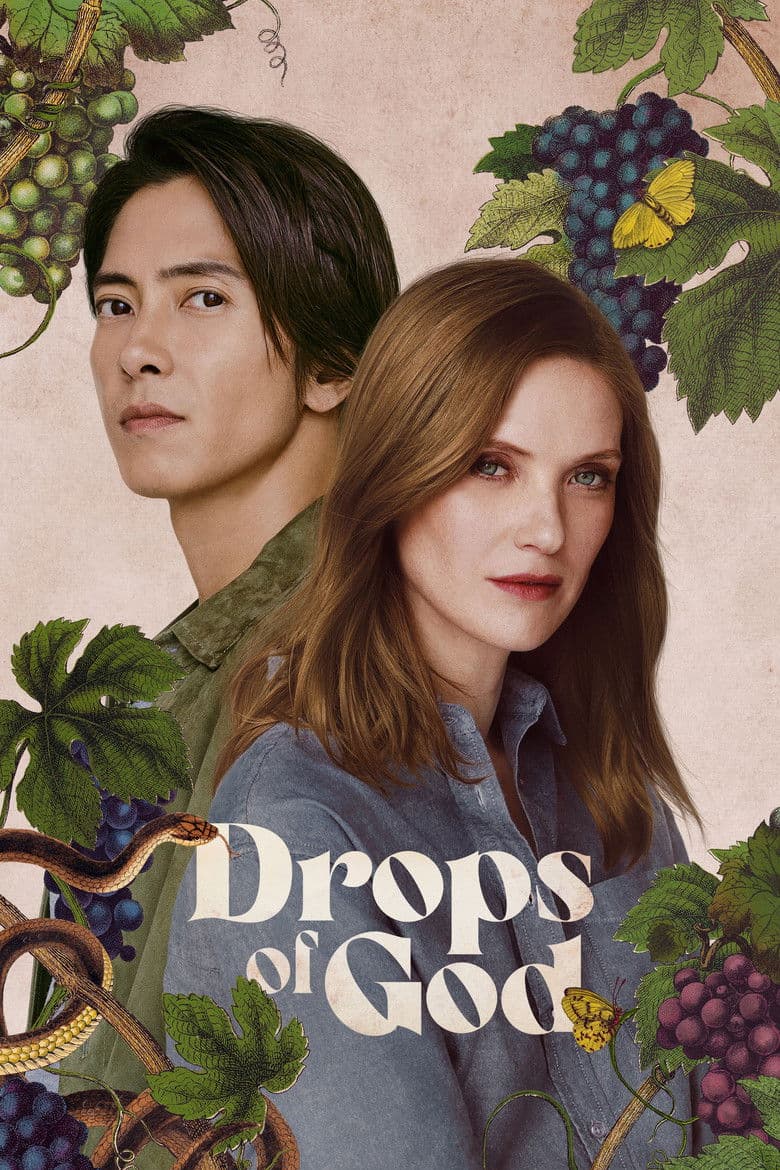
Started April 21, 2023 · Returning Series · Based on 2 seasons, 16 episodes through March 11, 2026 · TV-MA · French
Drops of God follows Camille Léger, a young French woman who returns to Tokyo after her estranged father, Alexandre, dies. He leaves a huge wine collection, but Camille must beat his best student, Issei Tomine, in wine tasting tests to inherit it. The contest reveals that Alexandre was also Issei’s biological father, so the rivals become half-siblings. Three years later, Camille and Issei chase the source of an unlabeled wine across France, Spain, Greece, Georgia, and Japan. The show is a slow family drama with mystery, romance, alcohol, and dark memories.
The clearest woke element is the adaptation’s change from a male Japanese lead in the manga to Camille, a French woman. Camille becomes a skilled wine expert who leads major investigations and fights for a place in a field shown as male-dominated. Season two adds repeated climate-change, drought, sustainable farming, and “old habits” arguments around the vineyards. The story also gives major space to several countries and cultures, but its main message remains about family wounds, inherited pressure, and learning to trust a sibling.
Community feedback
Was our 71% Woke rating accurate?
Breakdown
These are the editorial factors and ratings behind our score for Drops of God.
Woke representation / casting
The adaptation changes the manga’s male Japanese lead into Camille, a French woman, and puts her at the center of the show. Camille becomes a skilled wine expert, investigator, and winner of the first inheritance contest. The show also gives major roles to French, Japanese, Georgian, Greek, Spanish, and Italian characters because the story travels through those places. The female lead is the clearest identity-framed choice, while the wider national mix mostly fits the story.
56%
Woke political dialogue
Camille repeatedly talks about climate change and how vineyards must adapt. Season two adds arguments about drought, river water, sustainable farming, and changing old methods. Camille presents adaptation and breaking old habits as necessary for survival. The message is clear, but the dialogue stays inside the wine and farming plot.
40%
Identity-driven story themes
Camille’s story repeatedly centers on a woman claiming expert status in a field shown as male-dominated. The show makes cross-cultural identity and family belonging part of the bond between a French woman and a Japanese man who become half-siblings. Season two adds a Georgian family fight over land, tradition, and a threatened wine. These themes matter, but inheritance, trauma, wine, and sibling trust remain the main story.
38%
Western institutional / cultural critique
Season two criticizes a rich owner who tries to sell a family vineyard and replace it with a golf course. Camille challenges wine leaders who protect contest rules while a rare wine may disappear. The climate debate points to drought, river use, money, and old farming habits. The show keeps these conflicts inside the wine business and does not attack Western society or Christianity as a whole.
32%
Woke character or canon changes
The adaptation changes the manga’s main Japanese male character, Shizuku Kanzaki, into Camille Léger, a French woman. The change moves the central viewpoint and the inheritance win to a female lead. The show also changes the family history, locations, and relationships around the contest. This is a major identity change to established source material.
82%
Anti-woke backlash and complaints
Not present. Public criticism focused on source changes, pacing, and Camille’s choices. No sizable anti-woke campaign was found.
0%
Creator track record context
Quoc Dang Tran has a mainly mainstream record with some cross-cultural work. Alice Vial and Claire Lemaréchal often write women-centered stories. Clive Bradley brings a socialist background, while the other listed writers and producers are mostly low or moderate. This gives the show a mixed context that supports its female lead and climate material without showing a strong activist team.
38%
Production
TV Show · 2024
In Japan in the year 1600, at the dawn of a century-defining civil war, Lord Yoshii Toranaga is fighting for his life as his enemies on the Council of Regents unite against him…
TV Show · 2024
The powerful real-life story of Lali Sokolov, a Jewish prisoner who was tasked with tattooing ID numbers on prisoners' arms in the Auschwitz-Birkenau concentration camp during…
TV Show · 2026
The Clyburns uproot their comfortable New York City lives to the wild, untamed beauty of Montana's Madison River Valley on a search for connection.
TV Show · 2020
A wary CIA officer investigates a charismatic man who sparks a spiritual movement and stirs political unrest. Who exactly is he? And what does he want?
TV Show · 2024
Fascinated by cars since childhood, Brazilian racer Ayrton Senna became a sports legend — until tragedy struck, changing Formula 1 forever.
TV Show · 2019
The true story of one of the worst man-made catastrophes in history: the catastrophic nuclear accident at Chernobyl.
TV Show · 2023
The story of Bass Reeves, the legendary lawman of the wild West, is brought to life. Reeves worked in the post-Reconstruction era as a federal peace officer in the Indian…
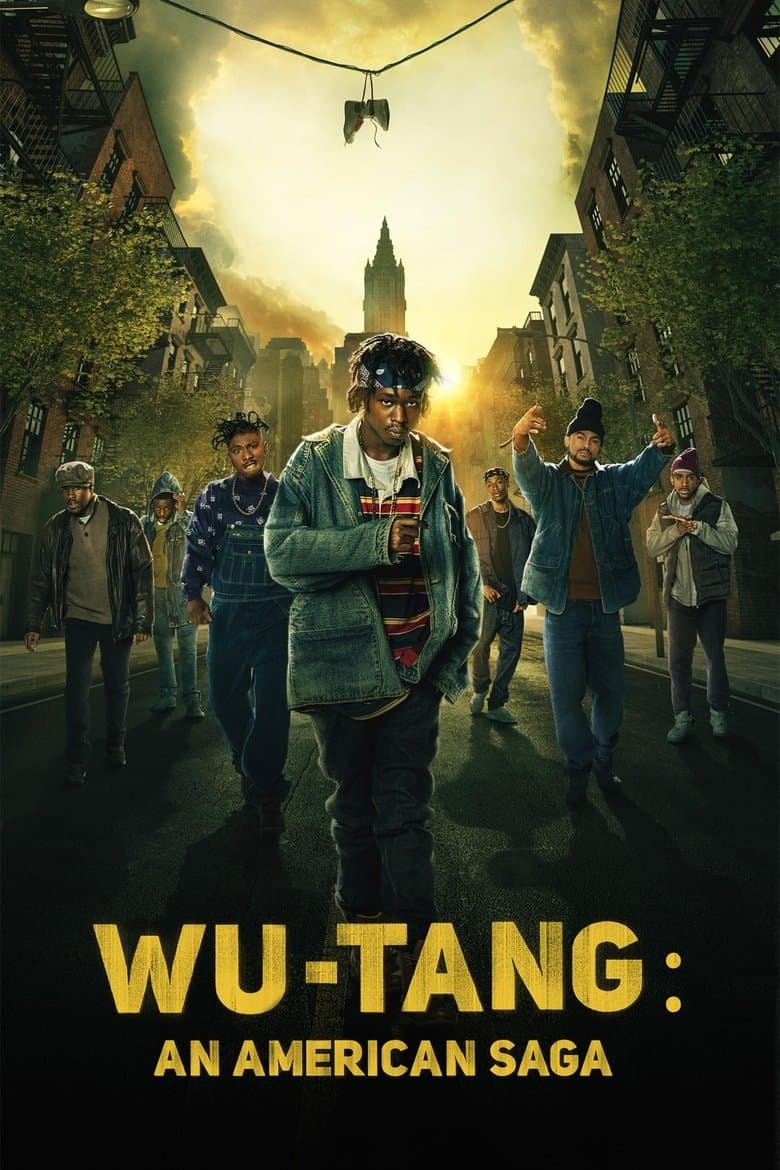
TV Show · 2019
In the early 1990s in New York, during the height of the crack cocaine epidemic, a visionary musician named Bobby Diggs aka The RZA begins to form a super group of a dozen young…
