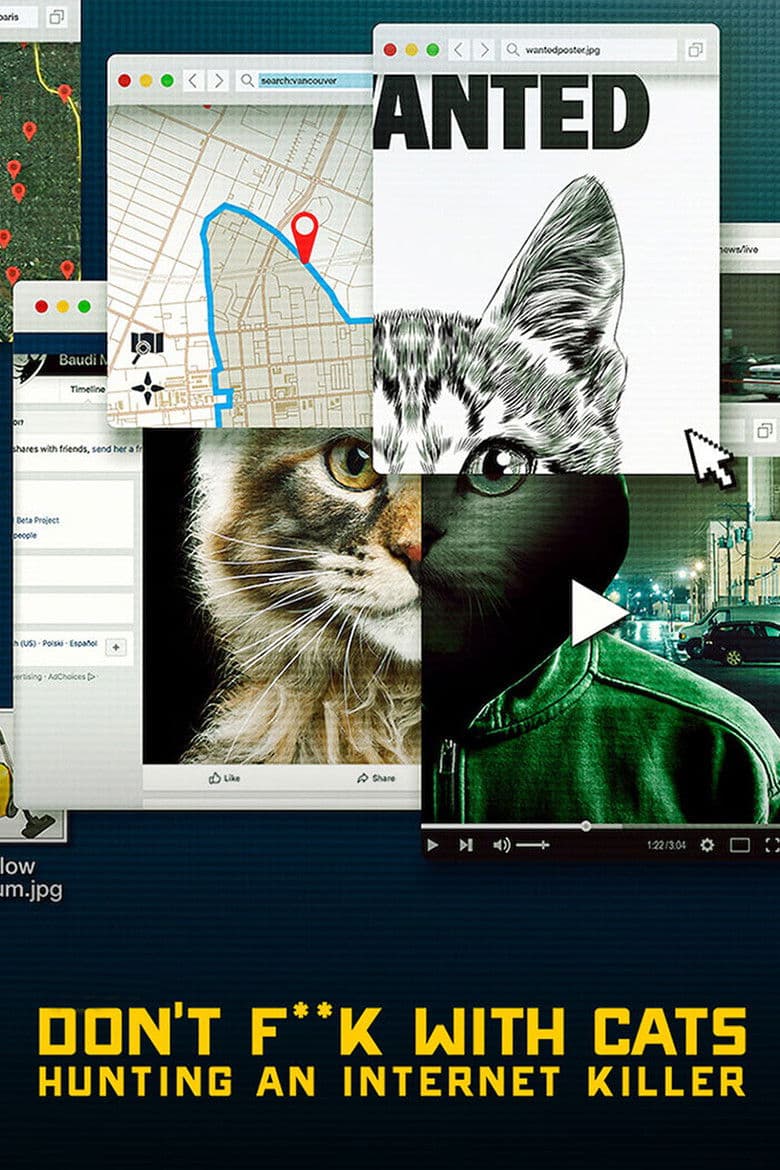
Started December 18, 2019 · Ended · Based on 1 season, 3 episodes through December 18, 2019 · TV-MA · 62 min
Deanna Thompson and John Green lead a group of online sleuths who try to find a man who posts videos of himself killing kittens. The hunt begins in 2010 when a Facebook group studies tiny clues in the videos and searches for the room, the city, and the killer. The case grows after the same man posts more animal attacks and then kills Chinese student Jun Lin. The three episodes follow the police chase, the killer’s need for attention, and the danger of online crowds. The tone is tense, grim, and deeply upsetting because the series uses short real crime clips and sound.
The clearest woke element is a short LGBTQ identity detail about Jun Lin. Episode 2 says that Lin was not openly gay and came to Canada because it was more liberal and accepting, so the series gives his private identity a small place in the case. This material is not a central campaign or a broad political message. The main themes are internet fame, animal cruelty, police delay, amateur investigation, false accusations, and the fear that attention can feed a killer. The ending asks whether detectives, viewers, and Netflix helped feed the killer’s need for attention.
Community feedback
Was our 12% Woke rating accurate?
Breakdown
These are the editorial factors and ratings behind our score for Don't F**k with Cats: Hunting an Internet Killer.
Woke representation / casting
Not present in this title.
0%
Woke political dialogue
Episode 2 says that Jun Lin was not openly gay and came to Canada because it was more liberal and accepting. The line links a personal move to LGBTQ acceptance. The series does not turn that point into a long political speech or activist argument.
10%
Identity-driven story themes
The series gives Jun Lin's LGBTQ identity a brief but clear place in the case. Episode 2 says he was not openly gay, and the show connects that fact to the events around his meeting with Magnotta. The story does not follow a queer relationship or build a larger identity campaign. Its main themes are online fame, animal cruelty, internet vigilantism, and the danger of feeding a killer's need for attention.
18%
Western institutional / cultural critique
Not present in this title.
0%
Woke character or canon changes
Not relevant. depicts actual events and individuals without ideological alterations to history or characters.
0%
Anti-woke backlash and complaints
Not present. No anti-woke or right-leaning complaints exist that accuse the show of pushing identity politics or DEI content.
0%
Creator track record context
Mark Lewis has a cached woke score of 2/100. Simon Mills also has a cached woke score of 2/100. Their listed documentary work has no known activist or identity-driven pattern. This gives the title only a very small creator track record context signal.
2%
Production
TV Show · 2019
A Cleveland grandfather is brought to trial in Israel, accused of being the infamous Nazi death camp guard known as Ivan the Terrible.
TV Show · 2021
The Son of Sam case grew into a lifelong obsession for journalist Maury Terry, who became convinced that the murders were linked to a Satanic cult.
TV Show · 2022
This harrowing docuseries explores, a cruel conman masquerading as a British spy manipulates and steals from his victims, leaving ruined families in his wake.
TV Show · 2023
With never-before-seen footage, this docuseries follows David Beckham's meteoric rise from humble beginnings to global football stardom.
TV Show · 2023
Follow the bruised bodies, soul-crushing fumbles, agonizing losses, and pure joy of three NFL quarterbacks during one season.
TV Show · 2021
Beneath the sunlit glamour of 1985 L.A. lurks a relentlessly evil serial killer. In this true-crime story, two detectives won't rest until they catch him.
TV Show · 2023
Through vividly enhanced archival footage and voices from all sides of the conflict, this docuseries brings WWII to life like never before.
TV Show · 2019
Using highly advanced colourisation techniques, critical moments from World War II, from Stalingrad to The Battle of Britain, are shown in a whole new light.
