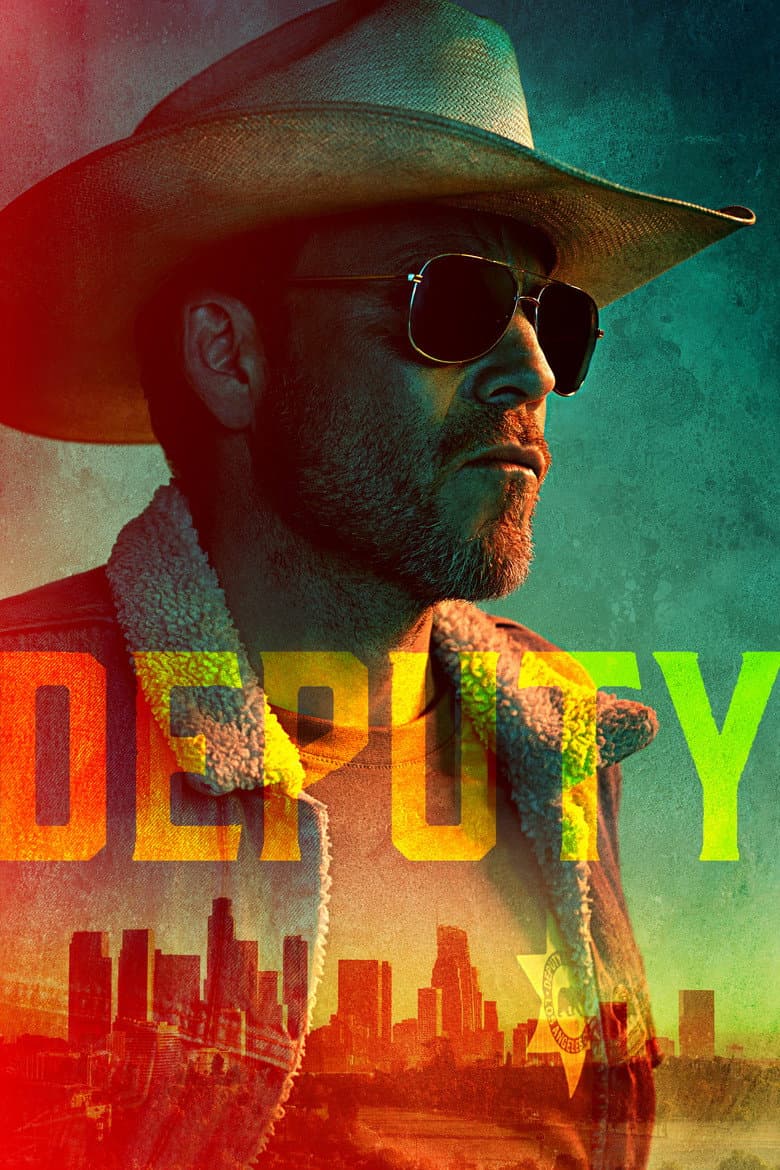
Started January 2, 2020 · Canceled · Based on 1 season, 13 episodes through March 26, 2020 · TV-14 · 43 min
Deputy follows Bill Hollister, a fifth-generation lawman who becomes the acting sheriff of Los Angeles County after the elected sheriff dies. Bill is better at chasing criminals than handling meetings, budgets, and election fights. He leads a team of deputies while trying to protect his wife Paula, his daughter Maggie, and Cade Ward’s foster children. The show uses a serious crime-drama tone with Western style, fast shootouts, family trouble, and rough jokes.
The main woke material centers on Deputy Brianna Bishop, who comes out as non-binary after a car accident and asks others to use they and them pronouns. Paula supports Bishop, and Bill accepts the change while telling Bishop to live honestly. The show also has Bill stop an ICE raid, defend immigrant families, expose police corruption, and confront a rich developer who targets a homeless camp. These ideas appear in several episodes, but Bill’s old-fashioned lawman story and the weekly crime cases remain the main focus.
Community feedback
Was our 59% Woke rating accurate?
Breakdown
These are the editorial factors and ratings behind our score for Deputy.
Woke representation / casting
The main cast places a white male sheriff at the center, while women and minority deputies hold important jobs in modern Los Angeles. That racial mix fits the setting and is not enough by itself to make the casting woke. Bishop is played by a non-binary actor, and the role changed from a lesbian woman to a non-binary deputy during development. FOX coverage highlighted Bishop as the first openly non-binary network television character, making identity part of the casting story.
44%
Woke political dialogue
The pilot has Bill stop an ICE raid and say the department should protect immigrant families. Episodes 7 and 9 use direct lines about non-binary identity, pronouns, and living one’s truth. Episode 10 includes a female candidate’s lines about an old boys’ club and the future being female. These lines appear in a few story arcs, while most episodes use ordinary crime talk and old-fashioned law-and-order speeches.
44%
Identity-driven story themes
Bishop’s identity becomes a continuing story after a car crash leads them to come out as non-binary. Paula supports Bishop, and Bill accepts the change and agrees to use the requested pronouns. The next episode makes the identity conflict part of Bishop’s relationship with Genevieve, and the finale starts a new relationship with Julie. This is a clear and sympathetic queer subplot, but Bill’s sheriff story still leads most episodes.
55%
Western institutional / cultural critique
The pilot treats an ICE raid as wrong and has Bill protect an immigrant neighborhood. Episode 5 says the LAPD wrongly targeted Joseph’s black friend, and Bill fights the cover-up. Episode 8 blames a rich developer for killing a homeless Marine veteran to clear an encampment, while Episode 10 attacks corrupt police leadership and an old boys’ club. The show still praises deputies and keeps Bill as the main law-and-order hero, so the critique is mixed rather than anti-institutional.
45%
Woke character or canon changes
Not relevant. Deputy is an original police series with no established book, franchise, or real historical cast of characters. The Bishop identity change happened during development, not in an older source.
0%
Anti-woke backlash and complaints
NewsBusters criticized the ICE stance in the pilot and later called the non-binary Bishop story an inserted woke issue. A TMDB user review called the show’s politics ultra woke, and a complaint-board post objected to the transgender material. Other audience reviews praised the cast and wanted a second season, while critics often called the politics mixed. The anti-woke reaction was real but limited and mostly came from individual or right-leaning outlets.
34%
Creator track record context
Will Beall’s background is that of a former LAPD detective, not an activist. David Ayer’s related work is gritty police crime, though he has spoken about diverse casts and changing police culture. The other cached producers have mainstream crime and network television backgrounds, so creator context adds only a weak woke signal.
13%
Production
TV Show · 2019
Erica Shepherd is a brilliant former CIA operative, now known as the most notorious traitor in American history serving life in a Supermax prison.
TV Show · 2024
Lone-wolf survivalist Colter Shaw roams the country as a “reward seeker,” using his expert tracking skills to help private citizens and law enforcement solve all manner of…
TV Show · 2019
The origin story of Bruce Wayne's legendary butler, Alfred Pennyworth, a former British SAS soldier who forms a security company in 1960s London and goes to work with young…
TV Show · 2020
Picking up just days after the “Power” finale, this sequel series follows Tariq navigating his new life, in which his desire to shed his father’s legacy comes up against the…

TV Show · 2025
In the working-class suburbs of Philadelphia, an FBI agent heads a task force assembled to put an end to a string of violent robberies led by an unsuspecting family man.
TV Show · 2019
Following an emotional breakup, tough but tender FBI super-agent Will Chase (codename: “Whiskey Cavalier”) is assigned to work with badass CIA operative Frankie Trowbridge…
TV Show · 2018
The harrowing true story of the 1993 standoff between the FBI, ATF and the Branch Davidians, a spiritual sect led by David Koresh in Waco, TX that resulted in a deadly shootout…

TV Show · 2024
Through the eyes of various Irish Republican Army (IRA) members, explore the extremes some people will go to in the name of their beliefs, the way a deeply divided society can…
