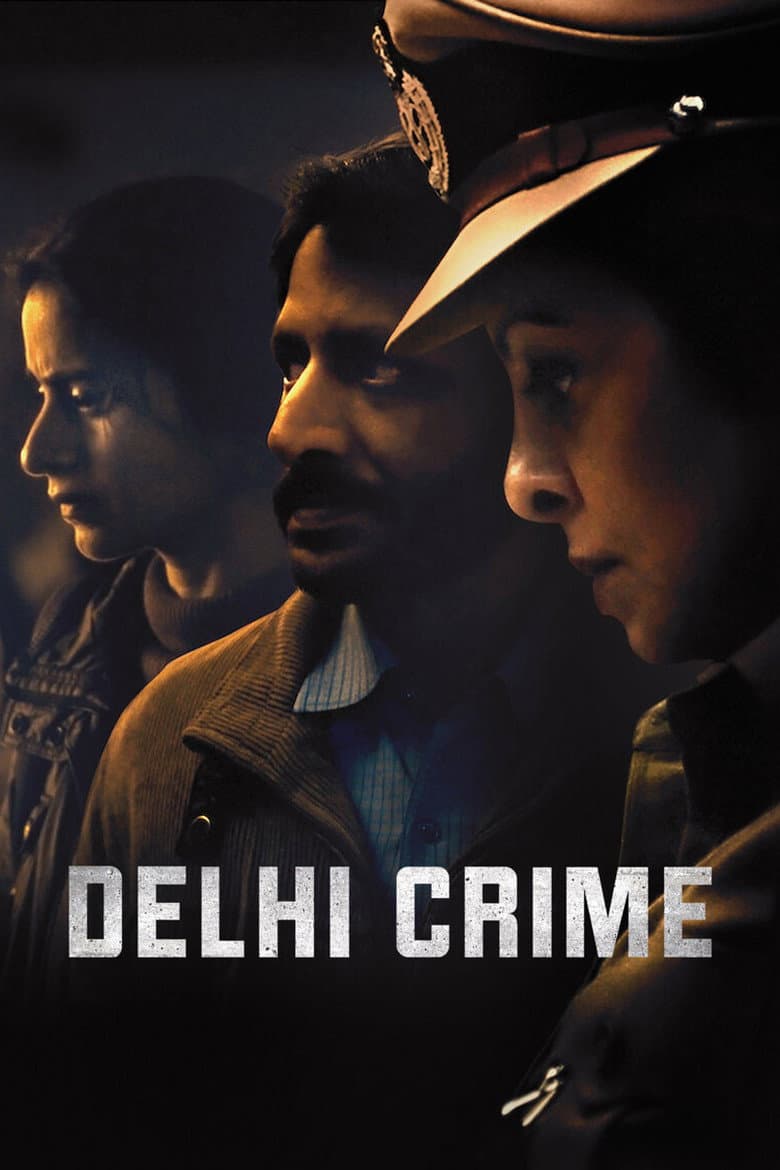
Started March 22, 2019 · Returning Series · Based on 3 seasons, 18 episodes through November 13, 2025 · TV-MA · Hindi
Delhi Crime follows DCP Vartika Chaturvedi as she leads a Delhi police team through serious cases. Season 1 follows the search for the men who raped and nearly killed a young woman on a bus in 2012. Season 2 follows brutal murders of older people linked to the Kachcha Baniyan gang. Season 3 moves Vartika to Assam, where missing girls lead her team to a trafficking network that reaches Delhi, Haryana, Rajasthan, and Thailand. The tone stays dark, tense, and close to the work of police officers.
The show repeatedly centers violence against women, girls, and children. Season 1 ties the crime to public anger, unsafe streets, poverty, and old ideas about women. Season 2 shows caste prejudice through police suspicion of poor communities once labeled criminal and focuses on women officers facing work and family pressure. Season 3 makes patriarchy, forced marriage, the selling of women, and the idea that girls are burdens part of the main mystery. The women lead much of the action, while the story presents gender and social systems as major causes of crime.
Community feedback
Was our 71% Woke rating accurate?
Breakdown
These are the editorial factors and ratings behind our score for Delhi Crime.
Woke representation / casting
Delhi Crime repeatedly puts women in the most important jobs, with Shefali Shah’s DCP Vartika leading the police team and Rasika Dugal’s Neeti growing into a senior officer. Season 3 adds Huma Qureshi as the trafficking boss and Sayani Gupta and Mita Vashisht in major roles, so women lead both the police and criminal sides. The pattern fits stories about crimes against women, and Vartika is based on a real female officer. Season 3 publicity called the clash a female version of Heat, which makes the repeated female-lead choice an open identity statement.
43%
Woke political dialogue
Season 1 has officers link sexual violence to poverty, job pressure, pornography, and ideas about women. Season 2 includes the direct line that no one is born a criminal and rejects the claim that some communities are born criminal. Season 3 repeats lines about missing girls, women being treated as goods, and women being dismissed in positions of power. These ideas appear in case talks and work arguments, but they do not take over most scenes.
42%
Identity-driven story themes
Season 1 makes violence against women and public demands for justice the main reason for the police hunt. Season 2 adds caste prejudice, the idea that poor groups are treated as born criminals, and pressure placed on working women. Season 3 makes missing girls, forced marriage, sex trade, and the belief that girls are burdens the main reason for the case. The show repeatedly treats these crimes as results of gender and social systems, so identity-driven story themes stay central across all three seasons.
68%
Western institutional / cultural critique
Season 1 shows police pressure, poor funding, media pressure, and rough treatment of protesters and suspects. Season 2 shows officers reject caste-based claims that some people are born criminals and shows higher officials pushing the team around. Season 3 links forced marriage, missing girls, and workplace disrespect to patriarchy and male entitlement. The show criticizes real institutions and social rules, but it does not attack Christianity or present a broad anti-capitalist message.
45%
Woke character or canon changes
Not relevant. The show uses fictional names and added story details around real cases, but no confirmed race, religion, gender, or sexuality swap is part of the story. The Season 3 online claim about a Hindu victim becoming Muslim is unverified and does not establish a change in the show.
0%
Anti-woke backlash and complaints
Small X accounts called Season 3 woke and alleged that it changed a Hindu trafficking victim into a Muslim victim to push propaganda. Those posts had very low views and no boycott or review-bombing was found. A named men’s-rights writer praised Season 2 for not attacking patriarchy, which shows a small anti-woke reading but not a major campaign. A Hollywood Reporter India review called the show’s empathy “woke almost,” while most other coverage and Reddit talk focused on story quality or praised its women-focused crime themes.
30%
Creator track record context
Richie Mehta has a record of female-led, socially serious work about violence against women and other public issues. Apoorva Bakshi has a strong record of gender-justice projects and stories about overlooked Indian voices. David A. Stern, Kilian Kerwin, and Pooja Kohli have moderate records tied to social issues, cultural voices, and access for underrepresented filmmakers. Most of the other listed producers have commercial careers and no public activist record.
44%
Production
TV Show · 2019
Within the walls of an interrogation room, London investigators question suspects accused of grievous crimes until the truth comes to light.
TV Show · 2019
A Cleveland grandfather is brought to trial in Israel, accused of being the infamous Nazi death camp guard known as Ivan the Terrible.

TV Show · 2018
The stranger-than-fiction account of a prison break in upstate New York in the summer of 2015, which spawned a massive manhunt for two convicted murderers who were aided in their…

TV Show · 2017
When Daniel Glass is misdiagnosed with a fatal disease he begins to notice how everyone around him treats him better.
TV Show · 2019
A twisted criminal's gruesome videos drive a group of amateur online sleuths to launch a risky manhunt that pulls them into a dark underworld.
TV Show · 2022
Bosch is now making a living as a private investigator two years after he quit the LAPD and finds himself working with one time enemy and top-notch attorney Honey “Money”…
TV Show · 2021
The Son of Sam case grew into a lifelong obsession for journalist Maury Terry, who became convinced that the murders were linked to a Satanic cult.

TV Show · 2023
Candy and Pat Montgomery and Betty and Allan Gore — two churchgoing couples — enjoy their small town Texas life... until an extramarital affair leads somebody to pick up an axe.
