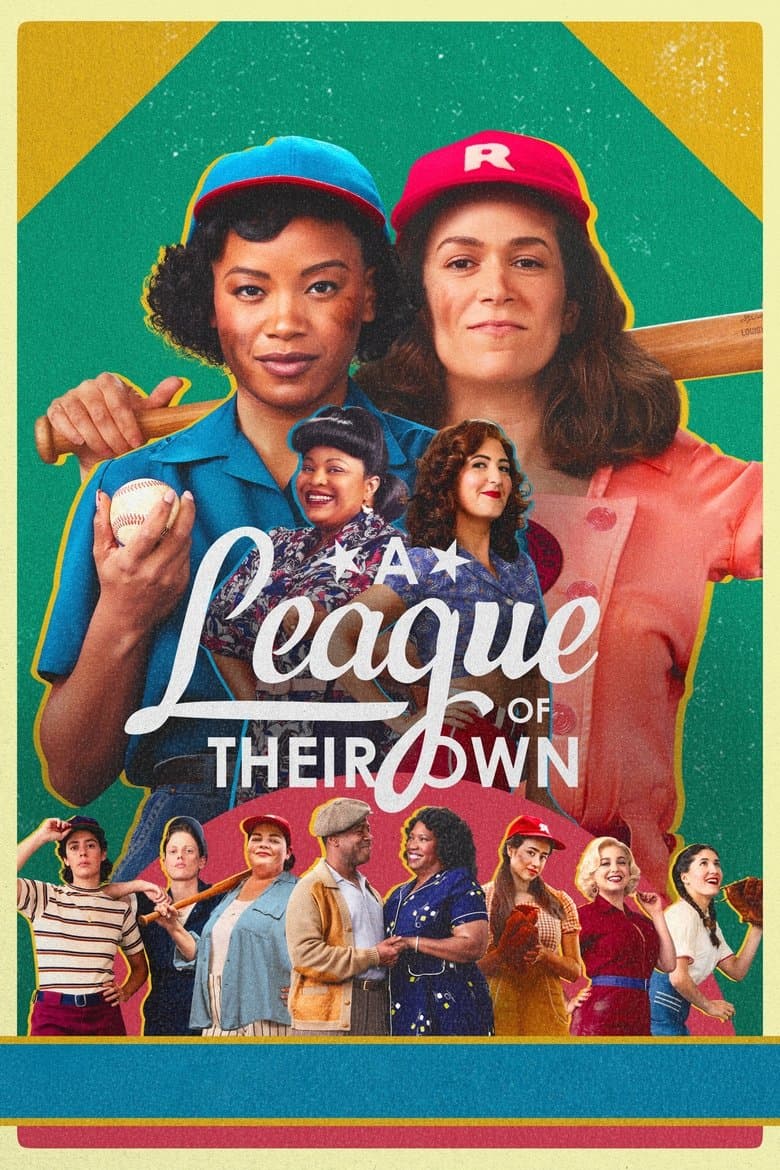
Started August 11, 2022 · Canceled · Based on 1 season, 8 episodes through August 11, 2022 · TV-14
Carson Shaw leaves her small-town life in 1943 to try out for the Rockford Peaches, a new professional women’s baseball team formed while many men are away at war. She is married, unsure of what she wants, and drawn to Greta, a confident teammate who opens a new part of her life. Max Chapman is a gifted black pitcher who is turned away because the league does not accept Black players. Max keeps chasing a place in baseball while working at her mother’s salon and trying to protect her family and friendship with Clance. The show mixes comedy, romance, baseball, and painful stories about the rules that control women.
Queer identity is one of the show’s main subjects, not a small side story. Carson’s romance with Greta grows across the season, and several teammates also hide or explore relationships with women. Max’s story covers racial exclusion, attraction to women, and her bond with Bertie, her black trans uncle. The series also shows men controlling the league, fans judging women’s bodies, and families policing gender and sexuality. These themes often receive as much time as the games, so viewers looking for a simple sports comedy will find a much more identity-focused drama.
Community feedback
Was our 92% Woke rating accurate?
Breakdown
These are the editorial factors and ratings behind our score for A League of Their Own.
Woke representation / casting
The show makes Max Chapman, a black woman, one of its two main leads even though the league excludes Black players. The story explains this choice through the real racial rules of 1943 and gives Max a separate path into professional baseball. The Peaches also place Latina and Cuban women in important roles. The casting builds a clear diversity focus, but most of these identity choices are tied to the period setting and the plot.
40%
Woke political dialogue
The show repeatedly has characters discuss who is allowed to play, work, marry, and live openly. Max faces direct racial exclusion, while the Peaches face rules about women’s bodies and behavior. Characters also talk about hiding same-sex relationships and the danger of being seen as queer. These talks run through both main plots, but they stay mostly inside the 1940s story instead of becoming speeches about current elections or parties.
52%
Identity-driven story themes
Carson’s main arc follows her discovery that she wants a relationship with a woman. Carson and Greta’s romance grows across the season and affects the marriage, team, and ending. Max’s story follows racial exclusion, attraction to women, and her bond with Bertie, her black trans uncle. Several teammates hide or explore same-sex relationships, and a queer bar gives them a place to meet. Queer identity and racial identity shape the main stories, so this is a central theme.
90%
Western institutional / cultural critique
The show presents the league’s male owners as policing how women should look and act to sell tickets. The story shows Black players being shut out and queer women being pushed to hide from family, fans, and authorities. Family pressure also treats gender nonconformity as dangerous or shameful. These repeated conflicts make institutions and social rules part of the show’s message, although the setting is historical and the plot is not about modern political parties.
50%
Woke character or canon changes
The series keeps the 1943 Rockford Peaches setting from the 1992 film but changes the center of the story. It turns the film’s hidden queer subtext into Carson’s same-sex romance and several openly queer storylines. It adds Max’s Black baseball path and Bertie, a black trans man, as major parts of the season. These are large identity-focused changes to the source, not simple cuts or setting updates.
78%
Anti-woke backlash and complaints
User reviews and public posts called the series too woke, too focused on lesbians, or a rewrite of the original film. The Washington Examiner called the show left-wing woke propaganda and objected to its race and sexuality plots. News reports described a wave of one-star reviews on Amazon and other rating sites. The backlash was clear but mostly came from partisan commentary and user reviews, while many mainstream reviews were mixed or positive.
58%
Creator track record context
Abbi Jacobson has a strong record of queer women, female friendship, and gender-expansive humor. Will Graham has supported queer stories about racially diverse women. Several other listed directors and writers have clear records of queer, trans, Black, feminist, or identity-centered work. The creative group is mixed, but its core leaders and many senior contributors strongly match the show’s focus.
76%
Production
TV Show · 2020
After being bullied and discriminated because of her ugly looks, a high school girl transforms herself into a gorgeous "goddess" and quickly rises to fame after mastering the art…
TV Show · 2020
The heartwarming and humorous adventures of a young country vet in the Yorkshire Dales in the 1930s. A remake of the 1978 series.
TV Show · 2016
Set nearly a decade after the finale of the original series, this revival follows Lorelai, Rory and Emily Gilmore through four seasons of change.

TV Show · 2018
When his secretary unexpectedly quits, an arrogant executive will do anything to bring her back.
TV Show · 2019
Following an emotional breakup, tough but tender FBI super-agent Will Chase (codename: “Whiskey Cavalier”) is assigned to work with badass CIA operative Frankie Trowbridge…

TV Show · 2022
In disguise as her friend, Ha-ri shows up to a blind date to scare him away. But plans go awry when he turns out to be her CEO — and makes a proposal.
TV Show · 2023
The lives of a realtor, a plumber and a former tennis star unexpectedly collide, exposing America’s obsession with true crime, murder and the slow-close toilet seat.
TV Show · 2016
After being pulled into the webtoon world created by her father, a surgical resident gets entangled in a murder mystery involving the story's hero.
