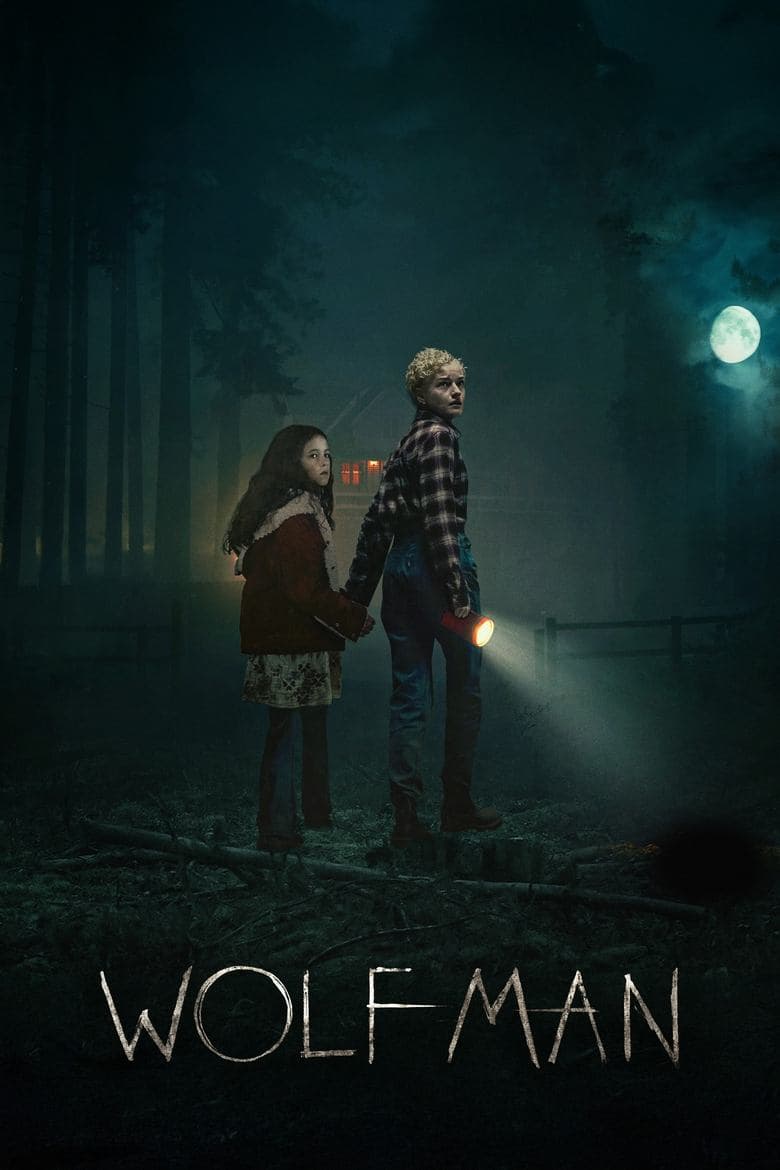
Blake Lovell is a stay-at-home father who wants to repair his strained marriage and protect his young daughter. He takes his wife, Charlotte, and their daughter, Ginger, from San Francisco to his remote childhood home in rural Oregon after his missing father is declared dead. A creature attacks them on the road, and a wound begins to turn Blake into a wolf man while the family hides inside the farmhouse. The film uses body horror, dark woods, family fear, and a sad tone as Blake loses control and his family fights to survive.
The story links the monster to Blake's harsh father and to the fear that bad male behavior can pass from father to son. Blake tries to be a better parent, but the change makes him repeat the violence he feared. Charlotte and Ginger become the people who face the threat, and the ending joins them after Charlotte kills the wolf man to save them. This gives the movie a clear critique of abusive fatherhood, male rage, and old ideas about men as protectors, but the film stays focused on one family's horror rather than a wider political cause.
Community feedback
Was our 47% Woke rating accurate?
Breakdown
These are the editorial factors and ratings behind our score for Wolf Man.
Woke representation / casting
Not present. The movie uses a white American family in present-day San Francisco and rural Oregon. It does not present the cast as a diversity or identity statement.
0%
Woke political dialogue
Not present. The characters talk about family fear, illness, parenting, and survival. They do not make direct political or activist arguments.
0%
Identity-driven story themes
The story makes Blake's inherited male violence a main part of the monster's meaning. His father teaches harsh survival, control, and fear. Blake worries that the same behavior will hurt his daughter, and his change turns those fears into attacks on his wife and child. The ending gives Charlotte and Ginger the power to stop the male threat and begin life together.
48%
Western institutional / cultural critique
The film presents old ideas about men as protectors as harmful when Grady uses them to control and frighten Blake. Blake's father passes anger and violent habits down through the family. The movie also reverses the usual home roles by making Blake the stay-at-home parent and Charlotte the main worker. Charlotte and Ginger finally survive by rejecting the violent male pattern.
43%
Woke character or canon changes
The film reworks the classic Wolf Man into a modern fatherhood story about inherited male violence. The monster is Blake's father and then Blake, while the wife and daughter replace the older male-centered ending by killing him and starting over. The change is mainly thematic, not a race or sex replacement.
30%
Anti-woke backlash and complaints
A few small X accounts called the film misandrist or “4th wave feminist slop.” Another account guessed before release that it looked very woke. The posts had little or no engagement, and no broad boycott or review-bomb campaign appeared.
12%
Creator track record context
Leigh Whannell has spoken about guns and has made films with social themes around abuse and family danger. Jason Blum has added gun-control and class themes to some Purge films and has criticized Donald Trump. The other listed creators have little public record of activist or identity-driven work.
18%
Production
Movie · 2024
After raising an unnervingly talented spider in secret, 12-year-old Charlotte must face the truth about her pet and fight for her family's survival.
Movie · 2021
The Blind Man has been hiding out for several years in an isolated cabin and has taken in and raised a young girl orphaned from a devastating house fire.

Movie · 2022
Finney Blake, a shy but clever 13-year-old boy, is abducted by a sadistic killer and trapped in a soundproof basement where screaming is of little use.
Movie · 2018
A man recently released from a mental institute inherits a mansion after his parents die. After a series of disturbing events, he comes to believe it is haunted.

Movie · 2019
A lone fisherman on his daily run finds himself lost in a thick fog which proves impossible to navigate. The worst is yet to come when his encounter with a seemingly abandoned…
Movie · 2016
Ronnie runs a Disco walking tour with his son, Brayden. When a sexy woman takes the tour, it begins a competition between father and son for her love.

Movie · 2024
Nothing is what it seems when a twisted one-night stand spirals into a serial killer’s vicious murder spree.
Movie · 2021
A young couple is pushed to the limits of sanity as they attempt to be reunited amid the chaos of a pandemic outbreak.
