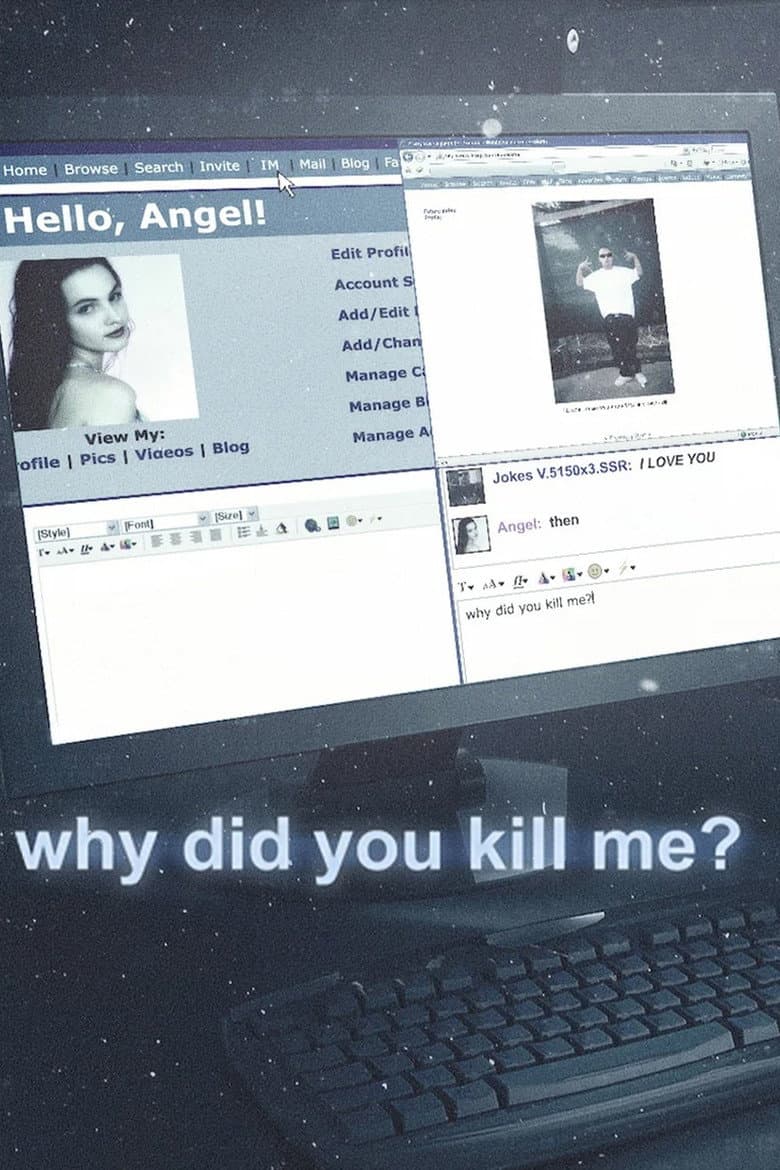
Why Did You Kill Me? follows Belinda Lane after her 24-year-old daughter, Crystal Theobald, is shot in Riverside, California, in 2006. The police have few answers, so Belinda and her teenage niece Jaimie search MySpace for the gang members they think were involved. They make fake profiles, build online trust, and use messages to learn who was in the car. The film has a dark true-crime tone, with grief, anger, drugs, gang violence, and fear driving the story.
The film centers on the line between justice and revenge. Belinda first wants to find the killers, but her plan grows into threats, a plot to kill several people, and a later search for another suspect in Mexico. The documentary also shows the fake profiles using Crystal’s pictures, slang tied to a different racial group, and a made-up identity to reach the gang. Belinda later sees how her own past and her sons’ gang ties connect to the violence, and she asks the court to remove the death penalty.
Community feedback
Was our 18% Woke rating accurate?
Breakdown
These are the editorial factors and ratings behind our score for Why Did You Kill Me?.
Woke representation / casting
Not present. The film uses real people from the case instead of actors. Their identities come from the real events, and the movie does not frame the group as a diversity statement.
0%
Woke political dialogue
Not present. The interviews discuss crime, grief, drugs, gang life, and revenge. The film does not build its spoken material around DEI, identity politics, or gender-rights ideas.
0%
Identity-driven story themes
The film shows a white mother and her niece using photos and slang tied to a different racial group in fake online profiles. The film also shows Belinda making racial guesses about suspects and using ICE against gang families. These choices add a clear identity-related layer to the story. The main focus stays on murder, grief, gang violence, revenge, and justice, so this layer is noticeable but not central.
24%
Western institutional / cultural critique
Not present. The family distrusts police, but the movie does not make a repeated activist attack on police, family life, Christianity, or Western institutions. Its conflict is about a murder case and vigilante action.
0%
Woke character or canon changes
Not relevant. The documentary presents a real case, not an adaptation with established fictional characters or canon. No identity-related change to a source or historical figure is part of the movie.
0%
Anti-woke backlash and complaints
Not present. Audience complaints focused on pacing, missing background, and Belinda’s conduct. No clear anti-woke or anti-DEI complaint about the film appears in the available public reaction.
0%
Creator track record context
Lucy Walker has a repeated record of films about overlooked groups, disability, trauma, and social or environmental problems. John Turner has worked on documentaries about corporate abuse, immigration, and other public issues. Julian Cautherley and Hector Coles have some socially focused work, but no strong public identity-politics record is clear. Fredrick Munk has no clear record of sustained political or DEI advocacy. This gives the creative team a mild supporting signal, not a strong one.
29%
Production
Movie · 2024
In this twisting documentary, a mechanic tries online dating for the first time and meets a woman who takes romantic obsession to a deadly extreme.
Movie · 2026
A teen slams her car into a building, killing her boyfriend and his friend. What seems like a tragic accident becomes a murder case.
Movie · 2026
Police pull over a woman who claims she just gave birth. But the baby — and the blood — aren't hers. Twisted lies unravel in this true-crime documentary.
Movie · 2017
Child abuse, mental illness, and forbidden love converge in this mystery involving a mother and daughter who were thought to be living a fairy tale life that turned out to be a…

Movie · 2022
Follows the man who survived an assassination attempt by poisoning with a lethal nerve agent in August 2020. During his months-long recovery, he makes shocking discoveries about…
Movie · 2022
In candid conversations with actor Jonah Hill, leading psychiatrist Phil Stutz explores his early life experiences and unique, visual model of therapy.
Movie · 2023
After Kai saves a woman's life, he turns into an overnight hero and viral sensation — until disturbing truths about his erratic behavior come to light.
Movie · 2023
A short kid from a Canadian army base becomes the international pop culture darling of the 1980s—only to find the course of his life altered by a stunning diagnosis.
