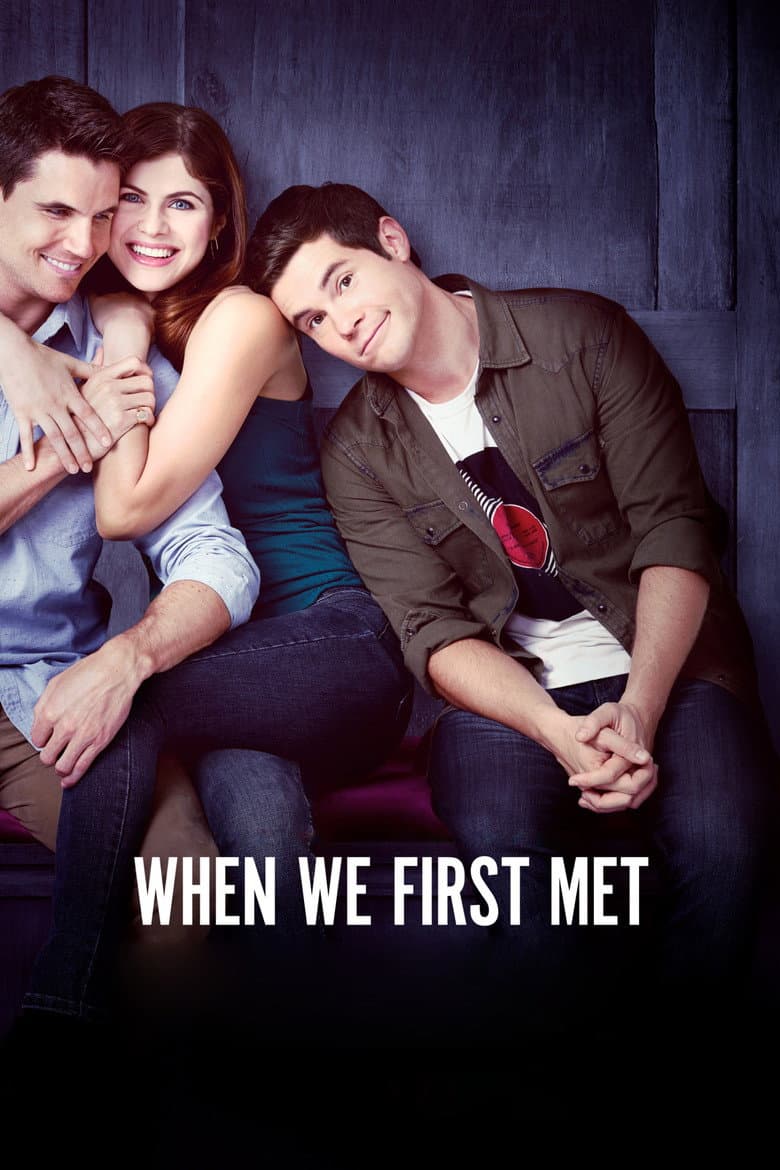
When We First Met follows Noah Ashby, a young piano player who cannot accept that Avery Martin sees him only as a friend. After Avery announces her engagement to Ethan, Noah finds a magical photo booth in a jazz club. The booth sends him back to the Halloween night when he first met Avery, so he keeps trying to change that meeting and win her love. The movie uses bright comedy, crude jokes, time travel, and a sweet romance to tell a story about regret, choice, and growing up.
The strongest social message comes from Noah’s belief that Avery’s choice can be fixed if he changes his looks, job, or dating style. The story repeatedly shows this plan failing and has Avery and Carrie call out his stalking and pressure. It ends when Noah accepts Avery’s choice and stops treating friendship as a prize he lost, while he begins a new relationship with Carrie. The movie also includes a brief lesbian-cousin joke and one insulting word aimed at transgender people.
Community feedback
Was our 32% Woke rating accurate?
Breakdown
These are the editorial factors and ratings behind our score for When We First Met.
Woke representation / casting
Not present. The main cast is mostly white, with one black supporting friend. The movie does not frame race, gender, or representation as a message, and the cast does not look unusually engineered for a modern city story.
0%
Woke political dialogue
Not present. The dialogue does not promote DEI, activist politics, or modern identity campaigns. It uses crude dating advice, gender stereotypes, and insulting jokes instead.
0%
Identity-driven story themes
The story centers on Noah treating Avery’s rejection as a problem he can solve. Avery and Carrie repeatedly push back when he uses time travel, pressure, or pickup tricks to get his way. The ending tells Noah to accept Avery’s choice and stop treating friendship as a loss. This is a clear but narrow message about male entitlement and women’s choice, not a broad identity or activist plot.
32%
Western institutional / cultural critique
The story repeatedly makes Noah’s “nice guy” thinking and male entitlement look foolish. Max teaches him to act like an assertive and ambitious jerk, and the plan leads to rejection, fights, and a stalker label. Avery and Carrie defend their own choices instead of rewarding pressure or persistence. The film rejects the idea that a man deserves romance because he invested time in a friendship, but it keeps the lesson inside a light comedy.
42%
Woke character or canon changes
Not relevant. The movie is an original story about Noah, Avery, Carrie, Max, and Ethan. It does not change a known character, book, franchise, or real event.
0%
Anti-woke backlash and complaints
Not present. The separate X pass found no anti-woke reaction or named complaint. Other coverage focused on consent, the friend-zone premise, and sexist or trans-related jokes, not claims that the movie pushes DEI or left-wing politics.
0%
Creator track record context
Ari Sandel, John Whittington, and Adam DeVine have low stored scores and no clear record of activist work. Ari’s short West Bank Story supports coexistence between Israelis and Palestinians, but that message is not part of this movie. Producer Daniella Kahane has a stronger record of women-centered work and gender-equality efforts. Her background gives a mild context signal, while the film itself does not use that work as a main theme.
16%
Production

Movie · 2019
A struggling musician realizes he's the only person on Earth who can remember The Beatles after waking up in an alternate reality where the group was forgotten.
Movie · 2018
When teenager Elle's first kiss leads to a forbidden romance with the hottest boy in high school, she risks her relationship with her best friend.

Movie · 2021
Two teenagers trapped in an endless time loop set out to find all the tiny things that make that one day perfect.

Movie · 2023
Hapless family man Paul Matthews finds his life turned upside down when millions of strangers suddenly start seeing him in their dreams.

Movie · 2018
Titu is going to marry a perfect woman named Sweety. Titu's best-friend Sonu doubts Sweety's character and tries to break the marriage while Sweety tries to do opposite and which…
Movie · 2016
Mia, an aspiring actress, serves lattes to movie stars in between auditions and Sebastian, a jazz musician, scrapes by playing cocktail party gigs in dingy bars, but as success…

Movie · 2020
Seven years since the Monsterpocalypse began, Joel Dawson has been living underground in order to survive. But after reconnecting over radio with his high school girlfriend Aimee…
Movie · 2026
A happily engaged couple is put to the test when an unexpected turn sends their wedding week off the rails.
