Movie review
October 16, 2020 · 109 min · PG-13 · Sci-Fi · Fantasy · Comedy · Adventure
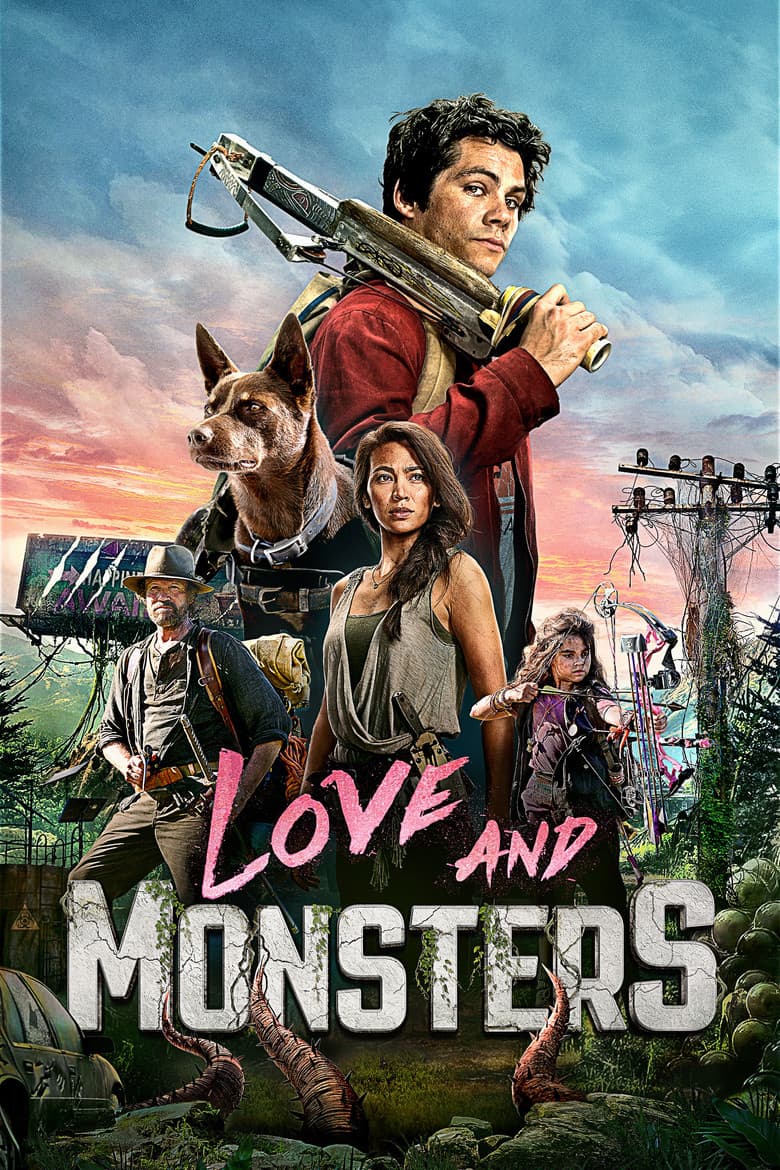
Seven years after chemicals from a destroyed asteroid turn cold-blooded animals into giant killers, timid bunker cook Joel Dawson leaves safety to walk about eighty-five miles to high-school girlfriend Aimee. He travels with a stray dog named Boy, meets survival mentors Clyde and Minnow, and faces classic adventure dangers along the way. He grows from a scared kitchen worker into someone who can face the surface world. The film feels like an earnest boy-and-dog adventure-comedy with adventure-movie and monster-movie energy, not a story about identity politics. Its main ideas are courage, hope, found family, and how romantic dreams meet real life.
Aimee leads an elderly coastal colony, has already mourned someone else, and is not written as a prize waiting to be saved. The ending softens the pure save-the-girl fantasy without turning into activist messaging. Casting shows light but clear diversity, including a mixed-Asian love interest opposite a white male lead and multiethnic supporting players in a modern California-style post-apocalypse that feels demographically plausible. There is mild female agency in Aimee as an independent person who has lived a full life, plus one brief same-sex gag when Joel, under hallucinogenic leeches, kisses a man he thinks is Aimee. Dialogue stays on survival, fear, dogs, romance, and monsters rather than politics.
Community feedback
Was our 16% Woke rating accurate?
Breakdown
These are the editorial factors and ratings behind our score for Love and Monsters.
Woke representation / casting
Mixed-Asian Jessica Henwick plays the love interest and de facto leader of an elderly coastal colony opposite a white male lead. Bunker and pirate crews also include multiethnic supporting players. The setting is a modern California-style post-apocalypse where that mix feels demographically plausible. The film does not market casting as a diversity statement or use a brilliant minority scientist or pilot template.
18%
Woke political dialogue
Not present. No activist, DEI, identity, or left-wing political speeches. Dialogue stays on survival, fear, dogs, romance, and monsters.
0%
Identity-driven story themes
The core arc is coming-of-age courage and a boy-and-dog quest, not race, gender, or queer activism. Aimee is independent, has lived a full life, and is not a pining damsel. A brief hallucination gag has Joel kiss a man he thinks is Aimee. That incidental beat raises the theme score a modest amount under LGBTQ incidental rules.
16%
Western institutional / cultural critique
Not present. No systemic attack on Western institutions, Christianity, capitalism, whiteness, or toxic masculinity as ideology. Joel’s fear is personal PTSD and cowardice in a monster world. Villains are opportunistic pirates, not stand-ins for the West.
0%
Woke character or canon changes
Not relevant. This is an original screenplay, formerly titled Monster Problems, not an adaptation of established characters or history.
0%
Anti-woke backlash and complaints
Not present. No sustained anti-woke news cycle treated the film as DEI or identity propaganda. Reception was largely warm. Some viewers praised it for not pushing woke messages.
0%
Creator track record context
Cached scores for key creatives are mild overall, with Matthews at 17, Duffield at 24, Robinson at 4, Levy at 9, and Cohen at 10. There are mild liberal or genre undercurrents for Duffield and a commercial entertainment focus overall. There is no activist or identity-first pattern among the main creatives.
14%
Production
Movie · 2021
When single mom Callie and her two kids Trevor and Phoebe arrive in a small Oklahoma town, they begin to discover their connection to the original Ghostbusters and the secret…

Movie · 2019
As the gang return to Jumanji to rescue one of their own, they discover that nothing is as they expect. The players will have to brave parts unknown and unexplored in order to…
Movie · 2023
Paul and Sophie, interns at a mysterious London firm, become steadily aware their employers Humphrey and Dennis are anything but conventional – they are disrupting the world of…
Movie · 2026
When their plan to book a show at the Rivoli goes horribly wrong, Matt and Jay accidentally travel back to the year 2008.
Movie · 2026
Science teacher Ryland Grace wakes up on a spaceship light years from home with no recollection of who he is or how he got there.
Movie · 2023
Following the sudden death of his mother, a mild-mannered but anxiety-ridden man confronts his darkest fears as he embarks on an epic odyssey back home.
Movie · 2026
A 'Man from the Future' arrives at an LA diner where he must recruit the precise combination of disgruntled patrons to join him on a one-night quest to save the world from the…
Movie · 2018
After being uprooted by his parents' separation and unable to fit into his new hometown, a teenager stumbles upon a magical app that causes his social media updates to come true.
