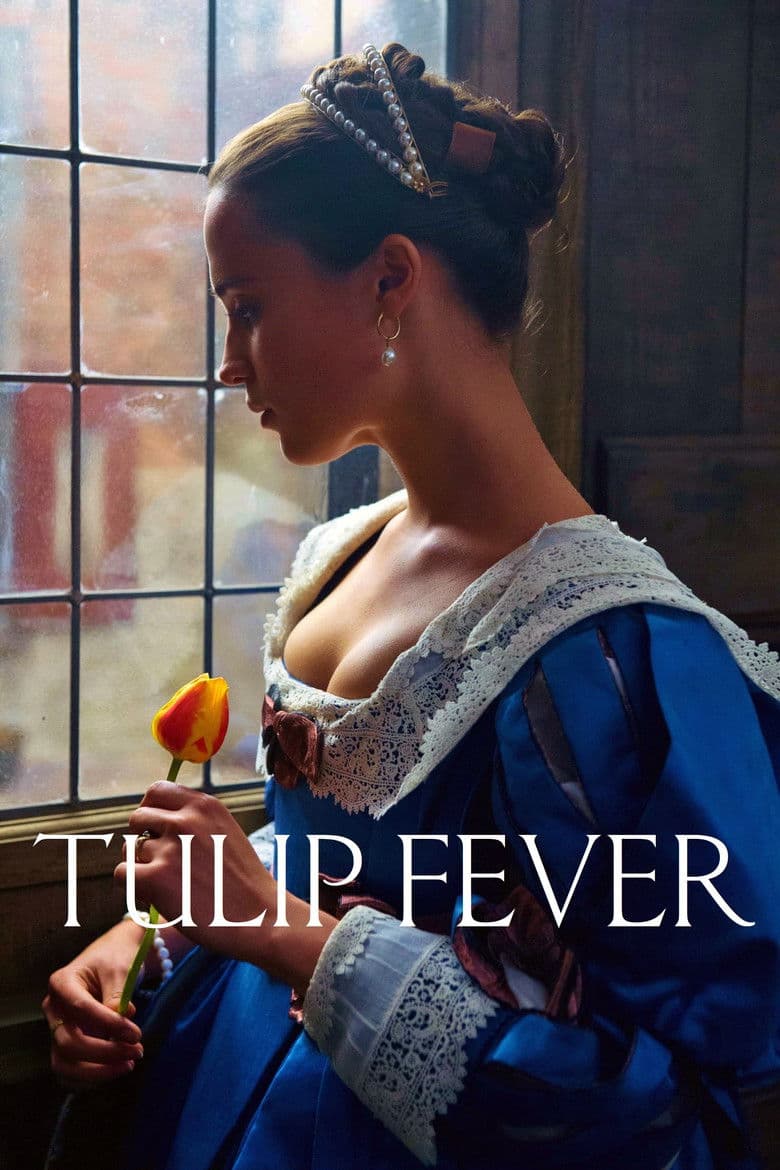
Sophia is an orphan in 1630s Amsterdam who is married to Cornelis, a rich older merchant. Cornelis wants a child and heir, but Sophia feels trapped in a marriage chosen for security rather than love. After a painter named Jan comes to make their portrait, Sophia begins a secret affair with him and joins his risky plan to trade tulip bulbs. The film mixes forbidden romance, sexual drama, deception, and comic twists with the bright colors and busy markets of the Dutch Golden Age.
The clearest woke element is the film’s sympathetic focus on women who have little control over marriage, sex, pregnancy, and money. Sophia and Maria try to gain safety and freedom by hiding a pregnancy and planning a new life, so female choice shapes a major part of the story. The film also treats old marriage rules as unfair, but it does not use modern political speeches or identity language. The woke material is serious but limited to the period romance and its characters rather than a wider activist message.
Community feedback
Was our 36% Woke rating accurate?
Breakdown
These are the editorial factors and ratings behind our score for Tulip Fever.
Woke representation / casting
Not present. The prominent cast is mostly white and fits a 17th-century Amsterdam period drama. A few nonwhite supporting performers do not create a diversity-first story or casting message.
0%
Woke political dialogue
Not present. The characters do not use modern political or activist language. Their talk focuses on marriage, faith, sex, art, money, and tulip trading.
0%
Identity-driven story themes
Sophia is valued as a wife who must give Cornelis an heir. The story shows her lack of control over marriage, sex, pregnancy, and money. Sophia and Maria work together to hide a pregnancy and seek safer lives, which makes female friendship and female choice a major part of the plot. The film treats their struggle with sympathy, but it frames it as a period romance rather than a modern identity campaign.
42%
Western institutional / cultural critique
The marriage system treats Sophia as a way to produce an heir. The convent calls marriage a safe path for a woman and helps place her in that role. Cornelis first sees marriage through duty and ownership, while a fertility doctor uses women’s fear of being cast aside. The film shows these old power rules as harmful, but it does not turn them into a modern attack on Christianity or Western institutions.
36%
Woke character or canon changes
Not relevant. The film adapts Deborah Moggach’s fictional novel. Its changes are ordinary screen adaptation choices, with no identity-driven rewrite of a known character or historical figure.
0%
Anti-woke backlash and complaints
Not present. Searches found no meaningful complaints that the film pushes woke, DEI, or identity politics. Public complaints focused on the messy plot, long release delays, Weinstein’s role, and the film’s quality.
0%
Creator track record context
Deborah Moggach often centers women’s lives, relationships, and changing gender roles. Shaheen Baig is linked to inclusive casting and equal access in the film industry. Producer Alison Owen has backed women-centered projects and spoken about sexism in film. Justin Chadwick and Tom Stoppard have much milder links to woke themes, and most other producers have mainstream records, so the wider creator context is mixed.
31%
Production

Movie · 2024
Remi and Barnes, two very different teenagers, meet by chance in the winter of their senior year, then spend four days together over the course of a year that will change their…

Movie · 2017
A brilliant but impulsive young surgeon spirals into self-destruction after a painful breakup, struggling to cope with love, loss, and the consequences of his own temper.

Movie · 2018
The coming-of-age tale of 16-year-old Lina Vilkas who is deported to Siberia amid Stalin's reign of terror in the Baltic region during WWII.

Movie · 2016
Set during the last days of the Ottoman Empire, a love triangle develops between Mikael, a brilliant medical student, the beautiful and sophisticated artist Ana, and Chris, a…

Movie · 2025
Two artistic souls find harmony through music despite their contrasting worlds. As feelings deepen, age and circumstances challenge their undeniable bond.
Movie · 2018
German artist Kurt Barnert has escaped East Germany and now lives in West Germany, but is tormented by his childhood under the Nazis and the GDR regime.

Movie · 2023
College freshman Abby tries to distance herself from her dark past while resisting her attraction to bad boy Travis.

Movie · 2019
Kabir, a highly intelligent but short-tempered medical surgeon spirals into addiction after his intense relationship with his girlfriend turbulently ends.
