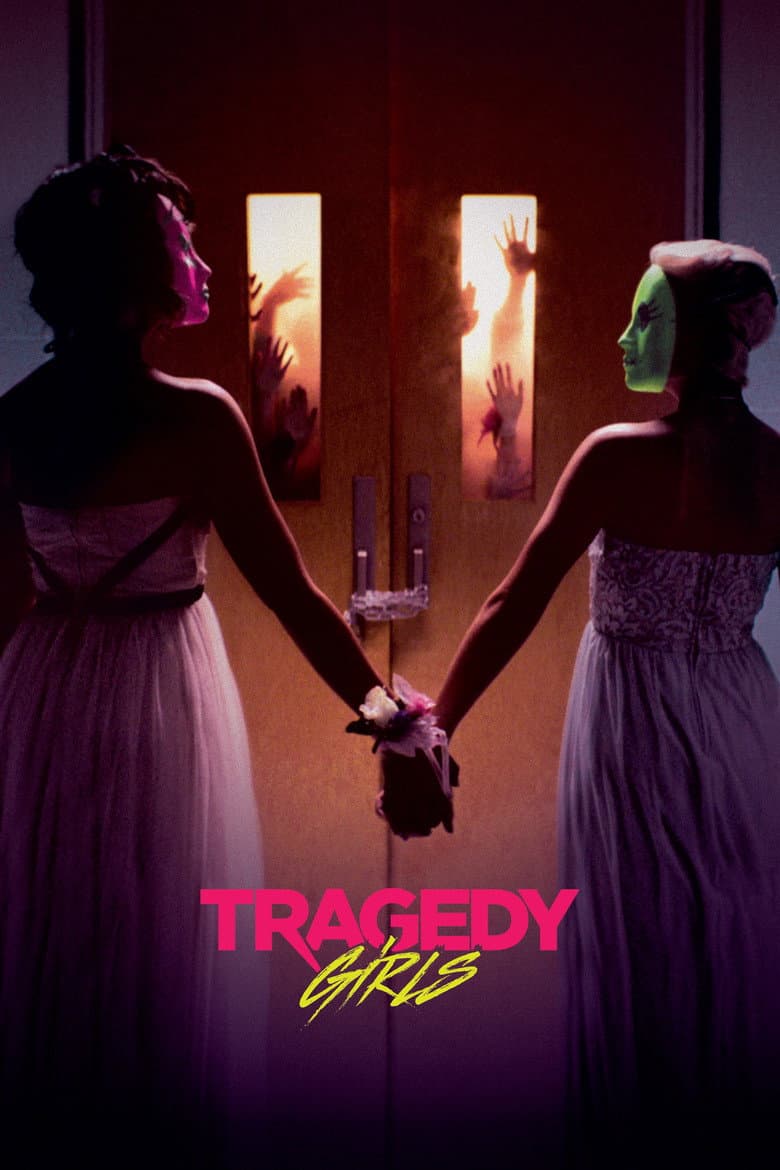
McKayla Hooper and Sadie Cunningham are high school seniors in the small Midwestern town of Rosedale. The best friends run a true crime blog and want more followers. They capture a real serial killer, then start killing people themselves when his crimes do not bring them enough attention. The movie uses bright colors, bloody jokes, and a fast horror-comedy tone.
The film puts two teenage girls at the center of the violence and makes them the smartest and most powerful people in the story. McKayla is black and Sadie is white, and their friendship drives nearly every major event. The girls beat, trick, or outlast most of the men around them, including the killer and local police. This gender-role reversal is a clear identity-related signal, but the movie uses it mainly to mock online fame, friendship, and the need for public praise rather than to deliver a direct political message.
Community feedback
Was our 42% Woke rating accurate?
Breakdown
These are the editorial factors and ratings behind our score for Tragedy Girls.
Woke representation / casting
The movie makes a black teenage girl and a white teenage girl the two lead killers. The two girls control the plot, while the main men serve as targets, helpers, or failed authorities. MacIntyre and Shipp publicly described the choice as a female-led twist, and Shipp called the girls “female badasses.” The film does not frame the racial mix as a wider diversity campaign, so the score rests mostly on the strong female-role pattern.
35%
Woke political dialogue
Not present. The girls mention followers, hashtags, and online news, but the movie does not give them recurring lines about DEI, identity politics, or activist causes.
0%
Identity-driven story themes
The movie repeatedly puts McKayla and Sadie in control as the active killers, planners, and survivors. The male killer, boyfriends, police, and other adult men usually become targets, helpers, or people the girls outsmart. The film treats the girls’ close friendship as more important than their boyfriends and lets the pair escape after a mass killing. Interviews and reviews openly frame this as a female-led or feminist twist on the slasher genre, although the story also mocks the girls’ hunger for fame.
58%
Western institutional / cultural critique
Not present. The movie shows local police and town leaders failing to stop the murders, but that is a plot device for the slasher comedy. It does not build a modern activist attack on Western institutions, religion, capitalism, or traditional family life.
0%
Woke character or canon changes
Not relevant. The movie is an original story about two fictional teenagers, not an adaptation of established characters or real historical events.
0%
Anti-woke backlash and complaints
Not present. The separate X research found no anti-woke complaints, boycott talk, or review-bombing. Wider coverage shows normal reviews and fan debate, not a real dispute about DEI or identity politics.
0%
Creator track record context
Tyler MacIntyre has a cached score of 31/100, while Chris Lee Hill and Justin Olson each have a cached score of 0/100. The cached producers and casting directors also have mostly low scores. MacIntyre’s interviews focus on social-media fame, citizen journalism, and female-led horror rather than activist or DEI goals. The creator record therefore gives a mild signal, not a strong one.
18%
Production
Movie · 2022
Legendary rock band Foo Fighters move into an Encino mansion steeped in grisly rock and roll history to record their much anticipated 10th album.
Movie · 2019
Columbus, Tallahassee, Wichita, and Little Rock move to the American heartland as they face off against evolved zombies, fellow survivors, and the growing pains of the snarky…
Movie · 2024
A family's vacation to a remote getaway takes an unexpected turn when they discover the present-day implications of the island's cannibalistic past.
Movie · 2024
A live broadcast of a late-night talk show in 1977 goes horribly wrong, unleashing evil into the nation's living rooms.
Movie · 2017
Real zombies arrive and terrorize the crew of a zombie film being shot in an abandoned warehouse, said to be the site of military experiments on humans.
Movie · 2024
After a family tragedy, three generations of the Deetz family return home to Winter River. Still haunted by Betelgeuse, Lydia's life is turned upside down when her teenage…
Movie · 2017
Ten years ago, over forty people were brutally torn to pieces in Louisiana’s Honey Island Swamp. Over the past decade, lone survivor Andrew’s claims that local legend Victor…
Movie · 2026
After breaking the mysterious "One Wish Willow" to win his crush's heart, a hopeless romantic finds himself getting exactly what he asked for but soon discovers that some desires…
