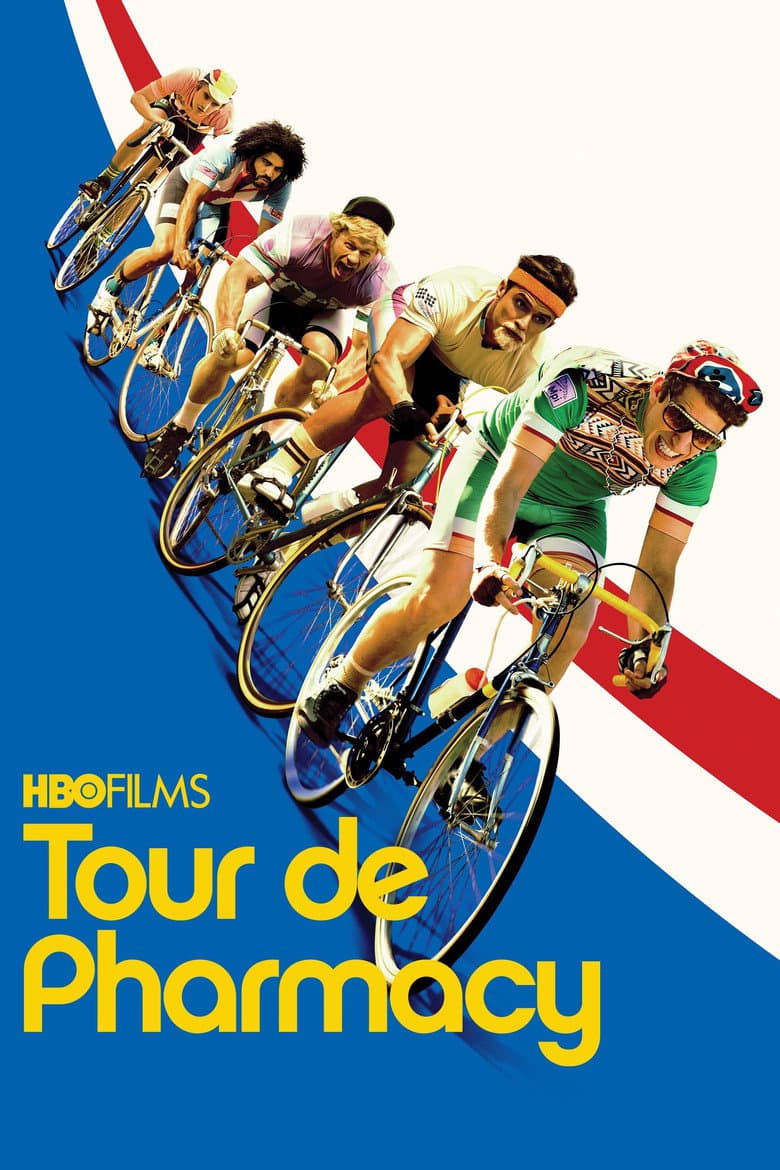
Tour de Pharmacy is a fake sports documentary about the 1982 Tour de France. A doping scandal removes almost every rider and leaves five strange competitors to race through France. Marty Hass is a clueless white man who claims to represent Africa. Slim Robinson chases his uncle Jackie Robinson’s place in history, while Adrianna Baton races in disguise. The film uses fake interviews and crude jokes to turn doping, sex, and sudden death into fast, silly comedy.
The story puts race and gender barriers at the center of two major riders’ goals. Slim Robinson repeatedly talks about breaking the color line and later wins as the first black man to win the race. Adrianna Baton hides her identity as a woman so she can compete, and the film later calls her and Marty the first publicly out gay athletes. These ideas are loud and easy to notice, but the movie treats them as absurd jokes inside a doping story rather than as a serious activist lesson.
Community feedback
Was our 46% Woke rating accurate?
Breakdown
These are the editorial factors and ratings behind our score for Tour de Pharmacy.
Woke representation / casting
The film makes a black cyclist, a woman racing in disguise, and a white man claiming Nigeria part of its central five. The Black rider and the woman are tied to the story, but their identity is also used as the reason they stand out in the race. Samberg said the team did not want the cast to be a blob of white people, which gives the casting a clear diversity signal. The film still keeps the signal inside crude comedy rather than making it the whole design.
45%
Woke political dialogue
The film uses repeated lines about breaking the color line and being the first Black rider to win. Adrianna says women are seen as unable to do what men can do, so she hides her sex to race. The narrator later calls Marty and Adrianna the first publicly out gay athletes, even though their relationship is heterosexual. These lines appear in character interviews and race commentary, but the film delivers them as crude jokes rather than a serious political speech.
39%
Identity-driven story themes
Race and gender barriers shape two of the five riders’ goals. Slim wants to win because cycling is shown as a very white sport, and his final win is framed as a historic first. Adrianna enters under a male name and proves that a woman can cheat at cycling as well as a man. The film also turns their romance into a joke about the first publicly out gay athletes. These themes matter to the plot, but the crude mockumentary tone keeps them from becoming a serious lesson.
47%
Western institutional / cultural critique
The film mocks macho sports culture through male riders who fight, grope spectators, brag, and compete with reckless pride. The cycling system is shown as corrupt because officials take bribes and let drug use continue. A woman must hide her sex because the race is treated as a men’s world. The gender jokes point at male entitlement, but the larger attack is on cheating and sports vanity rather than on Western institutions.
30%
Woke character or canon changes
Not relevant. The five riders are fictional characters, and the film does not recast a known character or alter a named historical figure’s identity. The real Tour de France is used as a loose setting for a made-up 1982 story.
0%
Anti-woke backlash and complaints
Not present. Broader reviews and audience posts criticized crude humor, nudity, price, and Lance Armstrong’s cameo, but no clear anti-woke or anti-DEI complaint was found. The separate X search also found no anti-woke reaction.
0%
Creator track record context
The key creators are mainly tied to mainstream comedy and mockumentary work. Jake Szymanski and Murray Miller made 7 Days in Hell with Andy Samberg before this film. Title interviews focus on exaggerating doping scandals, sports documentaries, machismo, and crude jokes. No clear activist or representation-first public image is reported for the listed crew.
8%
Production
Movie · 2024
Inseparable best friends AJ and Moose decide to run the local pool's snack shack after their plan to sell home-brewed beer goes down the drain.
Movie · 2018
Adam Sandler takes his comical musical musings back out on the road, from comedy clubs to concert halls to one very unsuspecting subway station.
Movie · 2023
From his onstage tackle to the slap heard round the world, Dave Chappelle lets loose in this freewheeling and unfiltered stand-up comedy special.
Movie · 2022
Exploring every facet of ‘Weird Al’ Yankovic’s life, from his meteoric rise to fame with early hits like ‘Eat It’ and ‘Like a Surgeon’ to his torrid celebrity love affairs and…
Movie · 2016
A comedy that follows a group of friends as they navigate their way through the freedoms and responsibilities of unsupervised adulthood.
Movie · 2023
A chaotic intervention. An action-packed stay in rehab. After a weird couple of years, John Mulaney comes out swinging in his return to the stage.
Movie · 2017
Brigsby Bear Adventures is a children's TV show produced for an audience of one: James. When the show abruptly ends, James's life changes forever, and he sets out to finish the…
Movie · 2016
Two teenage boys from inner-city Cork steal bicycles and ride off on a 160km quest to find an unrecovered bale of cocaine worth 7,000,000 euros.
