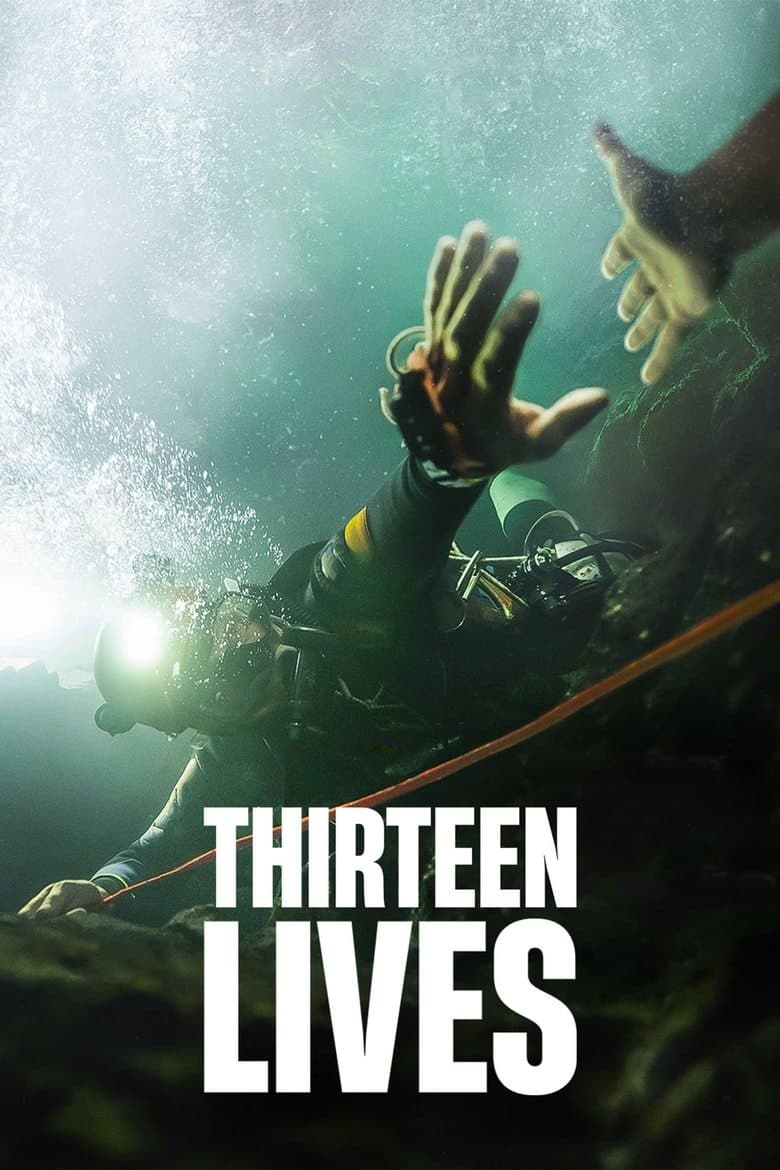
Thirteen Lives follows twelve boys from a Thai soccer team and their coach after heavy rain traps them inside the Tham Luang cave. British cave divers John Volanthen and Rick Stanton find the group, but the rescue becomes harder because the tunnels are long, dark, and full of water. Australian doctor Harry Harris joins the team when the rescuers consider putting the boys to sleep so they can carry them through the cave. The movie has a tense, serious tone and spends much of its time on careful plans, dangerous dives, and the families waiting outside.
The film shows the Thai Navy, local officials, farmers, parents, and volunteers working beside the foreign divers. The movie also follows a Shan mother who fears that her son could be left behind because the family has no identity cards. That short thread points to the real problem faced by people without citizenship papers in northern Thailand. Most of the movie stays focused on survival, courage, practical teamwork, local customs, and the hard choice to sedate the boys.
Community feedback
Was our 8% Woke rating accurate?
Breakdown
These are the editorial factors and ratings behind our score for Thirteen Lives.
Woke representation / casting
Not present. Casting matches real demographics of the 2018 events. Thai performers play the boys, coach, and local responders. Western actors portray the actual British and Australian divers in prominent but story-appropriate roles. No quota signaling or identity emphasis appears in lead casting.
0%
Woke political dialogue
Not present. All dialogue stays on rescue planning, cave conditions, coordination problems, and the medical ethics of sedation. No activist speeches, identity language, or social-justice points surface.
0%
Identity-driven story themes
The film briefly follows Buahom, a Shan mother who worries that her son may not be rescued because the family has no identity cards. The scene points to the real problem faced by people without citizenship papers in northern Thailand. The subplot adds a group-rights message, but it does not drive the rescue plan or most character arcs.
10%
Western institutional / cultural critique
Not present. Early Thai official delays create tension, yet the film shows strong positive roles for Thai military, farmers, and volunteers alongside global help. The sedation choice stays a practical ethical dilemma, not a vehicle for critiques of patriarchy, capitalism, or Western systems.
0%
Woke character or canon changes
Not relevant. The script follows real people and documented events with normal dramatization and no ideological swaps or reinterpretations of historical figures.
0%
Anti-woke backlash and complaints
Not present. No right-leaning or anti-woke complaints accused the film of pushing woke, DEI, or identity content. Limited pre-release casting talk came from progressive concerns about white-savior framing or Thai emphasis, which does not count for this score.
0%
Creator track record context
Ron Howard has a mainly mainstream career and no strong record of identity-politics activism. Cinematographer Sayombhu Mukdeeprom worked on films with LGBTQ themes, including Call Me by Your Name and Queer. Producer Aaron L. Gilbert has publicly backed diversity and inclusion in film. These background signals are mild and do not shape the rescue story.
15%
Production

Movie · 2024
A ride-share turns into a high-stakes game of cat and mouse after it follows a car fitting the description of an AMBER Alert.

Movie · 2025
A group of disillusioned outsiders abandon modern society in search of a new beginning. Settling on a remote, uninhabited island, their utopian dream quickly unravels as they…

Movie · 2016
When Krisha returns to her estranged family for Thanksgiving dinner, past demons threaten to ruin the festivities.
Movie · 2025
Seasoned deep-sea divers battle the raging elements to rescue their crewmate trapped hundreds of feet below the ocean's surface.
Movie · 2017
Dr. Steven Murphy is a renowned cardiovascular surgeon who presides over a spotless household with his wife and two children.
Movie · 2016
Paralyzed by his fear of dying, Miles Grissom takes out an advert offering $30,000 in reward money to the first person who can show him evidence of an angel, a demon, or prove…
Movie · 2021
When the aging Meyer Lansky is investigated one last time by the Feds who suspect he has stashed away millions of dollars over half a century, the retired gangster spins a…

Movie · 2016
A struggling painter is possessed by satanic forces after he and his young family move into their dream home in rural Texas.
