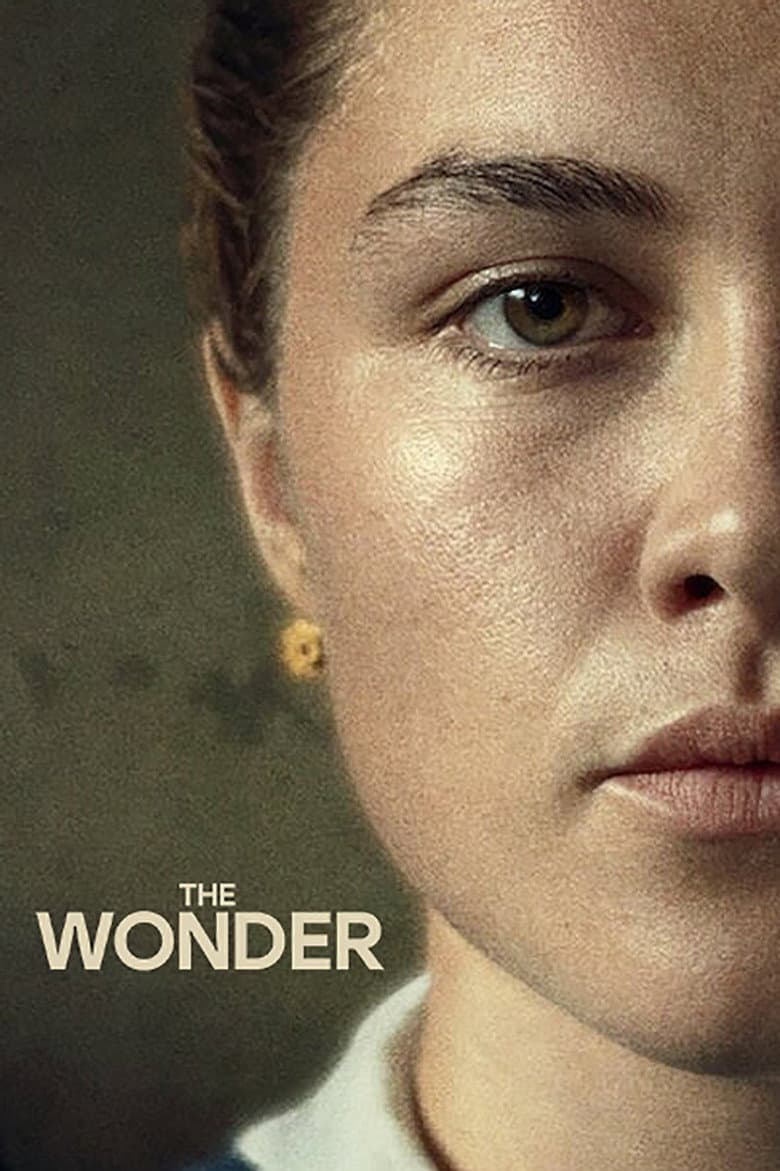
In 1862, Lib Wright, an English nurse who served in war zones, travels to a poor Irish village after local leaders ask her to watch Anna O’Donnell. Anna is an eleven-year-old girl who supposedly lives without food because God feeds her. Lib trusts medicine and facts, while Anna’s family, priest, doctor, and town leaders protect the miracle story even as the child grows weaker. The film is a slow, dark mystery about grief, abuse, faith, and the stories people use to survive.
The strongest woke element is a repeated focus on a girl’s body being controlled by family, religion, and male leaders. Lib is shown as the skilled woman who sees the danger, refuses to accept the town’s story, and takes control to save Anna. The film treats old religious authority and gender rules as dangerous when they silence women and put a child’s life behind a public cause. The story also uses fourth-wall breaks to connect this conflict with modern arguments about facts, belief, and who gets to control a person’s story.
Community feedback
Was our 52% Woke rating accurate?
Breakdown
These are the editorial factors and ratings behind our score for The Wonder.
Woke representation / casting
The main cast is made up of English and Irish characters that fit the 1862 setting. The female nurse, nun, girl, and servant all have story reasons for their roles. Interviews and marketing repeatedly frame the film as a female-led story about female resistance. That framing adds a small identity signal, but there is no diversity-first race or sexuality pattern.
8%
Woke political dialogue
Not present. The film includes arguments about facts, faith, and stories. It does not use modern woke political dialogue about race, DEI, sexuality, or current party politics.
0%
Identity-driven story themes
The film repeatedly shows Anna’s body being controlled by her family, religious beliefs, and town leaders. Anna believes that starving herself can help save her dead brother, while Lib fights to give her a new life. The story makes female agency and the protection of girls central to its answer to this abuse. Lelio has described the story as a modern issue about a female body used as a political weapon, which matches the film’s focus.
46%
Western institutional / cultural critique
The town council, doctor, priest, and parents keep a starving child inside a religious story. The men in charge dismiss Lib’s warnings even though she has medical training. The film presents inherited religious authority and strict gender roles as dangerous when they place a miracle above a child’s life. The ending leaves room for grace through Sister Michael, so the film attacks fanaticism more clearly than it rejects every form of faith.
44%
Woke character or canon changes
Not relevant. The film adapts Emma Donoghue’s fictional novel. It does not change an established character or real historical figure to send an identity message.
0%
Anti-woke backlash and complaints
One niche review called the film “woke-AF” and attacked its anti-religious message. That complaint connects the film’s female-resistance framing with its harsh view of religious authority. Wider news coverage and audience discussion focused on faith, pacing, and the fourth-wall device, not DEI or race and gender disputes. The evidence shows a fringe complaint rather than a broad anti-woke backlash.
8%
Creator track record context
Lelio’s cached creator score is 81/100 because his work often centers transgender identity and LGBTQ representation. Birch’s cached score is 67/100, and Donoghue’s is 78/100 because their work often centers feminist or queer themes. Nina Gold’s cached casting score is 45/100 because of her stated support for diversity. The cached producer scores are mostly low or moderate, so the strongest context comes from the director and writers.
76%
Production
Movie · 2022
Suspicious that her colleague is responsible for a series of mysterious patient deaths, a nurse risks her own life to uncover the truth.
Movie · 2025
When intelligence agent Kathryn Woodhouse is suspected of betraying the nation, her husband – also a legendary agent – faces the ultimate test of whether to be loyal to his…
Movie · 2017
Dr. Steven Murphy is a renowned cardiovascular surgeon who presides over a spotless household with his wife and two children.
Movie · 2018
Looking to investigate recruitment techniques of ISIS to lure women into Syria, a journalist creates a Facebook profile of a Muslim convert.
Movie · 2021
Eva, a mysterious doctor, searches for an answer to her urgent dilemma as she unravels Dr. Anmuth's Book of Vision.
Movie · 2019
A young woman returns a lonely widow’s lost purse, leading to an unlikely relationship between the two — until the young woman discovers the widow might not be all that she seems.
Movie · 2018
Young and disenchanted Sam meets a mysterious and beautiful woman who's swimming in his building's pool one night.
Movie · 2017
Secure within a desolate home as an unnatural threat terrorizes the world, a man has established a tenuous domestic order with his wife and son, but this will soon be put to test…
