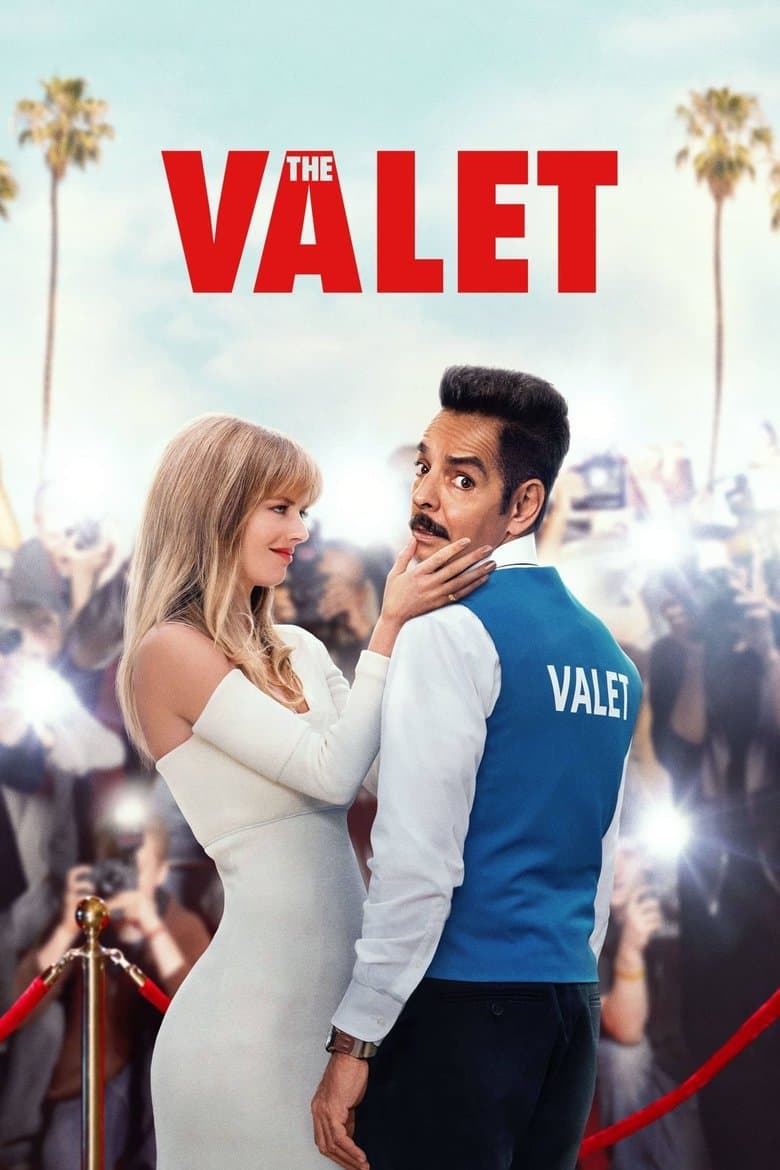
Antonio is a hard-working parking valet in Los Angeles who lives with his close Latino family and wants a better life for his son. Famous actress Olivia is caught in a photo with her married boyfriend, Vincent. Antonio ends up in the same photo by accident, so Vincent pays him to pretend he is Olivia’s new boyfriend. The fake romance pulls Antonio into rich Hollywood life while Olivia sees his warm family world. The tone is light and sweet, with fish-out-of-water jokes and heart.
The movie also spends clear time on Latino immigrant family life, class gaps between rich White Hollywood and working people, and a fight against a big developer’s plans for Antonio’s neighborhood. Viewers will notice jokes and scenes about being treated as “the help,” casual racism, and pride in immigrant roots. Marketing and star Eugenio Derbez called it a love letter to Latinos and working-class immigrants. There is soft critique of greedy rich people and a happy ending where the developer’s plan is stopped. It is not a nonstop lecture film, but culture, class, and representation are easy to see and are part of how the story is told.
Community feedback
Was our 57% Woke rating accurate?
Breakdown
These are the editorial factors and ratings behind our score for The Valet.
Woke representation / casting
Lead is Mexican star Derbez as a working-class Latino valet with a large Spanish-speaking family and friends. Supporting cast fills out multiethnic L.A. (Korean landlord, Indian P.I., black assistant). Diversity fits the city setting but is clearly featured as a selling point of the remake and marketing, not a quiet background detail.
40%
Woke political dialogue
Some lines and bits touch race and class: coworkers joke about White reaction to a Mexican man with a White star, diners order Antonio around like staff, and gentrification/“green jobs” talk appears. These moments land but are not nonstop speeches.
28%
Identity-driven story themes
The American remake builds around immigrant family pride, culture clash, working-class dignity, and being looked down on by rich Hollywood. Olivia grows by joining Antonio’s warm Latino world; a neighborhood-vs-developer plot ends with the project canceled. Class and ethnic identity are core to how the story is told.
50%
Western institutional / cultural critique
Rich developers and elites look selfish and harmful; Vincent is a cheating power player; workers and local shops are threatened by gentrification. The fix is a powerful woman taking the company and stopping the plan. This is soft modern class-and-elite critique inside a rom-com, not a full manifesto.
42%
Woke character or canon changes
Source French farce is reworked into a Latino immigrant L.A. family story with added gentrification and multiethnic community plots. That is an identity-forward remake choice, not only normal cuts or updates. No major race/gender swap of a famous historical hero as the main plot device.
30%
Anti-woke backlash and complaints
No clear anti-woke or right-leaning campaign treating the film as DEI propaganda turned up. Coverage stayed on charm, chemistry, and immigrant-family praise.
0%
Creator track record context
Producers Odell and Derbez have mid-range records for Latino representation advocacy and framed this title that way. Wong has lighter representation-themed work. Main writers and several other crew scores are near zero. Overall crew context supports mild-to-moderate identity framing.
35%
Production

Movie · 2018
Lara Jean's love life goes from imaginary to out of control when her secret letters to every boy she's ever fallen for are mysteriously mailed out.

Movie · 2018
A quirky couple spends their three-year dating anniversary looking back at their relationship and contemplating whether they should break up.

Movie · 2022
Divorced couple Georgia and David find themselves on a shared mission: they team up and travel to Bali to stop their daughter Lily from making the same mistake they once made 25…
Movie · 2025
When her mother sends her on a quest to complete a teenage bucket list, a young woman uncovers family secrets, finds romance — and rediscovers herself.
Movie · 2023
Highly intelligent computer major Zoey Miller is uninterested in romantic love, but her life is turned upside down when Zack, the school's soccer star, gets amnesia and mistakes…

Movie · 2022
Two strangers believe in love but never seem to be able to find its true meaning. In a wild twist of events, fate puts each in the other's path on one stormy New Year's Eve.

Movie · 2025
Two down-on-their-luck hourly workers team up to rob a posh London department store on Christmas Eve. Will they steal each other's hearts along the way?
Movie · 2023
Two twenty-somethings, both reeling from bad break-ups, connect over the course of an eventful day in South London – helping each other deal with their nightmare exes, and…
