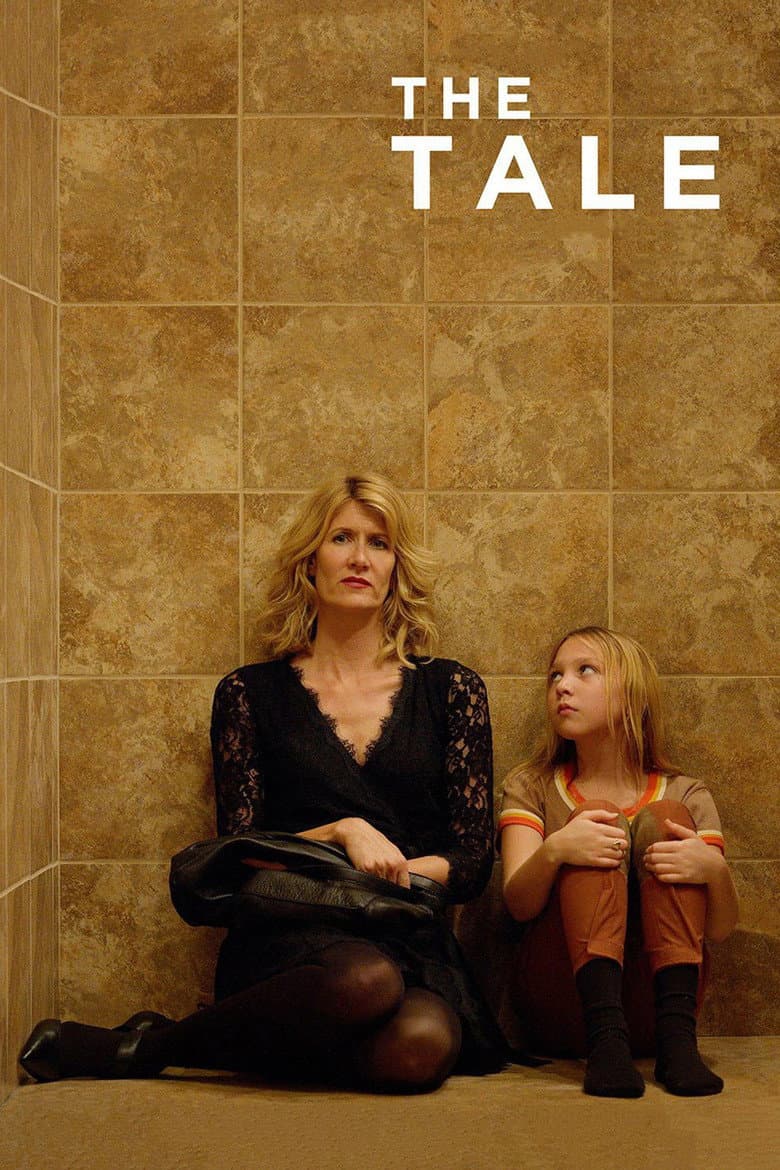
Jennifer Fox lives with her fiancé in 2008 when her mother finds a story Jennifer wrote at age thirteen. Jennifer returns to a North Carolina horse farm to check the memories behind that story. The story shows her younger self spending time with Bill, an adult running coach, and Mrs. G, his older lover. Jennifer once saw the experience as a special romance, but she slowly understands that the adults groomed and abused her. The film uses a tense, sad, and dreamlike tone as past and present keep mixing.
The film focuses on a woman's voice, memory, and recovery after sexual abuse. The story asks viewers to reject the idea that a child freely chose sex with a powerful adult. Jennifer moves from calling herself a hero to naming herself as harmed, which gives the story a strong feminist reading. The film shows how social silence can protect abusers. The film also presents a mixed-race adult relationship, but race and LGBTQ identity do not drive the plot, and the story stays focused on one woman's memory rather than a broad political campaign.
Community feedback
Was our 46% Woke rating accurate?
Breakdown
These are the editorial factors and ratings behind our score for The Tale.
Woke representation / casting
Common plays Jennifer's fiancé in a mixed-race relationship, which creates a visible diversity choice. The film does not explain or discuss that pairing as an identity issue. The 1970s abuse story otherwise uses casting that fits the people and place shown.
12%
Woke political dialogue
Not present. The film does not include modern DEI or activist speeches. The film has hard lines about abuse, consent, and memory. The repeated phrase “It was the seventies” explains the period and does not act as a political program.
0%
Identity-driven story themes
Jennifer's abuse and recovery form the center of the film. The story asks viewers to reject the idea that a child freely chose sex with a powerful adult. Jennifer moves from calling herself the hero to facing herself as a harmed child, and the film treats that change as a way to recover her voice. The story links a woman's silence to the wider habit of treating abuse as a private matter.
52%
Western institutional / cultural critique
The film shows an adult man using authority, charm, and ideas about freedom to make sex with a child seem acceptable. The film shows a period culture that dismisses warning signs by saying, “It was the seventies.” The legal system cannot punish Bill because the statute of limitations has passed. The film criticizes male entitlement and social silence, but it does not attack Christianity, capitalism, or Western society as a whole.
24%
Woke character or canon changes
Not relevant. The film is a fictional memoir based on Fox's life. The film is not an adaptation of a known fictional character or franchise. The film changes names and details for storytelling, but those changes are not identity-driven.
0%
Anti-woke backlash and complaints
Not present. The supplied X research found no anti-woke reaction or specific complaints. Audience discussion focused on the abuse subject, graphic scenes, pacing, and the ending.
0%
Creator track record context
Jennifer Fox's cached score is 18/100, and her record does not show a strong activist public persona. Several producers have high cached scores because they fund gender-equity and social-justice films. Regina K. Scully, Patty Quillin, Wendy Ettinger, and Mynette Louie are the clearest examples in this group. Fox's interviews also describe the film through female voice, agency, memory, and the #MeToo moment.
58%
Production

Movie · 2021
Eva, a mysterious doctor, searches for an answer to her urgent dilemma as she unravels Dr. Anmuth's Book of Vision.
Movie · 2018
Young and disenchanted Sam meets a mysterious and beautiful woman who's swimming in his building's pool one night.
Movie · 2017
Secure within a desolate home as an unnatural threat terrorizes the world, a man has established a tenuous domestic order with his wife and son, but this will soon be put to test…

Movie · 2020
A once-celebrated kid detective, now 31, continues to solve the same trivial mysteries between hangovers and bouts of self-pity.

Movie · 2022
Suspicious that her colleague is responsible for a series of mysterious patient deaths, a nurse risks her own life to uncover the truth.
Movie · 2021
A small-town Oregon teacher and her brother, the local sheriff, discover a young student is harbouring a dangerous secret that could have frightening consequences.
Movie · 2019
A woman grieving over the death of her daughter loses grip of reality when she begins to think her girl may still be alive.
Movie · 2016
Maureen, mid-20s, is a personal shopper for a media celebrity. The job pays for her stay in Paris, a city she refuses to leave until she makes contact with her twin brother who…
