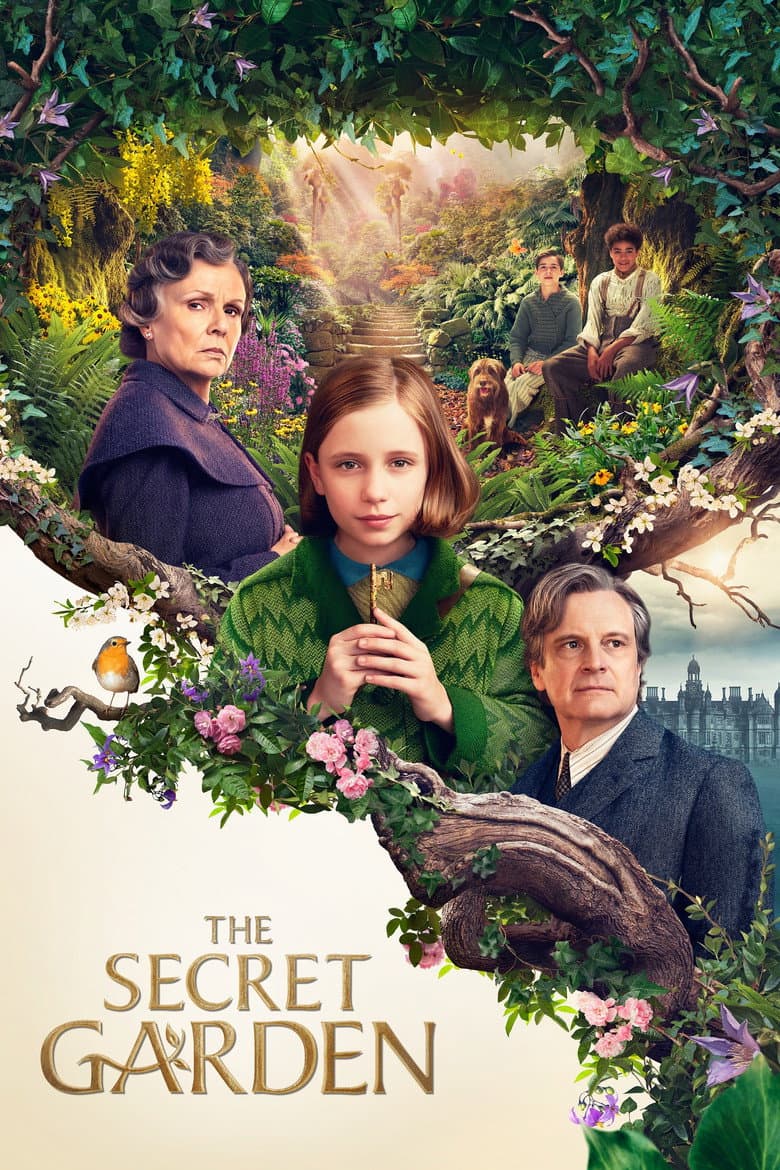
Mary Lennox is a spoiled, lonely girl who loses her parents in British India in 1947. She is sent to her uncle Archibald’s cold manor in Yorkshire, where strict rules surround a sick cousin, painful family secrets, and a locked garden. Mary joins Colin and Dickon to bring the garden back to life and to help the broken family heal. The film moves from dark halls and ghostly memories to bright plants and open air, so its tone stays eerie but hopeful.
The film casts black actors as Martha and Dickon, two important members of a servant family. Their friendship with Mary shows the gap between rich white children and a black working-class family, especially when Martha warns Dickon that the rich children could have him whipped. Mary must also face her habit of treating Martha as a servant and learn to value her friends. These ideas are visible and tied to Mary’s growth, but grief, friendship, nature, and family healing remain the main focus.
Community feedback
Was our 50% Woke rating accurate?
Breakdown
These are the editorial factors and ratings behind our score for The Secret Garden.
Woke representation / casting
The film places black actors Isis Davis and Amir Wilson in the important roles of Martha and Dickon. Martha is a maid and Dickon is one of the children who restore the garden, so viewers see the casting often. The rural 1947 Yorkshire setting makes this a visible departure from the book’s described English setting. Release interviews called Davis the first black actress to play Martha and described the casting as diverse representation.
38%
Woke political dialogue
The film includes a direct warning about race and class when Martha tells Dickon that the rich children could have him whipped. Mary answers that helping them is worth the risk. Mary also calls Martha a servant, and Martha shows that the insult matters. These moments are clear but short, and the film does not turn them into a long political speech.
18%
Identity-driven story themes
The film makes Mary’s life as a rich British child in colonial India part of her change. Mary learns to see Martha and Dickon as people beyond their servant role, and their friendship exposes the gap between rich white children and a black working-class family. The 1947 opening ties the family’s past to Partition and the end of British rule in India. These ideas shape Mary’s growth, but grief, friendship, nature, and family healing remain the main focus.
29%
Western institutional / cultural critique
The film shows a rich family estate where servants follow strict rules and wealthy children can use social power over poorer people. Mary’s colonial background and her rude treatment of Martha make class and race part of the family’s problems. The story also presents the old manor, war damage, and family power as things that must be left behind before healing can begin. This critique returns in several scenes, but it stays below the garden, grief, and family story.
28%
Woke character or canon changes
The film gives Martha and Dickon black actors, while the novel presents them as Yorkshire servant children and describes Dickon with rust-red hair, blue eyes, and a deep link to the moor. This creates a visible change to a known character from the source. The film also moves the story to 1947 and adds Partition, ghosts, and a burning manor, but those changes mainly alter the plot. The race change is the clearest identity-driven change from the source.
34%
Anti-woke backlash and complaints
A few small X accounts attacked the casting of black actors as Martha and Dickon as unfaithful to the book and as forced diversity. Some replies called non-white casting in a classic English story a one-way misuse of British culture. One second-hand family complaint said Dickon’s casting put the viewer off. The reaction was fringe, with no large campaign, boycott, review bomb, or major right-leaning outlet treating the film as a woke cause.
15%
Creator track record context
Jack Thorne has a strong public record supporting disabled inclusion and has spoken about transgender issues. David Heyman has criticized the lack of diversity on UK film sets and backed training for diverse young talent. Marc Munden’s record is milder and centers on social problems rather than identity politics. The main creative team adds noticeable supporting context, but it does not show a strong activist pattern across the whole group.
42%
Production

Movie · 2017
The story of August Pullman – a boy with facial differences – who enters fifth grade, attending a mainstream elementary school for the first time.
Movie · 2017
The behind the scenes story of the life of A.A. Milne and the creation of the Winnie the Pooh stories inspired by his son Christopher Robin.

Movie · 2016
The incredible true story of the greatest walk-on in the history of college football.
Movie · 2024
When David Smallbone's successful music company collapses, he moves his family from Australia to the United States in search of a brighter future.
Movie · 2016
When Christy discovers her 10-year-old daughter Anna has a rare, incurable disease, she becomes a ferocious advocate for her daughter’s healing as she searches for a solution.
Movie · 2024
19 year old Isaiah Wright lives for basketball and video games. A year out of high school, he has no job, no plans, and no idea how to be a man.

Movie · 2020
The story of Ray-Ray McElrathbey, a freshman football player for Clemson University, who secretly raised his younger brother on campus after his home life became too unsteady.

Movie · 2024
The Herdman kids are undeniably the worst kids in the history of the world. They lie, steal, cheat, bully and overall terrorize their small community.
