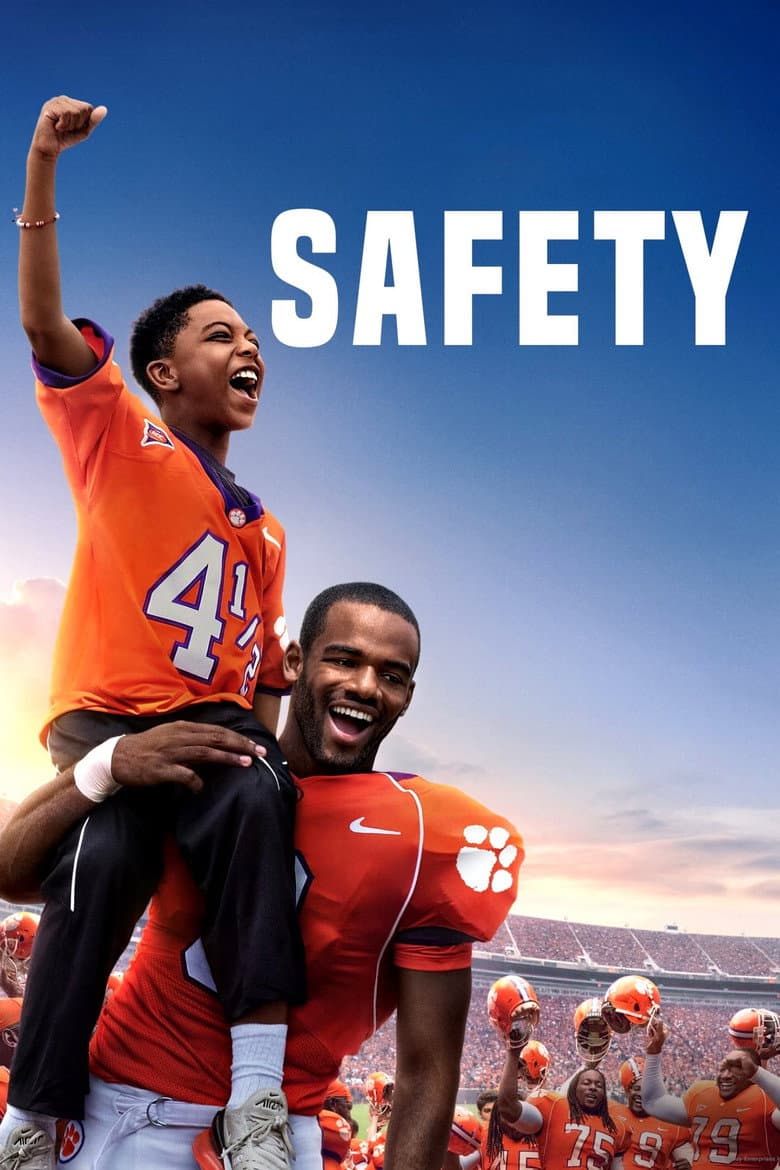
Ray McElrathbey is a freshman football player at Clemson University on a scholarship. When his mom falls back into drug problems, he secretly takes in his younger brother Fahmarr so the boy will not go into foster care. Ray must balance hard classes, football, and parenting while trying not to lose his spot on the team. The movie is warm, PG-rated, and focused on family, teamwork, and sticking together.
A normal viewer mostly sees a true sports-and-family story, not a big activist film. The main woke-leaning moments are light. Ray, a young black man, is shown as a strong, caring brother and stand-in dad, and director Reginald Hudlin has said that message matters. In one scene Ray snaps at a white coach and suggests the help is about feeling good helping “another black kid,” not pure care. Poverty, addiction, and strict NCAA rules also show up, but the movie centers on sacrifice, trust, and community more than modern identity politics. Many reviews treated it as an uplifting Disney sports drama.
Community feedback
Was our 27% Woke rating accurate?
Breakdown
These are the editorial factors and ratings behind our score for Safety.
Woke representation / casting
Lead roles match the real black McElrathbey family, so race is story-true, not a swap into a white or fictional world. Coaches and teammates mix races in a normal college-football way. Disney later sold it in a “Celebrate black Stories” package, which is light identity framing, not quota casting of mismatched stars.
20%
Woke political dialogue
Most talk is about football, school, family, and sacrifice. One clear race-aware beat has Ray accuse a white coach of helping him as “another black kid” for the coach’s own comfort. That line is noticeable, then the film softens it with the coach’s own tough background. Not a film full of activist speeches.
15%
Identity-driven story themes
Core story is brotherhood, parenting, and team support. Soft identity layer: a young black man as a responsible father figure, poverty and addiction in their home world, and Hudlin’s stated aim to push back on stereotypes about black fathers. Viewers mainly feel an underdog family tale, with race as background more than the main plot engine.
25%
Western institutional / cultural critique
The NCAA is shown as rigid and cold for blocking normal help to a student athlete and his kid brother. That is sports-rule conflict more than a full attack on Western culture, faith, or traditional family. Brief racial tension with a white coach is personal anger, not a long sermon on systems. Christianity appears lightly and helpfully, not as a target.
10%
Woke character or canon changes
Not relevant. This is a biopic of living people; race and gender track the real story rather than identity-driven rewrites of known fictional or historical figures.
0%
Anti-woke backlash and complaints
Searches of news and social talk did not turn up a clear wave of right-leaning or anti-woke attacks calling Safety DEI or propaganda. Public talk stayed on family, football, and inspiration.
0%
Creator track record context
Hudlin’s mid-range activist and black-representation record (50) shapes marketing and interviews more than the script’s day-to-day scenes. Writer and most producers score low. Casting director has a moderate inclusion profile. Overall crew context is moderate, not extreme.
32%
Production

Movie · 2023
When his beloved dog goes missing, a young man embarks on an incredible search with his parents to find him and give him life-saving medication.
Movie · 2024
When David Smallbone's successful music company collapses, he moves his family from Australia to the United States in search of a brighter future.
Movie · 2016
When Christy discovers her 10-year-old daughter Anna has a rare, incurable disease, she becomes a ferocious advocate for her daughter’s healing as she searches for a solution.
Movie · 2016
The incredible true story of the greatest walk-on in the history of college football.
Movie · 2017
The behind the scenes story of the life of A.A. Milne and the creation of the Winnie the Pooh stories inspired by his son Christopher Robin.
Movie · 2019
An unlikely connection sparks between two creatures: a fiercely independent stray kitten and a pit bull. Together, they experience friendship for the first time.
Movie · 2021
When Sara hears a preacher say faith can move mountains, she starts praying. Suddenly people in her town are mysteriously healed!

Movie · 2024
The Herdman kids are undeniably the worst kids in the history of the world. They lie, steal, cheat, bully and overall terrorize their small community.
