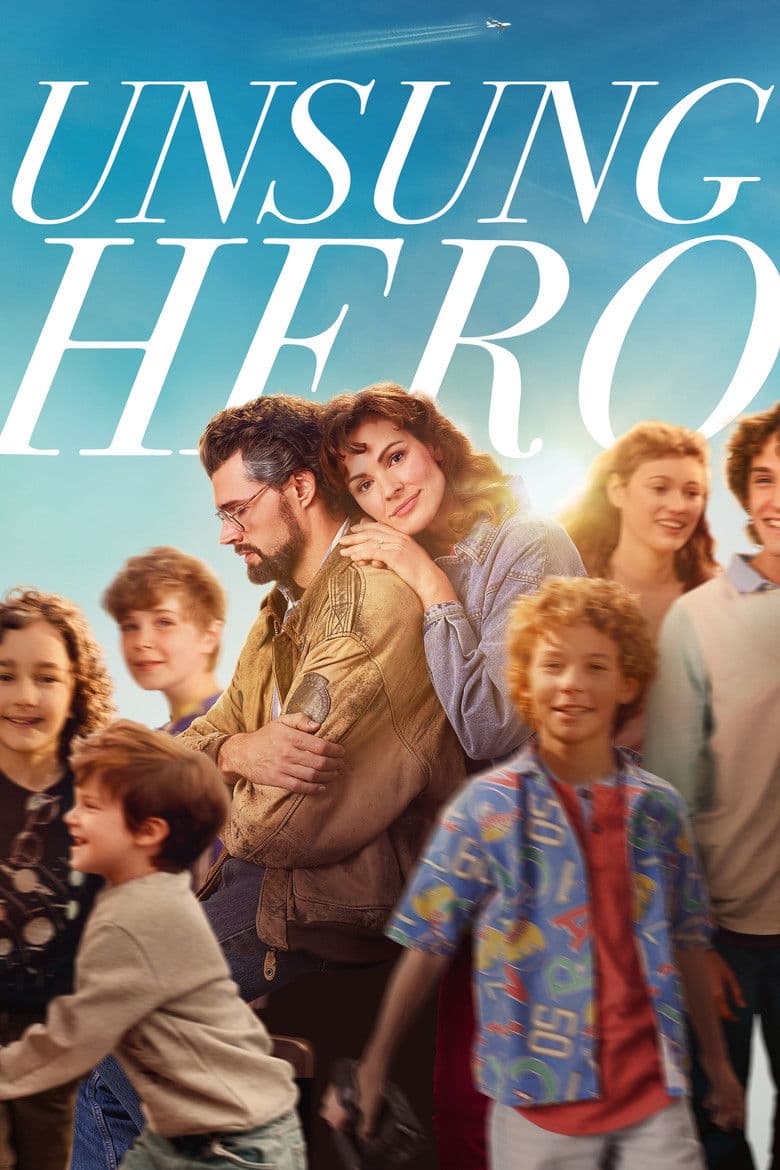
Unsung Hero follows David Smallbone, a music promoter whose business fails in Australia in 1991. He moves his pregnant wife, Helen, and their six children to Nashville, but the job he expected is gone when they arrive. The family has little money, no furniture, and no easy way to return. David struggles with shame and pride while Helen keeps the family together and helps the children keep hope. The film has a warm and hopeful tone.
The film presents an Australian Christian family rebuilding through prayer, help from a local church, hard work, and music. Helen’s faith and patience hold the household together while David faces shame, anger, and pride after his work fails. Rebecca’s attempt to enter Christian music brings repeated rejection, and her later success helps open a path for her brothers. The movie praises marriage, parenthood, humility, service to others, and staying loyal to family during a hard move.
Community feedback
Was our 1% Woke rating accurate?
Breakdown
These are the editorial factors and ratings behind our score for Unsung Hero.
Woke representation / casting
Not present. Casting matches the real White Australian Christian family at the heart of this true story. No audience-visible patterns of identity signaling, diversity quotas, or emphasis on race/gender representation in prominent roles.
0%
Woke political dialogue
Not present. Dialogue centers on personal faith struggles, family support, prayer, and daily perseverance with no political speeches, institutional critiques, or activist language.
0%
Identity-driven story themes
Not present. Core themes are Christian faith sustaining a traditional family through hardship, hard work, and pursuing music dreams together. No identity politics, representation arcs, or social-justice messaging.
0%
Western institutional / cultural critique
Not present. The film affirms Christian faith, family unity, and personal responsibility. It contains no portrayals of toxic masculinity, patriarchy as oppressive, anti-conservative framing, or critiques of Western culture or Christianity from an activist viewpoint.
0%
Woke character or canon changes
Not relevant. The story follows documented real events and people without ideological alterations, race/gender swaps, or canon changes to source material.
0%
Anti-woke backlash and complaints
Not present. No anti-woke or right-leaning complaints accuse the film of pushing DEI, identity politics, or left-wing messaging. Public discussion instead praises it as clean, traditional, and free of agenda.
0%
Creator track record context
Joel Smallbone has publicly praised America's diversity. He has no strong record of identity activism. Gerald Webb has a professional focus on expanding casting diversity. The other listed writers and producers are mainly tied to faith-based work or have no documented activist record. This group gives a weak creator track record signal.
5%
Production

Movie · 2020
Second chances start when a hardened criminal crosses paths with a precocious little girl who is helped by an angel to change hearts during the holiday season.
Movie · 2024
19 year old Isaiah Wright lives for basketball and video games. A year out of high school, he has no job, no plans, and no idea how to be a man.
Movie · 2016
When Christy discovers her 10-year-old daughter Anna has a rare, incurable disease, she becomes a ferocious advocate for her daughter’s healing as she searches for a solution.
Movie · 2021
The true story of Kurt Warner, who went from a stockboy at a grocery store to a two-time NFL MVP, Super Bowl champion, and Hall of Fame quarterback.

Movie · 2023
When his beloved dog goes missing, a young man embarks on an incredible search with his parents to find him and give him life-saving medication.

Movie · 2017
The film follows a man with an unwanted gift for healing who meets a teenager with cancer who helps him to find himself.
Movie · 2025
The world is a perplexing, peaceful mystery to Amélie until a miraculous encounter with chocolate ignites her wild sense of curiosity.
Movie · 2016
The incredible true story of the greatest walk-on in the history of college football.
