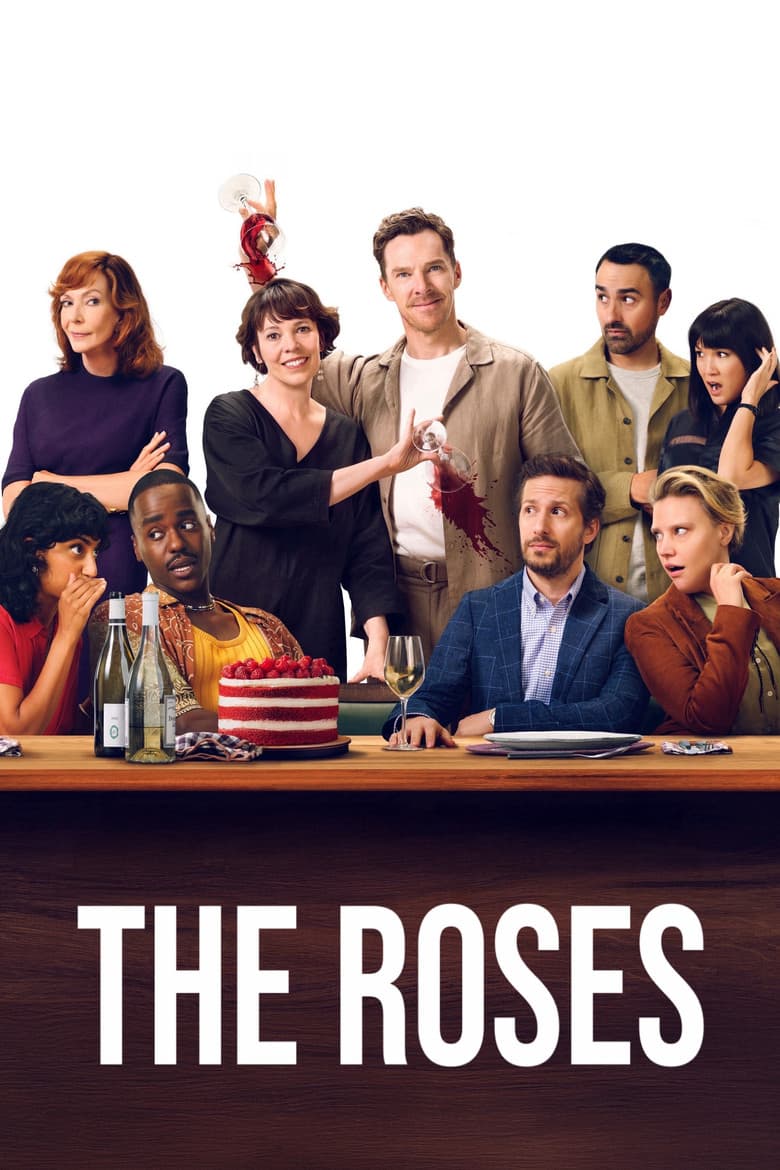
The Roses follows Ivy and Theo Rose, a British couple who build a life with their two children in coastal Northern California. Ivy is a talented chef, and Theo is an architect who hopes to make a name with a large museum project. When Theo's building fails and Ivy's small seafood restaurant becomes a hit, their money, work, and family roles change. Their love turns into jealousy, cruel jokes, sabotage, and a violent fight inside their dream home.
The film makes the role change the main source of tension: Ivy becomes the family breadwinner, while Theo stays home and struggles with the loss of his career. Theo's pride and pressure to prove himself as a man drive many of his choices, while Ivy's success makes her miss family moments and dismiss his work at home. The movie also includes Jeffrey, a gay black restaurant manager, and a comic friend who talks about opening her marriage and makes repeated sexual moves on Theo. These identity and relationship ideas are part of the main conflict and supporting comedy, but the film remains a dark marriage story rather than a political lesson.
Community feedback
Was our 46% Woke rating accurate?
Breakdown
These are the editorial factors and ratings behind our score for The Roses.
Woke representation / casting
The film places a gay black restaurant manager, Jeffrey, in a visible supporting job. The film also uses several nonwhite actors in staff and friend roles around the white British leads. The mix fits a modern California ensemble, and the story does not present the casting as a diversity campaign. The score stays low because there is no clear identity mismatch.
18%
Woke political dialogue
Not present. The couple argue about work, money, parenting, and marriage, but they do not give sustained political speeches. The film does not turn these arguments into a debate about parties, laws, or activism.
0%
Identity-driven story themes
The film makes a change in gender roles the main engine of the marriage plot. Ivy becomes the main earner, while Theo becomes the stay-at-home parent and struggles with the loss of status. Theo's pride and pressure to prove himself shape repeated arguments about work, parenting, and success. Ivy's ambition also makes her neglect family moments, so the film blames both partners rather than offering a simple feminist lesson.
35%
Western institutional / cultural critique
The film repeatedly presents old ideas about male success and provider status as harmful to Theo and the family. Theo replaces his lost career with intense training for the children and treats his home role as proof of failure. The film also mocks wealthy friends who talk about open relationships while hiding their own unhappiness. Ivy's selfish career drive is shown as harmful too, so the story criticizes modern work pressure and both partners' behavior rather than attacking one side alone.
37%
Woke character or canon changes
The film changes the source story's work and home roles so Ivy rises as a chef and Theo becomes a stay-at-home father. The film makes that change central by linking it to career loss, male pride, and resentment. The change is openly tied to modern gender roles, but it does not rewrite race, sexuality, or a famous character's identity. The new setup serves the marriage plot more than a wider identity campaign.
25%
Anti-woke backlash and complaints
The X pass found one small account praising the film as free of preachy woke material. A tiny account said Kate McKinnon seemed aggressively lesbian, but the post had no engagement and did not show a wider campaign. No repeated DEI complaints, review-bombing push, or anti-woke boycott was found. Boycott talk about Olivia Colman's politics and Israel was separate from the film's identity content.
10%
Creator track record context
Jay Roach has a left-leaning record through political dramas that scrutinize conservative figures. Tony McNamara often writes power and gender conflict, while his public profile is not strongly activist. Benedict Cumberbatch and Olivia Colman have clear public support for gender equality and LGBTQ causes, and Cumberbatch's company promotes female-led work. Other cached crew notes are mixed or show little activist profile. This supports a moderate score because the people around the film have progressive signals, but the title is mainly a marriage comedy.
43%
Production

Movie · 2023
College freshman Abby tries to distance herself from her dark past while resisting her attraction to bad boy Travis.

Movie · 2016
Maggie's plan to have a baby on her own with a sperm donor is derailed when she falls in love with John, an older married professor, destroying his volatile marriage to the…

Movie · 2023
The dramatic comedy is based on the true story of writer and pinball wizard Roger Sharpe, chronicling his journey to overturn New York City’s 35-year ban on pinball.

Movie · 2016
A week in the life of Paterson, a poet bus driver, and his wife Laura, a very creative artist, who live in Paterson, New Jersey, hometown of many famous poets and artists.

Movie · 2016
A young woman struggles to move on with her life after the death of her husband, an acclaimed folk singer, when a brash New York writer forces her to confront her loss and the…
Movie · 2016
Mia, an aspiring actress, serves lattes to movie stars in between auditions and Sebastian, a jazz musician, scrapes by playing cocktail party gigs in dingy bars, but as success…
Movie · 2023
A novelist's longstanding marriage is suddenly upended when she overhears her husband giving his honest reaction to her latest book.
Movie · 2016
A boy growing up in Dublin during the 1980s escapes his strained family life by starting a band to impress the mysterious girl he likes.
