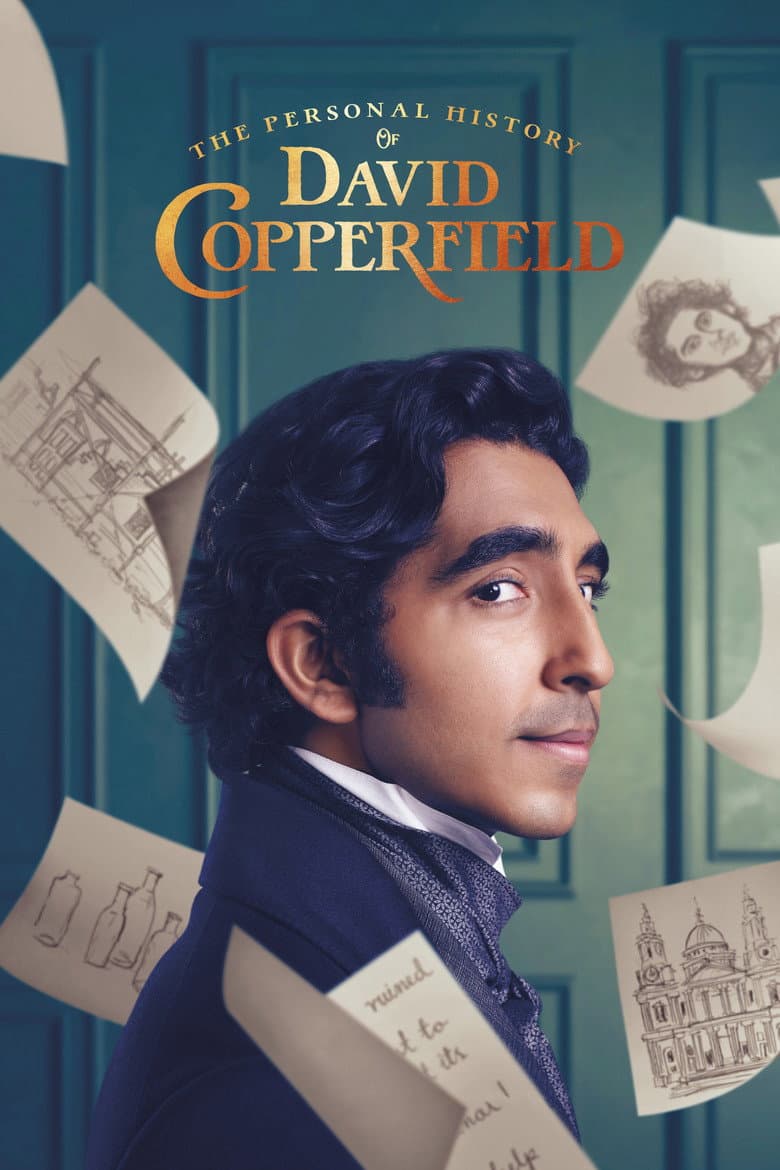
David Copperfield tells the story of a boy who grows from a troubled child into a successful writer. His cruel stepfather sends him to work in a London factory, and David loses his mother before he can say goodbye. He runs to his aunt Betsey, but poverty, debt, betrayal, and broken friendships keep changing his life. The story moves between the English coast and Victorian London, and its bright comedy sits beside pain, fear, and loss.
The film gives the famous English character to Dev Patel and places many actors of different ethnic backgrounds in major roles. Several family groups also have visibly mixed backgrounds, even though the story does not explain them through race or make race part of the plot. David keeps asking where he belongs and learns to accept his past instead of hiding it. The film treats friendship, family, and personal effort as the way people survive hardship, so the strongest modern signal comes from its visible casting and its broad message about identity and belonging.
Community feedback
Was our 62% Woke rating accurate?
Breakdown
These are the editorial factors and ratings behind our score for The Personal History of David Copperfield.
Woke representation / casting
The film gives the established English title character David Copperfield to Dev Patel. The film also uses actors of different ethnic backgrounds in major roles, including Agnes, Mr Wickfield, and Mrs Steerforth, and it shows visibly mixed family groups. Publicity and interviews openly frame this as colour-blind casting that should reflect modern Britain. The story gives these characters no race-based backstories, so the repeated pattern is easy to notice as a representation choice.
68%
Woke political dialogue
Not present. The film uses period dialogue about class, poverty, family, and social status. It does not use modern identity, DEI, or activist lines.
0%
Identity-driven story themes
David repeatedly asks where he belongs and whether he must hide his past. The story treats class, family background, and social status as labels that can trap people. David finally accepts his past and uses his own story to build a life with help from friends and family. The message is broad and hopeful, but it does not make race politics or activism the main plot.
34%
Western institutional / cultural critique
Not present. The film shows poverty, harsh work, debt, and abuse of power as part of Dickens’s period story. It does not turn those events into modern activist criticism of capitalism, patriarchy, or Western institutions.
0%
Woke character or canon changes
The film changes the familiar racial presentation of David Copperfield by casting Dev Patel in the title role. The film also uses mixed-ethnicity pairings for several established families from the Dickens story. The director connects these choices to diversity and present-day Britain. The plot remains close to Dickens’s story, so the main change is the identity-focused casting.
56%
Anti-woke backlash and complaints
Small online accounts called the film woke because Dev Patel played David and because black actors appeared in its Dickensian setting. A British nationalist magazine account told readers to skip the film and linked Patel’s casting to support for authors of colour in schools. An Irish Times report also noted a critic’s complaint that the casting was virtue signalling. The reaction stayed fringe and did not grow into a major campaign.
16%
Creator track record context
Armando Iannucci mainly has a liberal satire background and is not strongly linked to identity activism. Charles Dickens wrote about class and poverty without modern identity politics. Simon Blackwell also has a satire background without a strong record of DEI advocacy. Producer Ben Browning adds some feminist context through Promising Young Woman, but the wider creator group remains moderate.
22%
Production

Movie · 2018
With their golden era long behind them, comedy duo Stan Laurel and Oliver Hardy embark on a variety hall tour of Britain and Ireland.
Movie · 2023
A rich man learns about a guru who can see without using his eyes. He sets out to master the skill in order to cheat at gambling.

Movie · 2026
After Matt's dreams of a picturesque Italian wedding are shattered when his fiancée leaves him at the altar, he embarks on his planned honeymoon across Italy alone, immersing…

Movie · 2019
A headstrong Chinese-American woman returns to China when her beloved grandmother is given a terminal diagnosis.

Movie · 2016
Discover what Thor was up to during the events of Captain America: Civil War.

Movie · 2020
After Santa Barbara Police Chief Carlton Lassiter is ambushed and left for dead, Shawn and Gus return to help him and find themselves embroiled in a case involving the personal…

Movie · 2021
Buster and his new cast now have their sights set on debuting a new show at the Crystal Tower Theater in glamorous Redshore City.
Movie · 2026
George Hardy is a shepherd who reads detective novels to his beloved sheep every night, assuming they can't possibly understand.
