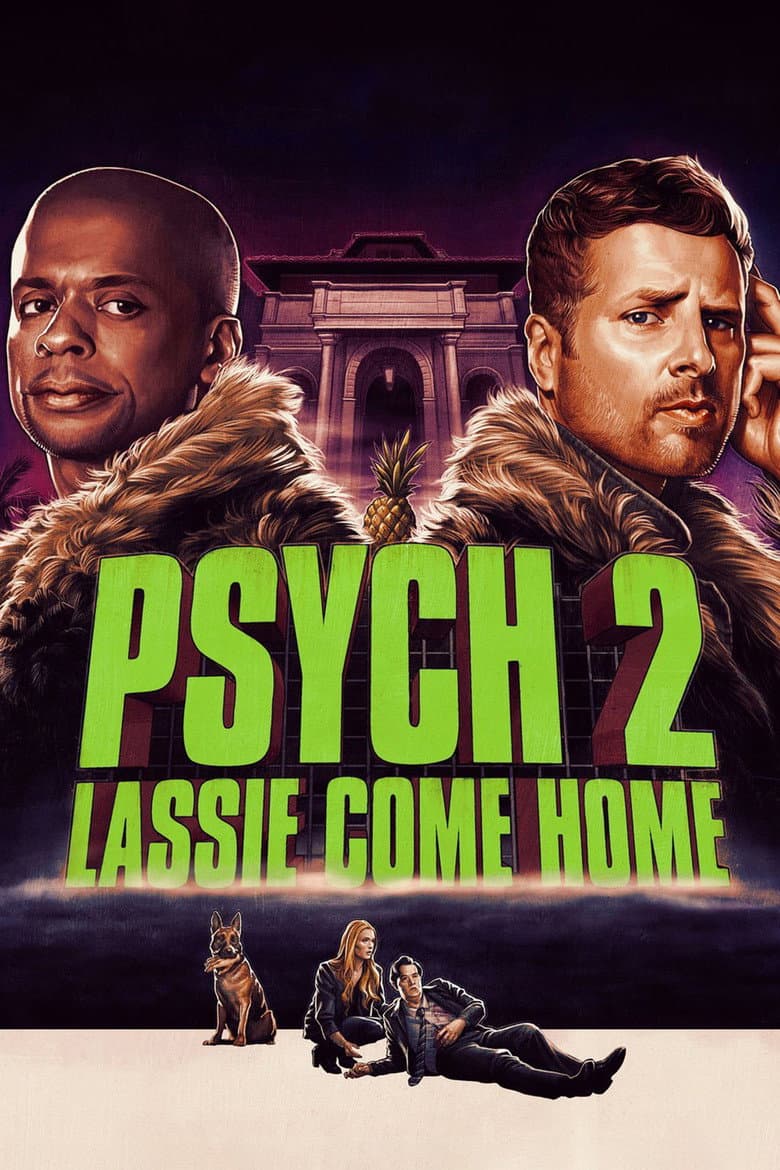
Carlton Lassiter, the Santa Barbara police chief, is shot while working and suffers a stroke during surgery. He wakes in a recovery center, where he sees strange figures and fears that his mind and body may never return to normal. Shawn Spencer and Burton “Gus” Guster leave San Francisco and secretly investigate the attack, a dead business owner, and a missing shooter. Juliet O’Hara and Chief Karen Vick also work around police orders while the old Psych team tries to protect Lassiter. The movie mixes detective comedy, family feelings, romance, hallucinations, and a possible ghost story.
The film shows a black detective, a black police chief, a female police investigator, and a female criminal planner in its present-day California story. Their jobs support the mystery, while the film spends most of its time on recovery after injury, fear of losing independence, loyalty between friends, marriage, fatherhood, and painful family memories. Shawn and Gus use jokes and lies to protect Lassiter, and Lassiter must choose whether to fight for his family. The movie treats these ideas as personal problems inside a playful crime story.
Community feedback
Was our 3% Woke rating accurate?
Breakdown
These are the editorial factors and ratings behind our score for Psych 2: Lassie Come Home.
Woke representation / casting
Not present. The film has a black detective and a black police chief, plus a female detective, but these roles fit the modern Santa Barbara setting. The story does not frame them as a diversity goal or use a repeated identity message.
0%
Woke political dialogue
Not present. The movie includes brief race jokes between Shawn and Gus. Those jokes do not argue for modern identity politics or activist ideas.
0%
Identity-driven story themes
Not present. Lassiter’s stroke recovery, the shooting, family, friendship, and romance drive the story. The movie does not make race, gender, sexuality, or group identity the main source of meaning.
0%
Western institutional / cultural critique
Not present. The case includes a dishonest CEO, financial fraud, and police mistakes. The movie treats these as parts of a crime plot, not as an attack on capitalism, family life, religion, or Western institutions.
0%
Woke character or canon changes
Not relevant. The movie continues the same Psych characters without race, gender, sexuality, or hero-role changes. Lassiter’s stroke and recovery change his situation, but they serve the plot and reflect Timothy Omundson’s real recovery.
0%
Anti-woke backlash and complaints
Not present. Reviewed news stories and fan discussions do not show notable complaints that the movie pushes woke, DEI, or identity politics. The negative comments focus on the plot, humor, romance, and continuity.
0%
Creator track record context
James Roday Rodriguez has publicly discussed reclaiming his Mexican-American name and supporting people of color. Dulé Hill has worked on projects about Black artists, community identity, and social justice. Steve Franks, Andy Berman, Barbara Biddle, and Chris Henze show no sustained activist record in the available background. This gives the title a mild creator track record signal, but the movie does not use that background as a theme.
15%
Production
